
IN BRIEF
|
Winter is fast approaching, and it is essential to prepare your motorcycle to face the rigors of the cold season. Protecting your two-wheeler from the cold, moisture, and frost is crucial to ensuring its longevity and performance. By following a few simple steps, you will not only ensure adequate protection for your ride but also an easy start when spring arrives. Get ready to discover the best practices for a successful wintering.
With the arrival of winter, it is crucial to prepare your motorcycle to cope with the harsh weather conditions. Proper wintering protects your ride against cold, moisture, and frost, while ensuring a smooth restart come spring. In this article, we will explore the different steps to follow and examine the advantages and disadvantages of properly preparing your motorcycle for the cold season.
Advantages
Preservation of the motorcycle
By preparing your motorcycle for winter, you maximize its lifespan. Regular maintenance, such as oil changes, deep cleaning, and moisture protection, help keep it in good condition. This prevents rust accumulation and other damage caused by the weather.
Easy start in spring
A properly winterized motorcycle has a better chance of starting without problems as soon as spring arrives. By performing tasks such as battery charging and lubrication, you improve your vehicle’s reliability and performance.
Cost savings on repairs
Taking the time to prepare your motorcycle for winter can save you money in the long run. Repairs due to neglected maintenance can quickly add up. By preventing problems before they occur, you safeguard your budget.
Disadvantages
Time and effort required
Preparing your motorcycle for winter requires an investment of time and effort. You need to follow different steps, which can be burdensome for some riders. This includes cleaning, oil changes, and finding an appropriate place for storage.
Additional maintenance costs
Winter maintenance can incur additional costs, such as buying specific products for motorcycle protection or professional services if you cannot do it yourself. These expenses may be significant, and some riders may be reluctant to bear them.
Risk of forgetting certain steps
With several steps to complete, there is a risk of forgetting something. This can compromise the effectiveness of the wintering process and cause problems in spring. Therefore, it is vital to follow a guide or a checklist to ensure proper preparation.
In the end, preparing your motorcycle for winter is an essential process that must be undertaken with care. Although it may seem a bit tedious, the long-term benefits far outweigh the disadvantages. For more information, you can consult useful resources like motorcycle wintering or tips on storing your motorcycle.
The winter season can be harsh on your motorcycle if you do not prepare it properly. By following a few essential steps, you will protect your two-wheeler from the cold, moisture, and frost, while ensuring easy restarting in spring. Here is a comprehensive guide to properly wintering your motorcycle.
Inspect your tires
Before storing your motorcycle, it is crucial to check the tire pressure. Properly inflated tires are less likely to deform. If you have worn tires, consider replacing them. Additionally, applying a specific maintenance product can help preserve the rubber.
Maintain the battery
Your motorcycle’s battery needs to be properly maintained. To prevent a complete discharge, disconnect the terminals and recharge it regularly. This will extend its lifespan and ensure an easy start at the end of winter.
Change the oil and filters
Regular maintenance is essential for the longevity of your motorcycle. Before storage, perform a complete oil change and replace the oil filter. This will eliminate impurities and moisture, helping to preserve the engine.
Protect against moisture
Moisture is a formidable enemy for your two-wheeler. To prevent it, clean your motorcycle with a protective product and apply grease to exposed metal parts. Also, consider storing your motorcycle in a dry and ventilated space to limit the risk of corrosion.
Use a protective cover
A cover is recommended to protect your motorcycle from dust and condensation. Make sure to use a breathable cover to avoid moisture accumulation, which could damage your ride.
Store your motorcycle properly
The choice of storage location is crucial. Avoid leaving your motorcycle outside. Ideally, use a garage or a shed with controlled temperatures. For long-term storage, consider using wheel supports to prevent flat spots on the tires.
Final preparation
Finally, before storing your motorcycle, make a final visual inspection of all mechanisms and check the condition of the headlights and brakes. This will allow you to start off on the right foot when spring arrives.
For additional recommendations on storing your motorcycle, do not hesitate to consult resources like this practical guide. Make sure to equip yourself well for the season, with great deals on your gear.
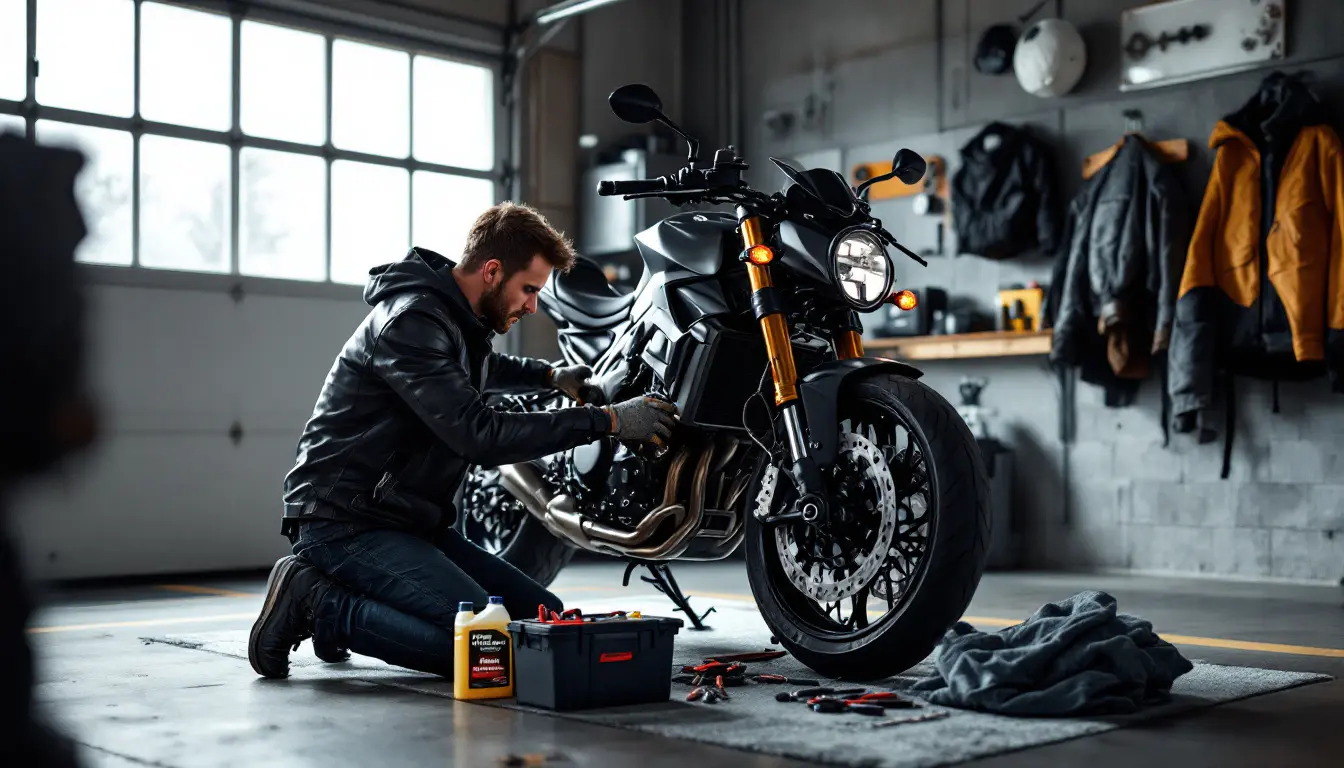
With the arrival of winter, it is essential to prepare your motorcycle for this cold period. Proper wintering ensures protection for your ride against frost, moisture, and other adverse weather elements. By following a few simple steps, you can ensure that your motorcycle is ready for spring. Here are some practical tips to help you properly winter your two-wheeler.
Checking the general condition
Before putting your motorcycle into winter storage, start by performing a complete inspection. Check the condition of the tires, the battery, and the braking system. Ensure everything is functioning correctly to avoid surprises when you hit the road again. Don’t forget to check the tire pressure, as under-inflated tires can deform over time.
Thorough cleaning
A good cleaning is essential. Wash and carefully dry your motorcycle to remove dirt, mud, or debris that could damage the paint or promote corrosion. Also, consider applying a protective product for the paint, such as wax or polish. Cleaning the exhaust chambers is also advisable to prevent moisture buildup.
Battery preparation
The battery is one of the components most sensitive to winter. If you do not use your motorcycle for several months, it is recommended to remove it and store it in a cool, dry place. Use a battery charger to keep it in good condition. Also, remember to check the electrolyte levels if your battery is accessible.
Fill fluids and drain
Ensure your motorcycle has a full tank of fuel to avoid condensation inside the tank. Add a fuel stabilizer to preserve the quality of the fuel during the winter. Additionally, do not forget to change the oil if it has been a while since your last change; this helps eliminate impurities.
Protection against moisture
To avoid the harmful effects of moisture, it is crucial to prepare your motorcycle with protection. Consider covering it with a breathable cover to prevent moisture buildup. If possible, store your motorcycle in a dry place, such as a garage, instead of leaving it outside.
Equipment check
Before storing it, check the various equipment on your motorcycle. This includes lights, taillights, and turn signals. Ensure everything is functioning correctly, as you do not want to be caught off guard when you want to restart your motorcycle in spring.
Additional considerations
In addition to wintering, consider accessories that can enhance your comfort while riding in winter, such as suitable clothing and safety items. Also, remember to learn good practices for starting your motorcycle after a long period of inactivity to ensure a smooth restart. For more information on this topic, you can check our article here.
To maximize the longevity and performance of your motorcycle during winter, it is crucial to prepare it well. By following these recommendations, you ensure that your faithful companion will be ready to ride as soon as the good weather returns.
Guide to preparing your motorcycle for winter
| Steps | Description |
| 1. Cleaning | Remove dirt and residue to prevent corrosion. |
| 2. Fluid check | Change the oil and check all fluid levels. |
| 3. Battery maintenance | Disconnect and charge the battery to prevent it from discharging. |
| 4. Tires | Check the pressure and condition of the tires to prevent deformation. |
| 5. Lubrication | Lubricate the chain and cables to maintain their functionality. |
| 6. Shelter | Store the motorcycle in a dry, protected place from the elements. |
| 7. Protection | Cover the motorcycle with a tarp to avoid exposure to moisture. |
| 8. Testing | Run the engine at regular intervals to keep it in shape. |

Testimonials on preparing your motorcycle for winter
Preparing your motorcycle for winter may seem like a daunting task, but it is essential for ensuring its longevity. To have peace of mind, I followed the advice of several enthusiasts. The first thing I learned was to always start with a thorough cleaning of the motorcycle. This helps eliminate dirt and prevents corrosion due to moisture. A friend told me that this was his first step before any other maintenance.
Another important point I retained was to check the tire pressure. Strangely, I tended to overlook this detail, but a participant in a forum pointed out that properly inflated tires help maintain their shape even during inactivity. This is probably something I will do every year from now on.
One of the suggestions from my motorcycle group was to take care of the battery. I was advised to remove the battery and store it in a dry, warm place. I started doing this after experiencing starting problems last spring. It made all the difference, and my motorcycle started without any issues.
Another aspect not to neglect is the lubrication of the chains and cables. I witnessed the damaging effects of frost on a friend who neglected this crucial point. By applying a good layer of lubricant, you protect these essential parts against the weather.
Finally, the choice of where to store the motorcycle is paramount. I’ve heard it’s better to choose an indoor space, warm and dry. A member of my community even built a shelter specifically for their motorcycle to avoid any exposure to the elements. In the future, I will take this aspect into account to optimize the preservation of my vehicle.
Preparing your motorcycle for winter
As winter approaches, it is essential to take a few measures to ensure the longevity of your two-wheeler. Careful maintenance and wise precautions can help protect your motorcycle from the cold, moisture, and frost. Follow these recommendations for successful wintering and to ensure your vehicle is ready to hit the road in spring.
Step 1: Thorough cleaning
Before storing your motorcycle, begin with a meticulous cleaning. Remove dirt, dust, and insects that have accumulated during the riding season. Use a mild soap and water to clean the carburetor and chassis. Be sure to pay special attention to hard-to-reach areas.
After washing your motorcycle, apply a protective wax and ensure each part is dried. This will create a barrier against moisture and prevent rust on metal surfaces.
Step 2: Mechanical maintenance
Check the overall condition of your motorcycle, focusing on the tires, brakes, and chain. Ensure that the tire pressure is correct and that they show no signs of deformation. Change the engine oil and oil filter to remove accumulated impurities.
Lubricate the chain and other moving parts to prevent oxidation and ensure proper functioning when returning from winter. Battery maintenance is also required; disconnect it and, if possible, store it in a temperate location. Be sure to charge it regularly during its rest period.
Step 3: Protect against moisture
During winter storage, it is crucial to protect your motorcycle from moisture. Store it in a dry location, shielded from the elements. If you must leave it outdoors, use a cover designed for motorcycles, which is waterproof while allowing air to circulate. This will prevent condensation and the risks of rust.
Step 4: Fluid check
Examine all the fluid levels of your motorcycle, including coolant and brake fluid. Renew them if necessary. Be sure the fuel tank is full; this minimizes moisture inside, thus reducing the risks of corrosion.
Step 5: Proper storage
Choose an appropriate storage location for your motorcycle. A heated garage is ideal, but if that is not possible, consider placing it in a room where it will be protected from the elements. Avoid leaving your motorcycle outside without protection, as it would be vulnerable to the rigors of winter.
Also ensure that you do not crowd other objects around it to avoid bumps or scratches.
Step 6: Preparation for spring
Before restarting your motorcycle in spring, perform a complete check. Inspect all fluid levels, inflate the tires, and ensure that all systems are functioning correctly. Do not let maintenance accumulate; a little effort in winter can lead to great satisfaction when hitting the road again.
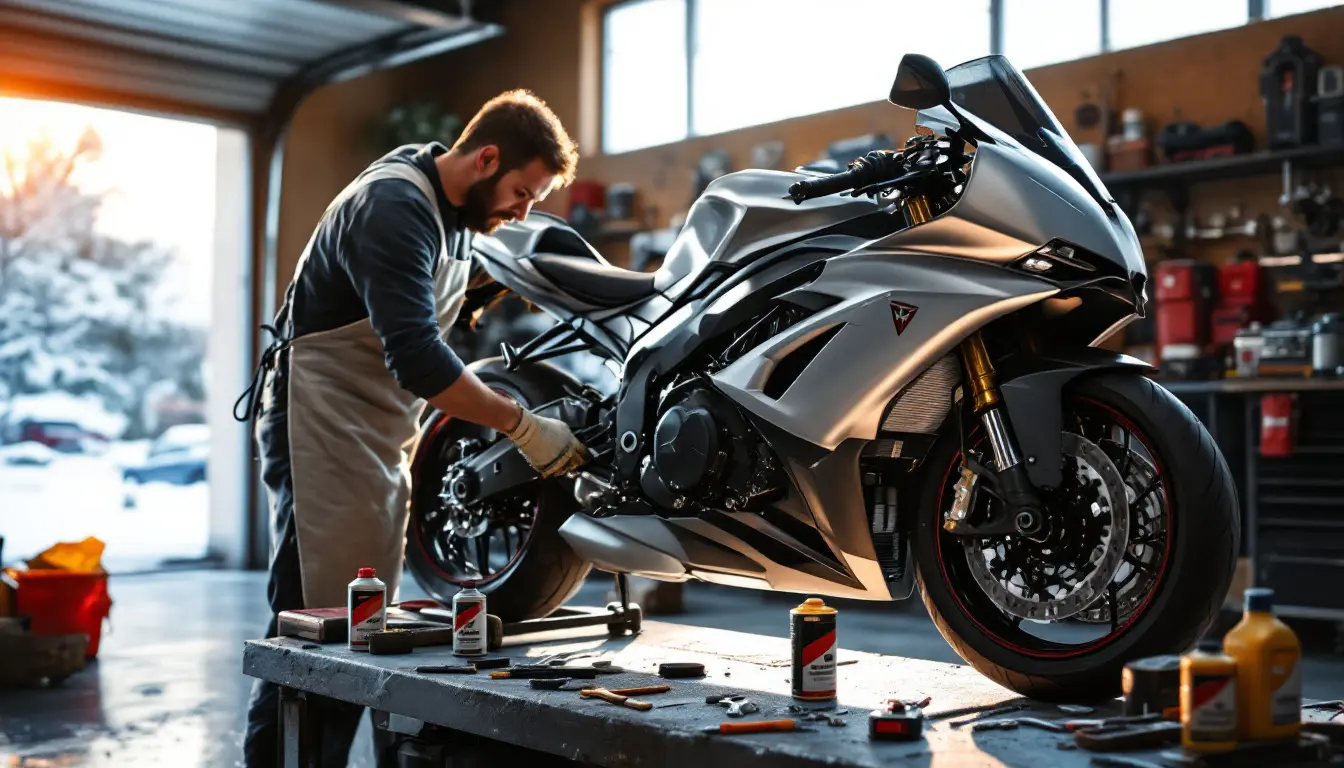
As winter approaches, it is crucial to take care of your motorcycle to ensure its proper functioning when restarting in spring. Indeed, the cold, moisture, and frost can damage various components of your two-wheeler, making it difficult to operate. Therefore, it is essential to carry out preventive maintenance to protect your investment.
The first step is to perform a thorough cleaning. By removing dirt, salt, and other contaminants, you help maintain the paint and exposed elements in good condition. Once your motorcycle is clean, it is advisable to check the tire pressure, as under-inflated tires are at risk of deforming during winter. Be sure to protect them from potential damage caused by the cold.
Next, consider performing a drain of the oil and replacing the filter if necessary. Used oil can contain impurities that, over time, can cause damage to your engine. It is also advisable to check your battery; a weak battery can cause trouble when restarting your motorcycle. Remember to disconnect the battery and keep it in a temperate location.
Finally, proper wintering also involves covering your motorcycle with an appropriate cover to protect it from the elements. It is best to store it in a dry space and shielded from harsh weather. By following these various steps, you ensure that your motorcycle remains in excellent condition and ready to hit the road as soon as the temperatures become mild again.
FAQ: How to prepare your motorcycle for winter
Why is it important to prepare your motorcycle for winter? Preparing your motorcycle for winter is critical to protecting your two-wheeler from harsh weather conditions such as cold, moisture, and frost. This not only ensures its longevity but also its proper functioning when it is time to restart in spring.
What steps should be followed to winterize a motorcycle? For successful wintering, it is essential to follow several steps: thoroughly clean the motorcycle, drain the oil and replace the filter, check and maintain the battery, correctly inflate the tires, and finally, protect all surfaces from moisture.
Should I store my motorcycle outside or indoors? It is highly recommended to store your motorcycle indoors to avoid the harmful effects of cold and adverse weather. Choose a dry location away from the elements.
How can I protect my motorcycle battery during winter? To preserve the battery, it is advisable to remove it and store it in a dry, cool place. Remember to recharge it regularly during winter storage to prevent it from completely discharging.
Is it necessary to cover my motorcycle? Yes, covering your motorcycle with a breathable cover can help protect the paint and prevent condensation, whether inside or outside.
What type of maintenance is recommended before putting the motorcycle away? A comprehensive maintenance routine including cleaning, lubrication of chains, and checking brakes and tires is recommended to ensure that each component functions correctly when you hit the road again.
Which products can help protect my motorcycle from frost and moisture? Using protective products for paint and anti-moisture sprays can be beneficial to preserve the metal and painted surfaces of your motorcycle.
When should I start preparing my motorcycle for winter? It is advisable to start preparing your motorcycle for winter before the first frost arrives, ideally as soon as temperatures begin to drop.


