
IN BRIEF
|
In the world of motorcycling, continuous training is crucial to ensure the safety of motorcyclists. Indeed, riders must constantly update their skills, not only to master the vehicle but also to navigate safely in a constantly changing road environment. The training provided addresses essential themes such as emergency situation management and traffic rules specific to two-wheeled vehicles, thus offering adequate support to become responsible and informed motorcyclists.
Continuous training for motorcyclists is essential to ensure safe and responsible driving. With the constant evolution of technologies and regulations, updating one’s skills can mean the difference between an enjoyable riding experience and a dangerous situation. This article looks at the advantages and disadvantages of continuous training for motorcyclists.
Advantages
Continuous training offers numerous advantages for motorcyclists. First of all, it helps enhance safety by learning to control one’s vehicle and adapting to new driving situations. The courses provide an in-depth understanding of the traffic rules and appropriate techniques. For example, they teach how to react in emergency situations, a fundamental aspect to avoid accidents.
Moreover, this continuous education helps motorcyclists stay updated with technological advancements. Innovations like advanced braking systems or the integration of new technologies in motorcycles may require specific training to optimize their use. Trained riders will know how to take advantage of these innovations to enhance their safety.
Finally, constant training can be an important motivational factor for employees in the sector. Offering continuous training programs to technicians and salespeople can help them refine their skills while promoting their loyalty within the company.
Disadvantages
Despite its many benefits, continuous training also presents certain disadvantages. One of the main obstacles is the potential cost associated with these trainings. Motorcyclists may feel financial pressure, especially if these programs are not covered by their employer or their insurance. This can deter some of them from participating in necessary training.
Another disadvantage is the availability of courses. Depending on the region, it can be difficult to find suitable or accessible programs. This can lead to frustrations for motorcyclists who wish to improve their skills but cannot find adequate solutions.
Finally, some motorcyclists may underestimate the importance of continuous training, thinking that their personal experience is sufficient. This lack of recognition of the benefits of training can expose them to greater risks on the road.
Continuous training is a fundamental element for motorcyclists wishing to optimize their safety and performance on the road. Indeed, these skill-update programs not only maintain a high level of vehicle control but also help understand and integrate technological and practical developments in the field. This article explores the importance of this training for motorcyclists.
The importance of technical skill
For a motorcyclist, mastering their vehicle is essential. Continuous training allows the acquisition of technical skills that are essential to face everyday driving challenges. This includes managing emergency situations, understanding dense urban traffic, and handling unpredictable behaviors from other road users.
The knowledge of new technologies
In an age where technology evolves at breakneck speed, it is crucial for motorcyclists to stay informed about the latest innovations in safety and equipment. Continuous training offers regular updates on available devices and technologies, thus enabling drivers to integrate these tools into their daily practice. To learn more about how to integrate these technologies, see here.
Preventing accidents
In light of the increase in fatal motorcycle accidents, it is imperative to engage in continuous training. Specialized courses allow riders to perfect their driving skills and learn to anticipate dangers. Road safety educators emphasize the importance of this training to ensure safe and responsible driving. For an overview of tips for safe driving, check out this article here.
The motivation and retention of motorcyclists
Continuous training is not only about acquiring new skills, but it is also a key lever to attract and retain motorcyclists. Training programs help strengthen commitment and passion for riding, thus creating a more responsible and supportive community of motorcyclists. Young riders, in particular, benefit from support that encourages them to practice safe riding. For more information, visit this link.
Practice and experience
In addition to theoretical learnings, practical sessions are essential to reinforce skills. They allow motorcyclists to implement the skills learned on the ground, which is crucial for their education. These training moments contribute to building confidence on the road, which is indispensable for every motorcyclist.
A training adapted to the needs of motorcyclists
Every motorcyclist has specific needs, whether in terms of experience or prior training. It is important that continuous training is tailored to meet the requirements of each individual. This type of training helps develop a motorcyclist who is aware of their capabilities and the limitations of their vehicle, thus promoting safer circulation for all.

Continuous training is a fundamental element for all motorcyclists, whether they are beginners or experienced. This approach not only allows the acquisition of new skills but also updates knowledge on the traffic rules and technologies that are constantly evolving. Thanks to this training, riders can adopt a safer and more responsible driving behavior on the road, thus minimizing the risks of accidents.
Optimizing road safety
Participating in regular training allows better management of emergency situations and reinforces the ability to react to the unexpected. Training programs address key topics such as vehicle control and safe behaviors, which helps motorcyclists avoid common mistakes that can lead to accidents. A better understanding of the risks associated with motorized driving is essential for any motorcyclist concerned about their safety.
Updating knowledge
The field of road safety is constantly evolving, with the emergence of new technologies and changes to regulations. Continuous training helps motorcyclists stay informed about these changes and incorporate them into their daily practice. This includes everything from updates regarding vehicle safety systems to the latest recommendations for responsible driving.
Perfecting technical skills
Training programs provide ideal opportunities for motorcyclists to enhance their technical skills. By learning to manage specific situations such as heavy traffic, roundabouts, or slippery roads, motorcyclists become more confident and competent. The training also allows revisiting driving techniques, ensuring that riders can adapt to various driving environments.
Maintaining skills
It is crucial to maintain a high level of skill throughout one’s life as a motorcyclist. Refresher and skills improvement sessions help keep safety habits at the forefront. These regular trainings provide a space to practice and develop reflexes that may dull over time. The repetition of exercises and the acquisition of new practices are essential to remain alert on the road.
Encouraging the motorcycling community
Continuous training also plays a role in creating a responsible and supportive motorcycling community. By sharing experiences and knowledge, motorcyclists can learn from each other and strengthen the culture of safety. This contributes to fewer accidents and a safer driving environment for everyone.
To deepen your understanding of safe riding, check out these useful links: safe riding techniques, tips for riding in groups, and road positioning.
Importance of continuous training for motorcyclists
| Comparison Axis | Description |
| Mastery of the vehicle | Allows acquiring essential technical skills for safe driving. |
| Adaptation to rules | Trains drivers on the specifics of motorcycle traffic. |
| Management of emergency situations | Teaches techniques to react effectively to unforeseen events. |
| Technological evolution | Helps keep up with innovations and safety equipment. |
| Building confidence | Helps motorcyclists to feel safer and more confident on the road. |
| Accident prevention | Reduces the risk of accidents by improving driving skills. |
| Professional networking | Facilitates exchanges between motorcyclists and experts in the field. |
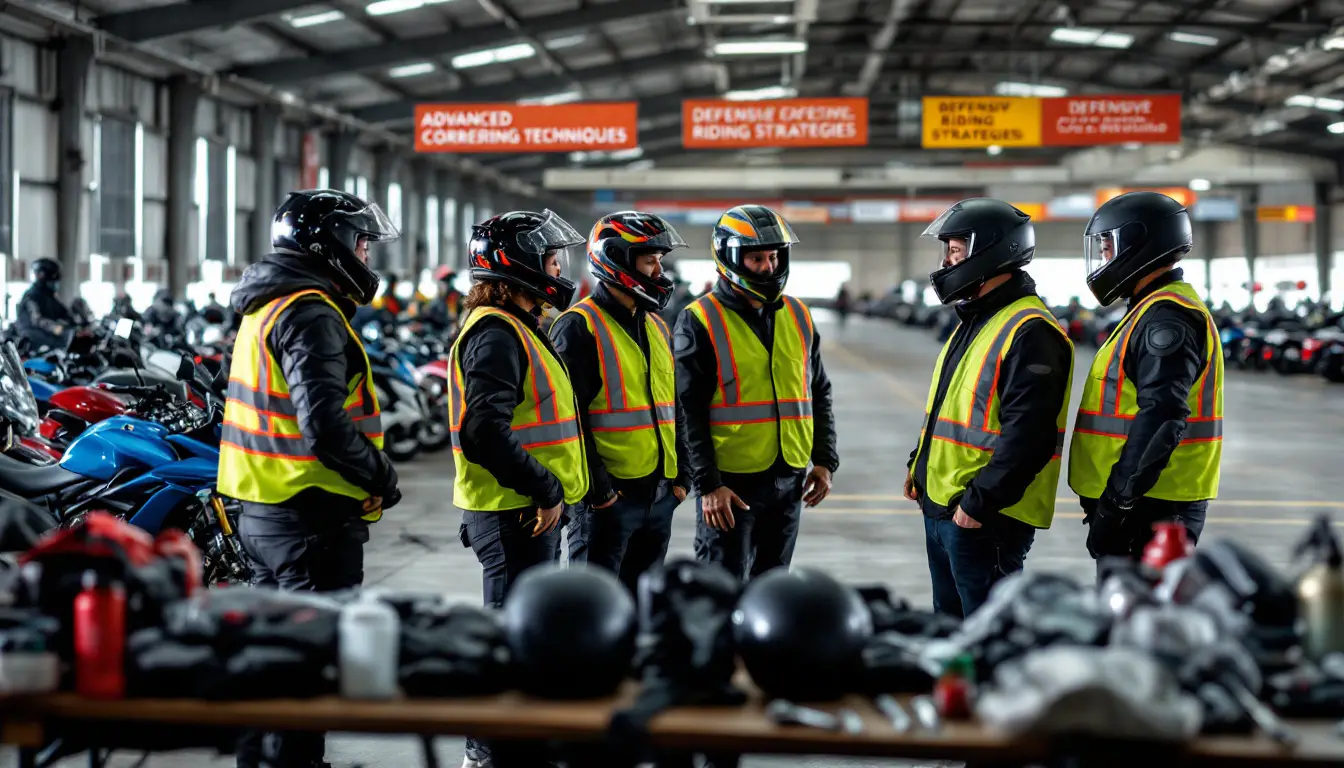
Continuous training for motorcyclists proves to be indispensable in ensuring a responsible and secure driving. Indeed, the world of two-wheelers is constantly evolving, both in terms of technologies and traffic rules. Each motorcyclist must therefore engage in a constant learning process to stay up to date.
Training allows acquiring essential technical skills. For example, specialized courses address situations that may arise on the road, such as managing heavy traffic or navigating through complicated intersections. These trainings offer motorcyclists the opportunity to familiarize themselves with the realities of daily driving and to anticipate hazards.
Moreover, vehicle control is a fundamental aspect of road safety. Regular practice during continuous training sessions helps motorcyclists refine their driving technique, which becomes crucial, especially during delicate maneuvers, such as roundabouts or tight turns. The learnings thus acquired make a significant difference in real situations.
Another important point lies in stress management. The courses teach motorcyclists how to keep calm in unforeseen situations. The ability to react calmly can not only prevent incidents but also guarantee a less stressful riding experience.
Finally, continuous training contributes to personal development. By studying, motorcyclists develop a sense of confidence and autonomy on the road. Each session offers them the chance to learn from other enthusiasts and share their experiences, which strengthens the community of motorcyclists.
Continuous training for motorcyclists is of paramount importance to promote road safety and minimize accident risks. Whether one is an experienced driver or a novice, these courses are designed to improve driving skills, deepen the understanding of traffic regulations, and adapt to practical challenges encountered on the road. This article examines the reasons why continuous training is essential for motorcyclists, highlighting its benefits and its impact on the safety of all.
Technical mastery of the vehicle
One of the main benefits of continuous training is the improvement of technical mastery of the vehicle. Motorcyclists are trained in various driving techniques that allow them to better manage their motorcycle. This includes exercises on maneuverability, management of difficult weather conditions, and appropriate responses to emergency situations. Thanks to this training, motorcyclists gain increased confidence and the ability to deal with unexpected situations on the road.
Understanding traffic rules
Traffic regulations evolve over time, particularly due to the integration of new technologies and changes to road infrastructures. Continuous training helps motorcyclists stay informed about these changes. By better understanding the regulations in force, motorcyclists can adopt more responsible behavior and avoid infractions that could lead to accidents.
Accident prevention
Continuous training is also a means of preventing accidents. By addressing real-world driving scenarios and learning to recognize risky behaviors, motorcyclists can develop better anticipation of dangers on the road. Specific courses cover maneuvers for bypassing, safe techniques for riding in groups, and strategies for staying vigilant at all times.
Learning new technologies
More and more motorcyclists are integrating advanced technologies into their riding, such as anti-lock braking (ABS) systems and alert devices. Continuous training allows motorcyclists to familiarize themselves with these technological tools that enhance safety when driving. Specialized courses provide the opportunity to learn to use these new features optimally.
Skill evolution and maintenance
Over time, it is natural for driving skills to deteriorate or for old habits to overshadow new ones. By participating in continuous training, motorcyclists can not only refresh their knowledge but also refine their skills. This allows them to ☑️<> a responsible and secure driving style, essential for their own safety and that of other road users.
Commitment to the community
Often, motorcyclists wish to set an example for their peers and the younger generation. By engaging in continuous training, they actively participate in a culture of road safety and become ambassadors of good practices within their community. This commitment can also encourage others to follow their path, thus reinforcing the safety network around motorcyclists.

The necessity of continuous training for motorcyclists
Continuous training is emerging as a fundamental issue for motorcyclists, both in terms of safety and technique. Indeed, the road presents varied and sometimes unpredictable situations that require up-to-date and suitable skills. Motorcyclists must therefore engage in a lifelong learning process, enabling them to adapt to changes in traffic conditions and the evolution of safety rules.
This ongoing education is all the more crucial at a time when road accidents remain a major public health issue. By participating in trainings, motorcyclists can perfect their mastery of the vehicle, their reflexes, and their ability to manage emergency situations. For example, advanced driving courses cover topics such as stress management, hazard assessment, and quick decision-making during crises. These skills are essential for ensuring safe driving.
Additionally, continuous training allows riders to learn about the new technologies integrated into modern motorcycles, such as driving assistance systems and safety devices. Understanding these innovations is essential to fully exploit their vehicle’s potential and reduce the risk of accidents. Knowledge of new regulations, such as those related to the environment, also fits into this dynamic of keeping knowledge up to date.
Finally, involving motorcyclists in this process also proves beneficial for their confidence and friendliness within their community. Continuous training indeed encourages the exchange of experiences and the sharing of good practices, thus reinforcing the sense of belonging to a group concerned with safety and accountability on the road.
FAQ: Why is continuous training crucial for motorcyclists
Why is continuous training important for motorcyclists? Continuous training allows motorcyclists to refresh their skills, learn new safety techniques, and become familiar with the latest innovations in road safety.
What are the advantages of continuous training? Advantages include better vehicle control, optimized management of emergency situations, and increased preparedness for the challenges of modern traffic.
How are the trainings tailored to motorcyclists? They are designed to address motorcyclists’ questions, allowing them to understand the importance of these sessions and discover the practical applications of the skills acquired.
What aspects are addressed during the trainings? The trainings cover topics such as vehicle control, specific traffic rules for motorcycles, and defensive driving techniques.
Can continuous training help prevent accidents? Yes, by improving motorcyclists’ skills, continuous training contributes to reducing accident risks on the road.
Who can benefit from continuous training? All motorcyclists, whether beginners or experienced, can benefit from these trainings to improve their riding.
What typically occurs during a continuous training session? A typical session includes practical exercises, simulations, and discussions about the theory of safe driving.


