
IN BRIEF
|
The famous Nürburgring circuit, known for its unique layout and rich history, has recently made a controversial decision regarding access: motorcycles will now only be allowed on certain occasions. Anchored in the heart of the Eifel since 1927, the Nordschleife has long been a place of passion for motorcyclists, but growing concerns about rider safety have led to the near-total exclusion of these two-wheelers from a site where speed and adrenaline flowed. Instead of having free access to the legendary circuit, motorcyclists will now have to adhere to strict restrictions that fundamentally alter the experience within this temple of speed.
Located in Germany, the Nürburgring is an iconic circuit known for its long layout of 20.832 km, nicknamed “The Green Hell.” Traditionally open to vehicles of all kinds, it now faces restrictions regarding motorcycle access. Indeed, this mythical site, which has hosted numerous world-renowned sporting events, now limits motorcycle access to just four days a year, during special days supervised by driving schools. Let’s examine the advantages and disadvantages of this new regulation.
Advantages
The undeniable priority of this restriction lies in safety. The mixture of two and four wheels on such a complex and fast circuit poses risks, particularly due to differences in driving dynamics. With tight turns and significant elevation changes, motorcycles can easily be endangered by the presence of heavier and often faster cars. By supervising motorcycle access through driving courses, organizers ensure that each participant rides in a controlled and supervised environment, which could reduce accidents. Additionally, this initiative allows motorcyclists to benefit from quality training, thereby acquiring new skills and a better understanding of the circuit’s specifics.
Disadvantages
On the other hand, these restrictions provoke disappointment within the motorcycling community. Many enthusiasts believe that these new rules are unfair and favor cars. The reduction in access means that motorcyclists will have to settle for a few limited days to experience the unique feeling of the Nürburgring, which is insufficient considering the circuit’s fame. With the ban on riding freely, what was once an exhilarating adventure transforms into a guided activity, losing some of its authenticity and spirit of freedom. Motorcyclists will no longer be able to share the tarmac with other vehicles, and this situation could be seen as a major disadvantage for thrill-seekers.
In summary, this restrictive decision brings a new dimension to the Nürburgring, which is sure to spark debates and controversies. For more information on this news and its impact, check out these articles here and here. In the meantime, motorcyclists are looking to other European roads to satisfy their quest for speed and adrenaline, discovering the most beautiful motorcycle routes in Europe here.
The famous Nürburgring circuit, known for its driving challenges and iconic layout, has recently announced access restrictions for motorcycles. In an effort to ensure safety for all users on the track, motorcyclists will no longer be able to enjoy free access, a measure that has sparked heated reactions in the motorcycle enthusiast community.
A legendary circuit and its challenges
Inaugurated in 1927, the Nürburgring stretches over 20.832 km through the Eifel massif. This circuit, nicknamed “The Green Hell,” has hosted Formula 1 drivers and has always been regarded as one of the most difficult layouts in the world. With 73 corners and impressive elevation changes, it is the dream playground for many car drivers and motorcyclists seeking adrenaline and performance.
The new restrictions
Recently, the owners of the circuit realized that the coexistence of motorcycles and cars was no longer sustainable, and decided to impose significant changes regarding access to the Nordschleife. From now on, motorcyclists will only have access to the track on four special days a year, organized under the supervision of driving schools. On other days, only free access for cars will be permitted.
The reasons for these changes
The circuit’s managers justify these restrictions by a desire for safety. The different driving dynamics of motorcycles compared to those of cars could lead to misunderstandings among road users. Thus, while the safety argument can be defended, the removal of free access for motorcyclists leaves a bitter taste for many enthusiasts. It marks a regrettable separation between two worlds that have long coexisted on this iconic circuit.
Alternatives and new opportunities
Although access is limited for motorcycles, it is important to note that guided sessions by professionals will still be organized. Motorcyclists will thus have the opportunity to experience the circuit in controlled conditions. In addition, the Grand Prix circuit, shorter by 5 km, will be open for dedicated track days, allowing enthusiasts to continue living their passion on two wheels.
Community reactions
The changes reported provoke various reactions within the motorcycling community. Some fear that this decision is symptomatic of a trend to want to protect at all costs activities that once entertained entire generations. The nostalgic will undoubtedly think that “it was better before,” while others call for patience and adaptation in the face of a constantly evolving world.
For more information
To stay informed about the latest news regarding the restrictions on the Nordschleife, you can consult the following articles: Motorcycle Sports, Passion Moto Formation, Sport Auto, and Caradisiac.
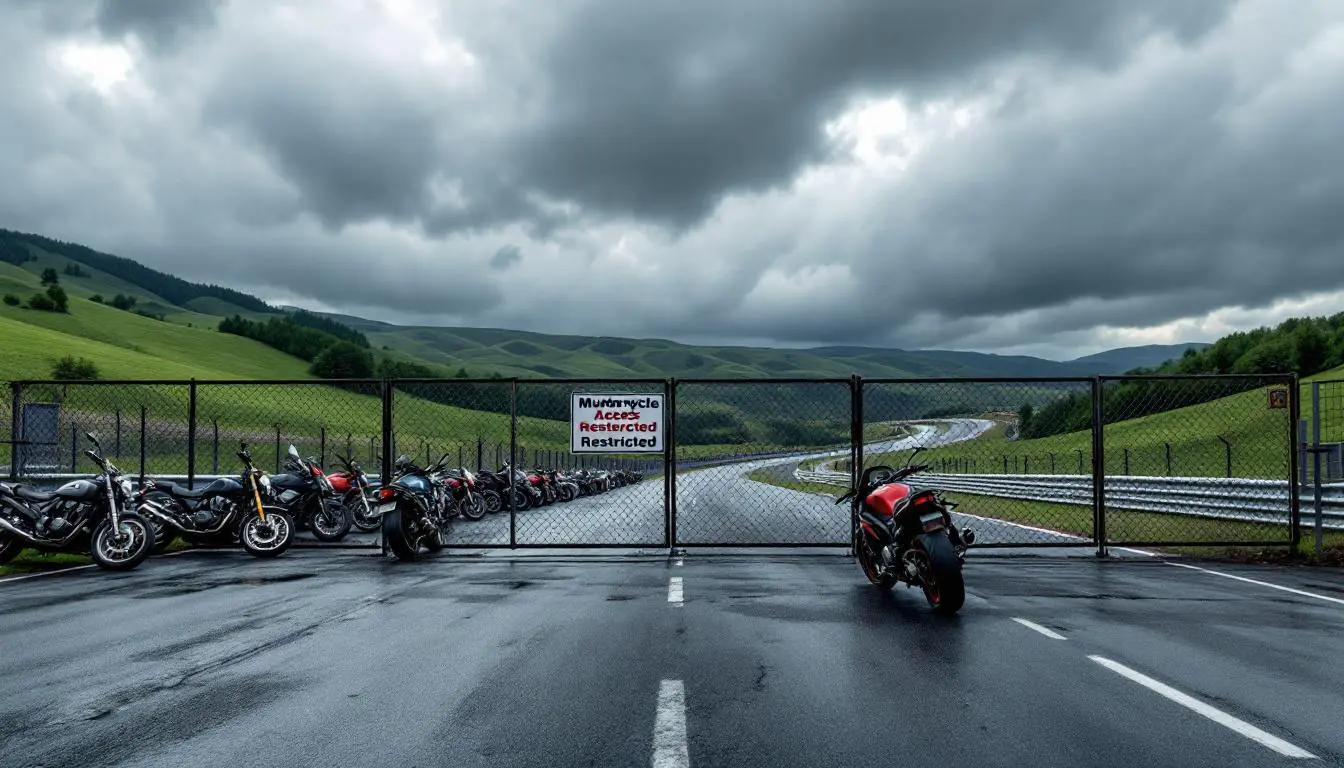
The famous Nürburgring circuit, known for its challenges and rich history, no longer allows the coexistence of cars and motorcycles. From now on, two-wheel enthusiasts must prepare for a new reality: very limited access to this legendary circuit, offering only a few days a year to navigate this legendary layout. Let’s delve into the details of this decision and what it implies for motorcyclists.
The reasons for this decision
The managers of the Nürburgring justify this restriction by safety concerns. The different driving dynamics between motorcycles and cars create a conducive environment for misunderstandings on the track. Indeed, tight corners and varying speeds can create risky situations for motorcyclists, leading to this separation that favors four-wheeled vehicles.
The historical impact of the Nordschleife
Inaugurated in 1927, the Nordschleife is an icon of speed, measuring 20.832 km with no less than 73 corners. Nicknamed “The Green Hell,” this track has hosted prestigious events, including Formula 1 Grands Prix. However, its dangerousness has often been highlighted, notably through the tragic accident of Niki Lauda in 1976. Although a new circuit was built in the 1980s, the old layout continues to fascinate speed enthusiasts.
New motorcycle access
In response to these new rules, motorcyclists now have access to the Nordschleife only during a few special days, organized by driving schools. This allows them to experience the adrenaline on this challenging circuit, supervised by professionals. This initiative helps ensure a certain level of safety while offering motorcyclists the opportunity to discover this legendary road.
Alternatives for motorcyclists
For those who cannot use the Nordschleife, there is still the possibility to explore the Grand Prix circuit, which, though shorter, offers an exciting driving experience on a 5 km layout. With 38 track sessions organized each year, there are opportunities to enjoy speed safely on motorcycles.
For more information on these significant changes regarding motorcycle access, you can consult this article: Nürburgring banned for motorcycles, as well as a detailed overview of this situation here: End of motorcycles at the Nürburgring.
Access restrictions for motorcycles on the Nürburgring
| Elements | Details |
|---|---|
| Access | Motorcycles excluded during free sessions |
| Access days | 4 days per year reserved for motorcycles with supervision |
| Safety | Justification based on the risk of accidents |
| Costs | Paid access for supervised sessions |
| Alternatives | Grand Prix circuit of 5 km open 38 days per year |
| Supervision | Sessions guided by professionals |
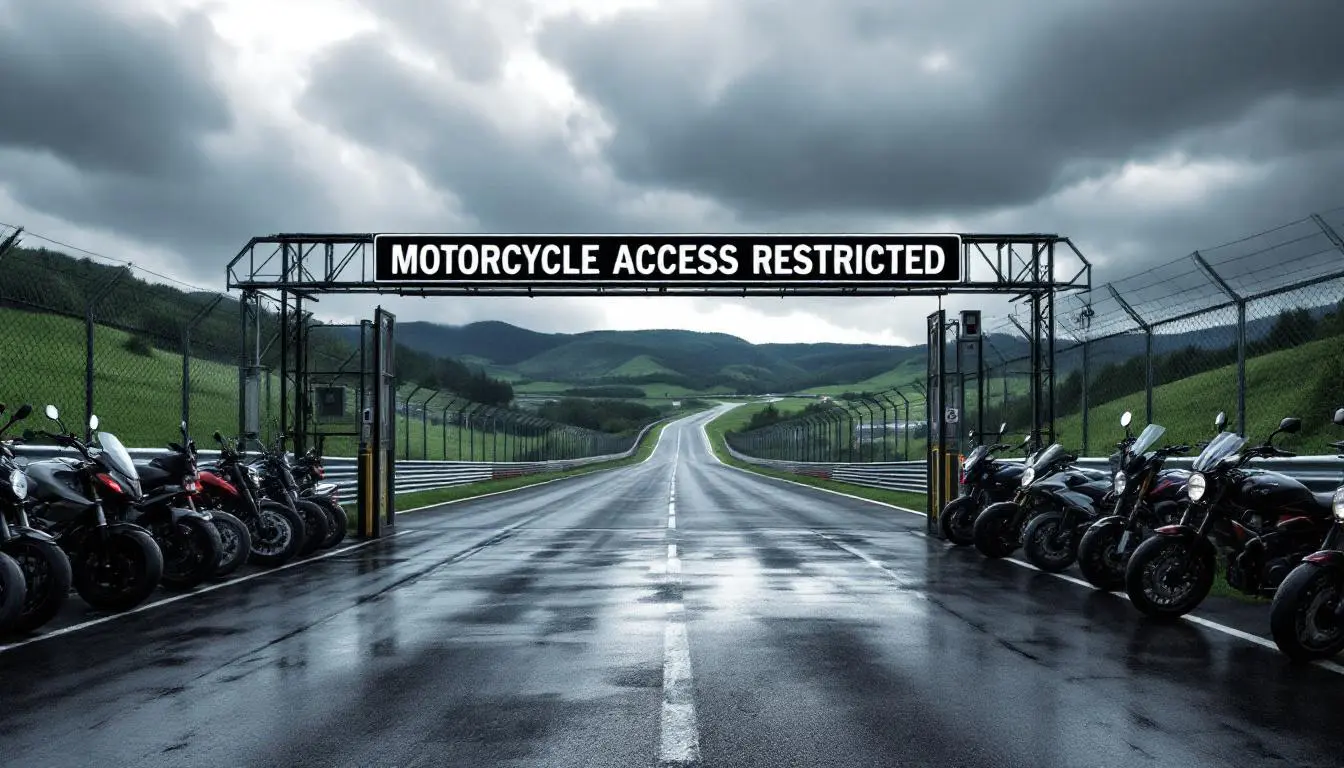
Testimonials on motorcycle access restrictions at the Nürburgring
A disappointing decision – For many motorcyclists, the news has been a hard blow. “I don’t understand why motorcycles are excluded from the Nürburgring,” says an enthusiast who has spent many days on the circuit. “It was a unique place where one could experience intense sensations and compete with other vehicles. Now, we feel wronged.” This exclusion leaves a bitter feeling among those who consider the track a true sanctuary of speed.
A symbol of change – “It’s a sad time for motorcycling,” confesses a former racer who has navigated the 20.832 km of the Nordschleife. “Access was a right for motorcyclists. Now, due to safety concerns, we are stripped of this privilege.” For him, this restriction is not just about the track but rather a metaphor for the changing culture of driving.
In search of adrenaline – Another motorcyclist, who has proven himself on similar circuits, expresses his frustration. “I thought the rules could also apply to cars. After all, they can be just as dangerous. I’m disappointed that the organizers didn’t find a way to ensure safety while allowing motorcycles to access this iconic track,” he says, emphasizing the need for spaces where motorcyclists can thrive.
A welcome yet insufficient respite – While some motorcyclists turn to supervised training sessions to continue their passion on the Ring, the general sentiment remains: “Four days a year is insufficient,” adds a motorcycle advocacy leader. “It does not replace the freedom and excitement we used to have.” She laments the lack of opportunities for enthusiasts to experience those moments of pure adrenaline.
A protective approach – In a defense of the new restrictions, a fervent car driver comments: “I understand that safety must come first. Motorcycles and cars have very different driving dynamics, and it is necessary to preserve the safety of everyone on the circuit.” However, even this opinion is mixed, as it raises concerns about a separation that could ultimately harm the community spirit of speed enthusiasts.
Impact of Access Restrictions on Motorcycles at the Nürburgring
The famous Nürburgring circuit in Germany, known for its legendary Nordschleife, has recently decided to impose access restrictions on motorcycles. This decision aims to separate two-wheeled vehicles from cars in order to improve safety on the track. From now on, motorcyclists will only be able to access the circuit during supervised sessions, which significantly limits their opportunities to enjoy this mythical 20.832 km long track, nicknamed “the Green Hell.” In this article, we will examine the reasons behind this decision, its impact on motorcyclists, and the alternatives available to them.
History of the Nürburgring
Inaugurated in 1927, the Nürburgring has been the site of many iconic competitions, including Formula 1 Grands Prix. With its 73 corners and spectacular terrain, this circuit is considered one of the most difficult in the world. Legendary drivers, such as Niki Lauda, have made history on this track, which has seen moments of glory as well as dramas. The circuit has been partially boycotted due to its dangerousness, which led to the construction of a new circuit in the 1980s. However, the Nordschleife continues to attract enthusiasts, allowing everyone to experience driving on one of the most feared tracks.
The New Restrictions
Recently, the managers of the Nürburgring made it known that, for safety reasons, motorcycle access would now be restricted. Motorcyclists will only be able to access the track during four dedicated days, organized with the supervision of driving schools. This decision mirrors a broader trend aimed at enhancing safety on circuits, but it also fuels frustration within the motorcycling community.
Why these restrictions?
The circuit’s officials argue that the driving dynamics between cars and motorcycles differ considerably. These differences can lead to misunderstandings during free sessions, thus increasing the risk of accidents. Their choice to favor car access, which is more economically profitable, only heightens the sense of injustice among two-wheel enthusiasts. This decision is marked by legitimate concerns regarding safety but also raises questions about the place of motorcycles in the world of racing.
Alternatives for Motorcyclists
Despite these restrictions, motorcyclists are not entirely excluded from the Nürburgring. They can participate in training sessions designed to help them master the track in a controlled environment. While these programs offer an opportunity to explore the track, they limit the freedom and excitement of spontaneous riding. Furthermore, alternatives exist, such as the Grand Prix circuit, which hosts open days for motorcycles, although this remains less appealing compared to the full experience of the Nordschleife.
The Community’s Reactions
The reaction to these new rules varies within the motorcycling community. Some feel that this decision undermines the very soul of racing at a time when enthusiasts are looking to experience intense moments on their bikes. Others may understand the safety concerns but regret that motorcycles are sidelined without equivalent beneficial offers. A nostalgia for a time when motorcycles and cars coexisted freely on the track persists, fueling the ongoing debate about safety policies on circuits.
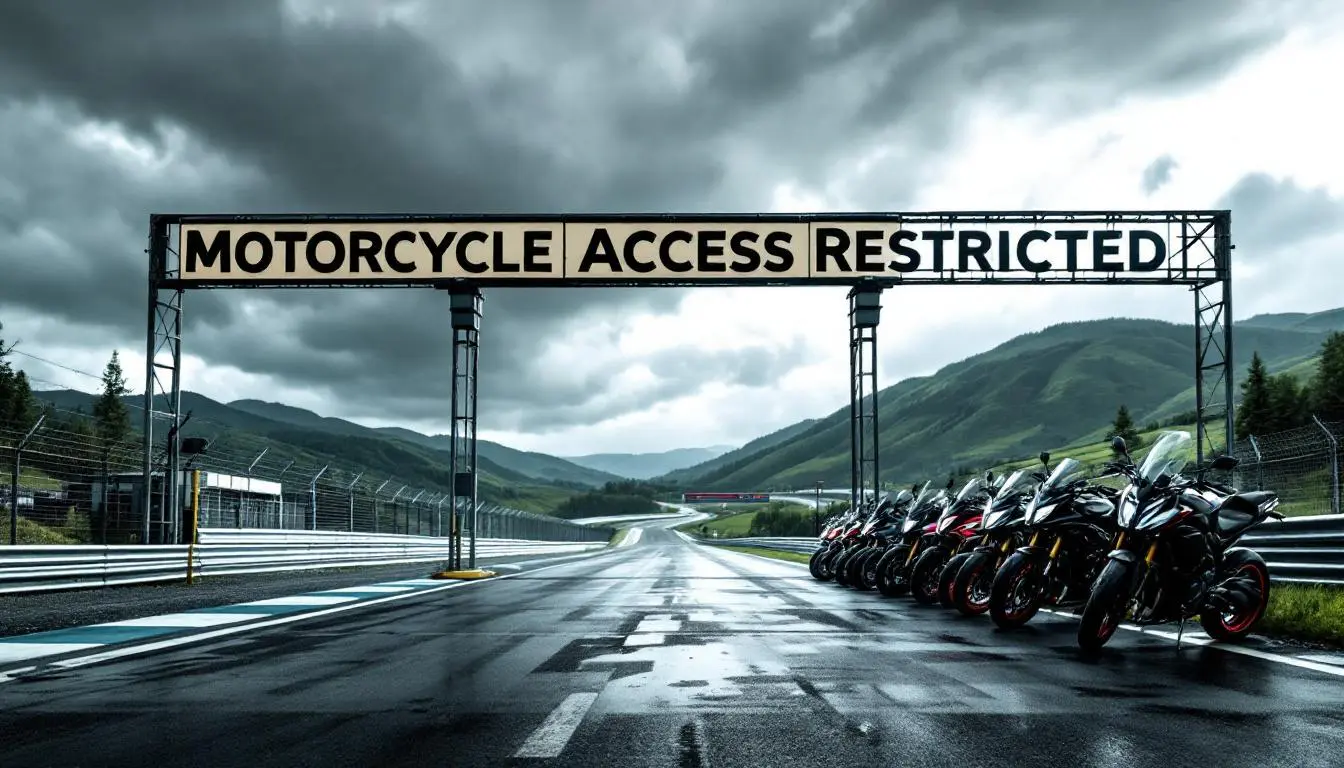
Access restrictions for motorcycles on the Nürburgring
The popular Nürburgring, known for its legendary course, is once again making headlines, but this time for reasons that leave many motorcycle enthusiasts disappointed. Due to increasing concerns regarding safety on the track, authorities have decided to impose access restrictions on motorcycles. This change marks the end of an era where motorcyclists could enjoy the freedom to navigate this iconic circuit.
Since its inauguration in 1927, the Nürburgring has become a benchmark for speed lovers, attracting both cars and motorcycles. The famous Nordschleife, nicknamed “the Green Hell,” is often described as a playground for daring drivers. However, the recent decisions to restrict motorcycle access deliver a hard blow to this tradition. Motorcyclists will now only be able to access the track four days a year, as part of initiatives supervised by professionals.
The reasons put forward by the circuit’s officials are mainly related to safety and driving dynamics, which can lead to misunderstandings and heighten risks on the track. While safety is paramount, this measure leaves a bitter taste for those who practice motorcycling as a living passion. Furthermore, the Nürburgring’s renown has always been associated with equal access among different types of vehicles.
The nostalgia for a time when cars and motorcycles shared the same track intertwines with the reflection on the evolution of our society, where safety seems to sometimes take precedence over the freedom of enthusiasts. These changes, although presented from a safety viewpoint, raise questions about the future of motorsport and the balance between pleasure and safety in circuit driving.
FAQ on motorcycle access restrictions at the Nürburgring
What are the new restrictions regarding motorcycle access to the Nürburgring? Motorcycles will only be able to access the famous Nordschleife four days a year during supervised track days.
Why are motorcycles now excluded from the circuit? The circuit owners announced this exclusion for safety reasons, arguing that the different driving dynamics between motorcycles and cars pose a risk of misunderstandings.
What is the history of the Nürburgring and why is it famous? Inaugurated in 1927, the Nürburgring has a unique layout of 20.832 km with 73 corners, famous for its speed and nicknamed “The Green Hell.”
Can motorcyclists still enjoy the experience on the circuit? Yes, they have the opportunity to participate in supervised training sessions from the circuit’s driving schools, but only in a controlled environment.
How many days a year will motorcycles be able to access the Nürburgring? Motorcycles will have access to the circuit only four days a year.
What compensation is offered to motorcyclists following this exclusion? Motorcyclists can participate in specific days under supervision, or have access to the Grand Prix circuit, which measures 5 km, for a total of 38 days per year.
What was the impact of Niki Lauda’s accident on the Nürburgring? Niki Lauda’s accident in 1976 heightened safety concerns and led to a reassessment of the danger associated with the Nordschleife.
What do drivers think about the Nürburgring? Former F1 champion Jackie Stewart stated that a driver who does not feel fear on the Ring either lies or does not drive fast enough.


