
IN BRIEF
|
The new regulations that will come into force in the coming years could transform the motorcycle market in France and the European Union. Designed to improve road safety and reduce noise pollution, these measures will directly affect the purchasing process. Future buyers will need to be aware of the legal requirements governing the registration and use of motorized two-wheelers, as well as the potential financial impact associated with ecological penalties and stricter noise standards, making the selection of a new motorcycle more complex.
The new regulations concerning motorcycle purchases, which will take effect starting in 2025, bring significant changes for riders and future buyers. These rules primarily aim to improve road safety and reduce the environmental impact of two-wheelers. In this article, we will explore the advantages and disadvantages that arise, in order to better understand their influence on consumer choices.
Advantages
The new regulations have several notable advantages for motorcycle buyers. First, these laws encourage innovation in technology and safety equipment. Motorcycle manufacturers, in response to stricter noise and emission standards, will need to develop less polluting and quieter models, which can improve air quality and reduce noise pollution.
Additionally, a mandatory technical inspection every two years ensures that motorcycles remain in good working order, thus guaranteeing greater safety on the roads. Buyers can feel more confident investing in a vehicle that meets rigorous standards. It is also important to note that compliance with these regulations could increase the resale value of motorcycles, thereby attracting more potential buyers.
Disadvantages
However, these new regulations come with some disadvantages for consumers. One of the main drawbacks lies in the additional cost that this may incur for buyers. Indeed, the necessary improvements to comply with the new standards may lead to an increase in the purchase price of motorcycles. Furthermore, the new requirements for technical inspections may also lead to higher maintenance costs, which can be a deterrent for some potential riders.
Another disadvantage lies in the potential complexity of the administrative procedures that buyers will have to navigate. For example, the need to comply with specific regulations could make the purchasing process longer and more complicated. Additionally, there is a risk that certain older models may become obsolete in the market, which could disappoint enthusiasts of vintage motorcycles who wish to acquire them.
For several years, the motorcycle market has been evolving, driven by increasingly strict regulations aimed at improving road safety and reducing the environmental impact. Starting in 2025, certain measures will have direct consequences on motorcycle purchases, whether for new riders or experienced motorcyclists. Let’s explore together the main modifications that will affect your purchasing choices.
The mandatory technical inspection
Starting in 2025, all motorcycle owners will have to undergo a regular technical inspection to ensure their vehicle complies with safety standards. This obligation, established by the new amendment, has been put in place to avoid accidents related to mechanical failures. This means that when purchasing a motorcycle, you will need to not only check its mechanical condition but also consider its inspection history.
Noise standards imposed by regulation CEE-ONU R41.05
On January 1, 2025, the CEE-ONU R41.05 regulation will require stricter sound tests for all newly registered motorcycles. Manufacturers will have to adapt their models to comply with these new standards, which could influence your choice. Quieter motorcycles will be favored, which could also have an effect on the used market. This change is part of a desire to reduce noise pollution, particularly near urban areas.
Ecological penalty and new taxes
Another aspect to consider is the introduction of new taxes, such as the ecological penalty, which aims to discourage the purchase of polluting vehicles. This taxation system could weigh on the purchase cost of motorcycles with high CO2 emissions. Therefore, buyers will need to pay attention to the environmental characteristics of the models they are considering, opting for more environmentally friendly motorcycles to avoid these additional fees.
Mandatory safety equipment
An important change is the obligation to have certain safety equipment on motorcycles. This includes devices such as anti-lock brakes (ABS), which become essential to reduce the risk of accidents. Riders will need to include these criteria when purchasing, which can also influence the price and availability of certain models.
Conclusion and next steps
With these new regulations coming into force, it is essential for future motorcycle buyers to be informed about the consequences of these changes. Consider seeking models that comply with the standards to make a serene and legal purchase.
For more information on the new regulations, consult reliable sources such as this article which summarizes the major implications.
You can also discover how safety equipment will be perceived in future purchases through this article.

The recent regulations regarding technical checks and noise standards significantly affect the motorcycle market. Starting in 2025, consumers will have to adapt to these changes, which aim not only to promote road safety but also to protect the environment. This article explores the implications of these new laws on motorcycle purchases, as well as tips for navigating this ever-evolving environment.
The new noise standards
The CEE-ONU R41.05 regulation, which comes into force in January 2025, imposes stricter noise standards for motorcycles. This means that newly registered models will have to be designed to reduce noise emissions. For buyers, this leads to the need to carefully examine the technical specifications of motorcycles available on the market and to favor brands and models that comply with these new standards.
The mandatory technical inspection
Since 2023, the technical inspection for motorcycles has become a legal requirement, and it must be conducted every two years. For future buyers, it is crucial to check the maintenance and technical inspection history of the vehicle. Purchasing a model from before 2017 may require an imminent inspection, which could incur additional costs. Be sure to review the report of the technical inspection to better understand the implications.
Financial consequences
The new regulations could also have a direct financial impact on motorcycle buyers. Indeed, the ecological penalty and possible noise taxes might increase the acquisition cost for certain models. It is therefore advisable to evaluate the various associated costs and to look for advantageous financing options, while considering the potential financial savings related to purchasing vehicles that comply with the new standards.
Mandatory safety equipment
Regulatory changes also include requirements concerning motorcycle safety equipment. All new models must be equipped with safety devices that meet current standards. Consumers must ensure that the motorcycle they are considering purchasing meets these requirements and evaluate the purchase of additional equipment. To learn more, consult our article on the new trends in motorcycle equipment.
Choosing suitable models
Due to the new regulations, it is recommended to focus on recent models, which are less likely to be affected by short-term compliance changes. Manufacturers are also actively working to adapt their models to these new requirements. Young riders should seek vehicles that promote safety and compliance with current standards. For advice on suitable motorcycles for young riders, check our article on motorcycles to favor for young riders.
Anticipating market evolutions
In an increasingly strict regulatory market, anticipating future developments is vital. Stay informed about new legislation and market trends to adjust your purchasing choices. This will enable you not only to comply with requirements but also to make a wise investment. To consult the deadlines and requirements for technical inspections, visit this link: the deadlines to meet for your motorcycle’s technical inspection.
Impact of new regulations on motorcycle purchases
| Regulation | Impact on purchase |
| Mandatory technical inspection | Increased maintenance costs to anticipate. |
| Stricter noise standards | Limitation on the purchase of louder models. |
| Ecological penalty | Encouragement to choose less polluting models. |
| Mandatory safety equipment | Increased initial purchasing expenses. |
| Pollution emission standards | Narrowing of available model choices. |
| Technological adaptation of manufacturers | New models often more efficient but more expensive. |
| Driver education | Increased training offers to anticipate. |
| Global safety standards | Favored brands that comply with these standards. |
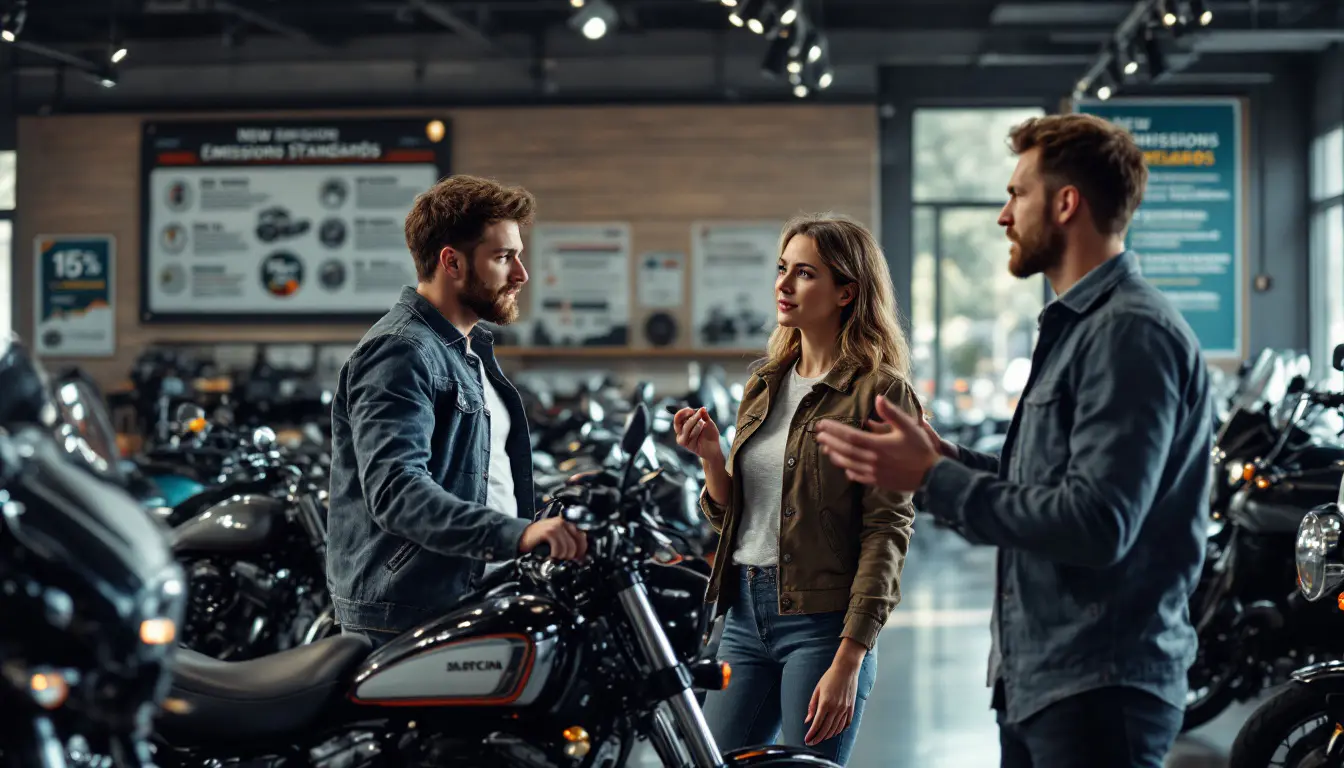
With the introduction of new regulations regarding technical inspections for motorcycles, many are questioning the repercussions of these changes on their purchasing plans. Emma, a young rider of 29 years, shares: “I had planned to buy my first motorcycle this year, but with the mandatory technical inspection, I feel a bit lost. I’m not sure what this means for used motorcycles.” Her apprehension is shared by many first-time buyers.
Meanwhile, Marc, a motorcycle enthusiast with over ten years of experience, observes that the new noise standards introduced by the CEE-ONU R41.05 regulation will also affect the choice of available models: “Manufacturers will have to adapt their motorcycles to meet the standards, which means that some iconic machines may disappear from the market.” This raises concerns about the future of certain classic motorcycle models.
Anne, a mother considering purchasing a motorcycle for her daily commute, emphasizes the importance of changes for safety: “The new regulations aim to improve safety on the roads, and that reassures me as a mother. I want to buy a motorcycle that meets these standards to reduce risks for my family.” Safety concerns dominate the reflections of many buyers.
Finally, Julien, a driving school instructor, shares his perspective on the economic implications of these new rules: “I fear that motorcycle prices will increase due to the new technical inspection requirements and noise reduction technologies. Fewer choices on the market could also mean that quality models will become scarcer.” This concern reflects a broader issue faced by consumers in this context of reinforced regulation.
The new regulations concerning motorcycles introduced in 2023 and set for 2025 have a significant impact on the purchase of two-wheelers. With the mandatory technical inspection, stricter pollution and noise standards, motorcyclists must now be more attentive to the technical specifications when making their choice. This article examines the main implications of these legislative changes on the motorcycle market.
The new technical standards
Starting in January 2025, the European Union will impose the CEE-ONU R41.05 regulation, which introduces sound tests and more rigorous performance requirements for motorcycles. This means that manufacturers will need to review the design of their vehicles to comply with these standards without compromising performance. Buyers will thus need to ensure that their chosen model meets these requirements. This may also influence brand choice, with some being more advanced than others in technological innovation.
Impact of the mandatory technical inspection
Since late 2022, motorcycles are required to undergo a technical inspection every two years. This obligation aims to reduce incidents due to mechanical issues and to improve road safety. Future owners must be aware of this obligation and seek to ensure their motorcycle’s compliance at the time of purchase. This adds an extra layer of anxiety for new buyers, potentially discouraged by the costs associated with regulated maintenance.
The ecological penalty and its consequences
The transition to less polluting vehicles is also reinforced by the ecological penalty, an additional tax applied to the purchase of polluting motorcycles. While this measure may deter purchases based solely on aesthetic or performance criteria, it encourages consumers to invest in more ecological models. This also opens up a market for electric and hybrid engines, which are becoming increasingly attractive to environmentally conscious buyers.
Strengthened safety equipment
The new regulations also include increased requirements for motorcycle safety equipment. Helmets, gloves, and reinforced clothing must meet precise safety standards. For buyers, this means that the total cost of ownership of their motorcycle will also include budgets for these items. Motorcyclists must therefore be attentive not only to the purchase price of the motorcycle but also to the investment planned for their safety.
Market trends
This regulatory context also affects market trends. Manufacturers must reorient their production to comply with the new standards, and high-powered sports models may become less popular compared to more energy-efficient and quieter models. Buyers are therefore turning to two-wheelers that combine compliance with regulations and riding pleasure, redefining their view of motorcycle performance.
The new regulations on motorcycles significantly alter the purchasing landscape in this segment. Between the mandatory technical inspection, environmental requirements, and the effects of the ecological penalty, it is crucial for future buyers to inform themselves and consider these elements at the time of their choice. Adopting an informed approach can not only ensure better safety but also maximize long-term riding pleasure.

The recent regulatory reforms concerning motorcycle purchases in France mark a significant step towards more responsible mobility. With the introduction of mandatory technical inspections, consumers must now take into account the technical state of their future vehicle before finalizing their purchase. This promotes increased awareness regarding the safety conditions and maintenance of motorcycles, thereby influencing buyer decisions.
Furthermore, the establishment of stricter noise standards, such as the CEE-ONU R41.05 standard, encourages manufacturers to develop quieter and more environmentally friendly models. Potential users will thus have a wider range of motorcycles to consider, but with the assurance that these products meet current ecological requirements. This signals a transition towards sustainable mobility that could attract a new audience, concerned with their environmental footprint.
However, these evolutions may also lead to an increase in purchasing costs. Suppliers will be forced to invest in their technologies to comply with new standards, a cost that could be passed on to consumers. Thus, buyers may need to reevaluate their budget or opt for used models that are not subject to these recent requirements.
Finally, these regulatory changes impact the training and education of new motorcyclists. With increased standards regarding safety and emissions, it is crucial that future riders are well-informed and trained. Driving schools and training centers will need to adapt and offer programs that comply with these reforms, shaping a new generation of riders better prepared for the challenges of the road.
- What are the main new regulations regarding motorcycle purchases?
- The new regulations mainly concern the mandatory technical inspection and stricter noise standards starting in 2025.
- How does the technical inspection affect motorcycle purchases?
- The technical inspection must be carried out every two years for motorcycles, which can influence the purchasing choice in favor of models that are easily compliant with these requirements.
- What is the noise standard introduced by the European Union?
- The CEE-ONU R41.05 standard imposes stricter sound tests for new motorcycles, prompting manufacturers to adapt their models to comply with these rules.
- Do the new safety measures influence motorcycle prices?
- Yes, the addition of safety devices and the need to comply with new standards may result in an increase in prices for newly marketed motorcycles.
- What are the implications of these regulations for riders?
- Riders must prepare for an additional cost related to the technical inspection as well as the need to purchase motorcycles compliant with the new safety and noise standards.
- Do these new rules only target new motorcycles?
- No, these rules also apply to used motorcycles, which may impact the used two-wheel market.
- How do these changes affect the environment?
- The new regulations aim to reduce pollutant emissions and limit noise, contributing to a healthier environment.


