
IN BRIEF
|
For mechanical enthusiasts, repairing their motorcycle at home becomes a true pleasure. Having the right tools and being well-equipped is essential to ensure effective and safe repairs. Whether you are a curious novice or an experienced mechanic, knowing the essential equipment for maintaining your two-wheeler is fundamental. In this realm where every little detail counts, good preparation will allow you to extend the lifespan of your motorcycle while providing an optimal riding experience.
Repairing your motorcycle by yourself may seem daunting, but with the right equipment, it becomes a manageable and rewarding task. Whether you’re a passionate motorcyclist or simply an owner looking to care for their two-wheeler, it is essential to equip yourself properly. In this article, we will explore the indispensable items to have at home to ensure effective repair and maintenance of your motorcycle, examining their advantages and disadvantages.
Advantages
Having the right tools for repairing your motorcycle offers several advantages. First of all, you can make significant savings. By performing your own repairs, you avoid labor costs at a workshop. Furthermore, you control the quality of your work by using replacement parts that you have chosen yourself.
Another strong point is the development of your mechanical skills. By familiarizing yourself with the various components of your motorcycle and using the appropriate tools, you enhance your knowledge and confidence in your abilities. Moreover, this allows you to better understand how your vehicle works, which can be useful in unexpected situations on the road.
Finally, maintaining your motorcycle at home gives you the flexibility to carry out repairs whenever you want, without the constraints of a professional garage’s schedule.
Disadvantages
However, repairing your motorcycle at home is not without its disadvantages. The first hurdle lies in the cost of purchasing the necessary tools. To ensure successful repairs, you need to invest in a varied range of instruments, which can weigh on your initial budget.
Next, it must be acknowledged that it requires time and patience. While learning can be rewarding, some repairs can turn out to be lengthy and complex. Sometimes, it may be wiser to entrust your motorcycle to a professional, especially for tasks involving advanced technical aspects.
Finally, there is an increased risk of error when intervening yourself. By using inappropriate tools or performing non-compliant repairs, you risk damaging your motorcycle or compromising your safety. Therefore, it is crucial to gather information before embarking on mechanical tasks.
Repairing and maintaining a motorcycle may seem daunting, but with the right equipment, it becomes a manageable task for all enthusiasts. In this guide, we will explore the indispensable tools to have in your workshop to ensure effective and safe repairs for your motorcycle. Whether you’re a novice or an expert, these tools will help keep your two-wheeler in perfect working order.
Safety Tools
Before starting work on your motorcycle, it is crucial to ensure your safety. Wearing work gloves, safety glasses, and sometimes a helmet is essential to prevent injuries during repairs. Having these protective equipment at hand should be a priority before diving into your mechanical work.
Basic Tools
For good maintenance, some tools are necessary. An adjustable wrench, a flat and Phillips screwdriver, and a drill are basic essentials. These tools allow you to perform simple repairs, such as changing a spark plug or adjusting the brakes. Investing in a well-equipped toolbox is also a good idea.
Specialized Tools for Mechanics
Depending on your motorcycle model, certain specialized tools may be indispensable. A ratchet, sockets, and a battery starter are excellent examples of equipment to add to your collection. These tools will enable you to carry out more complex interventions and to make effective repairs.
Routine Maintenance
To maintain your motorcycle’s performance, knowing the regular maintenance tools is essential. A battery charger is crucial, especially if you do not use it regularly. A pressure gauge to check tire pressure and a microfiber cloth to clean surfaces are also accessories to consider.
Improving Your Workshop
If you want to optimize your workspace, here are some practical tips. Consider organizing your storage space to keep your tools within easy reach. A robust and well-lit workbench can make your repair sessions more enjoyable and productive.
Smart Investment
While investing in quality tools may cost more upfront, it will save you money in the long run. By buying the right equipment, you can perform 80% of your repairs yourself, thereby avoiding workshop fees. Don’t hesitate to take advantage of promotions to build your tool arsenal.
Having the right tools at your disposal is essential to ensure quality maintenance of your motorcycle. With this list of essential equipment, you will be ready to face almost any common repairs.
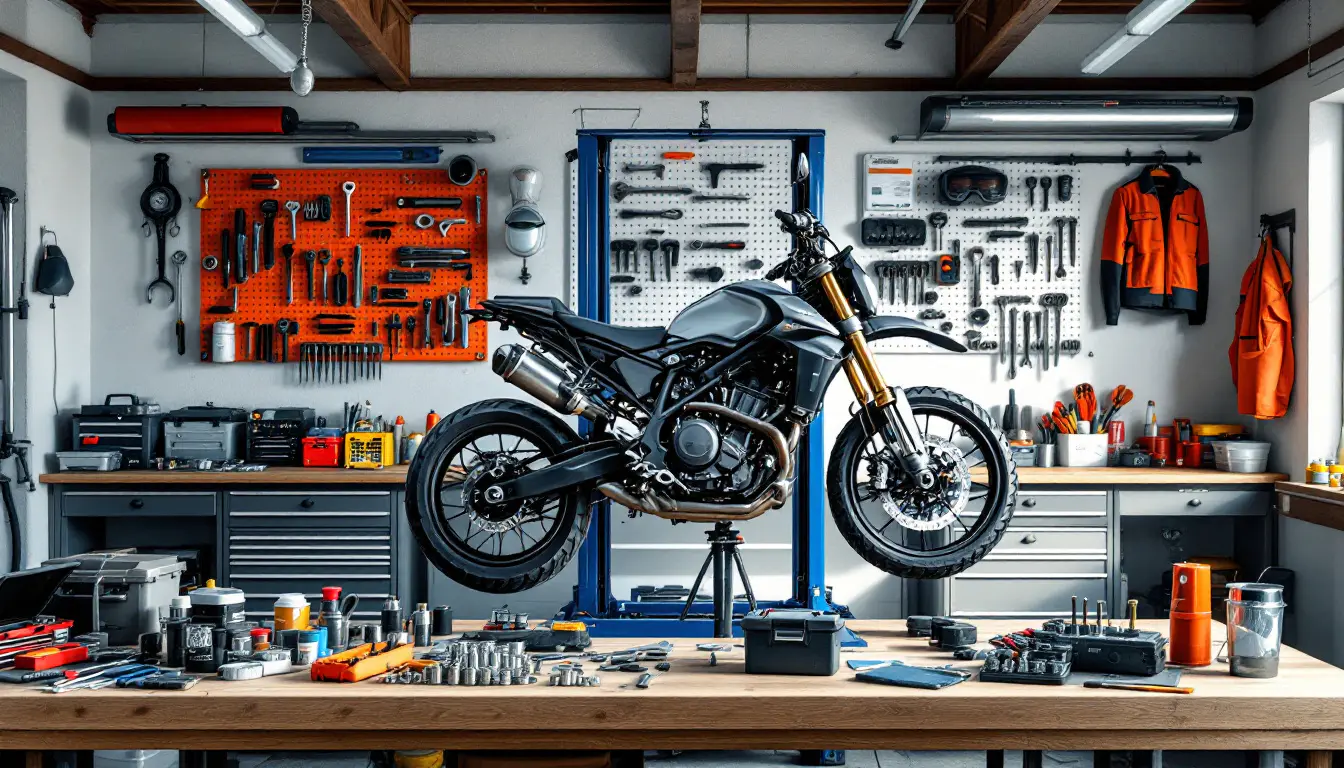
Repairing your motorcycle by yourself can seem daunting, but with the right tools and equipment, it becomes a rewarding activity. Whether you are a novice or already experienced in the field, it is crucial to know the essentials that will allow you to perform safe and effective maintenance and repairs. Here is an overview of the essential equipment to have in your workshop.
Safety Equipment
Before starting any repairs, it is vital to think about your safety. Work gloves, safety glasses, and sometimes even a helmet are essential elements to prevent injuries when maintaining your motorcycle. This equipment protects you from potential debris and sharp parts.
Basic Tools
To begin your work, a well-equipped toolbox is indispensable. Among the basic tools to have, there is a set of wrenches, a screwdriver, and a pliers. These will allow you to easily disassemble and reassemble different parts of your vehicle. It is advisable to invest in quality tools to ensure their longevity.
Specific Repair Tools
Depending on the repairs you plan, certain specific tools may be necessary. A battery charger is essential to avoid breakdowns due to a discharged battery, especially if you do not ride often. Additionally, tools like torque wrenches are useful for adhering to the torque specifications recommended by the manufacturer.
Tools for Routine Maintenance
Regular maintenance of your motorcycle is crucial for its long-term performance. An appropriate lubricant for the chain and a cleaning kit will help you keep your motorcycle in good shape. Be sure to have a pressure gauge to check tire pressure, which directly contributes to your safety on the road.
Optimize Your Workspace
Having a well-organized workspace greatly simplifies the repair process. Arrange your tools so that they are easily accessible and label compartments for optimal storage. Good organization will save you time and reduce stress during your work.
Consider Eco-Friendly Equipment
As part of responsible maintenance, do not forget to turn to eco-friendly equipment. Many cleaning products and lubricants are now available on the market. To learn more about these alternatives, feel free to check interesting online resources, such as those you will find here eco-friendly for motorcyclists.
| Equipment | Description |
| Work gloves | Protects your hands from cuts and dirt. |
| Safety glasses | Preserves your eyes from debris during repairs. |
| Helmet | Essential for interventions around the motorcycle. |
| Tool kit | Contains various tools necessary for repair. |
| Battery charger | Prevents breakdowns due to a dead battery. |
| Adjustable wrenches | For easily adjusting and loosening bolts. |
| Jacks and supports | Supports the motorcycle for easy access underneath the vehicle. |
| Maintenance manual | Essential guide for specific repairs. |
| Oil and lubricants | Essential for the proper functioning of moving parts. |
| Worklight | Illuminates dark areas for better visibility. |
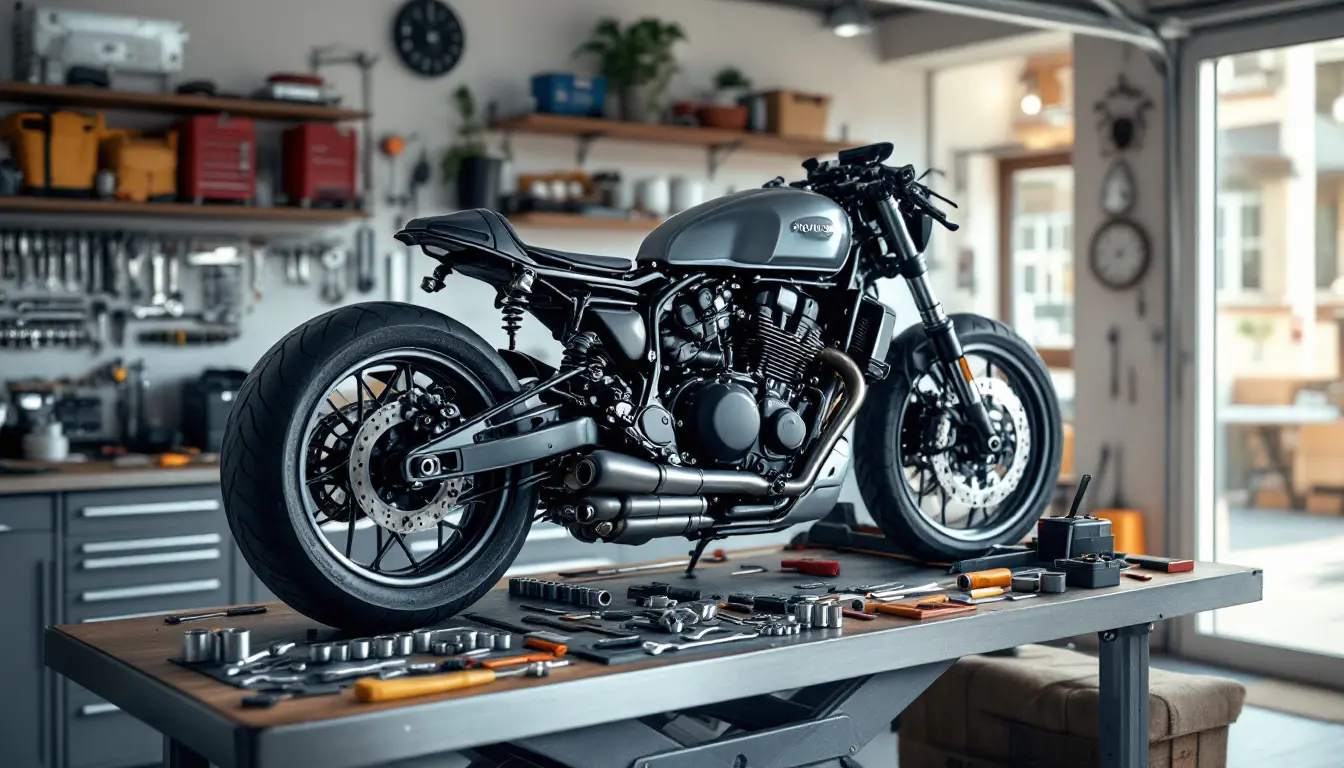
Testimonials on Essential Equipment for Repairing Your Motorcycle at Home
Maxime, 32 years old: “I have always been passionate about mechanics, but repairing my motorcycle scared me a bit at first. Thanks to a guide on essential tools, I was able to equip myself gradually. Today, I have everything I need: ratchet, adjustable wrenches, and even a battery charger. Every repair has become a true pleasure!”
Sandrine, 28 years old: “I never realized how easy it was to maintain my motorcycle myself. With work gloves and safety glasses, I feel more confident. Having suitable tools has allowed me to perform all the oil changes without any problem. I feel like a pro!”
Jean, 45 years old: “Since I invested in quality tools, I can do most of the repairs on my motorcycle. A good workbench and equipment like a torque wrench have transformed my experience. I can honestly say that I’m not far from mastering mechanics.”
Léa, 36 years old: “When I decided to start maintaining my motorcycle, I followed the recommendations on the essential equipment. Every time I look at my toolbox, I feel ready to face everything. The right tools make all the difference and make every intervention more effective.”
Marc, 40 years old: “I’ve always been a bit hesitant to repair my motorcycle, but since I understood the importance of basic tools, I feel more at ease. Having a good kit at my disposal has simplified many repairs. Now, I recommend that all motorcyclists give it a try!”
Maintaining and repairing your motorcycle yourself is an exciting project for mechanics lovers. However, it is essential to equip yourself with the appropriate tools to carry out these interventions safely and effectively. This article presents the essential equipment for repairing your motorcycle at home, with practical advice on each indispensable tool for successful maintenance.
The Essential Safety Tools
Before diving into repair, it is crucial to ensure your safety. The first items to consider are work gloves, which protect your hands from cuts and burns. Opt for gloves suitable for mechanics, providing good grip.
Safety glasses are also essential to protect your eyes from debris and splashes. If you work with power tools, consider wearing a helmet for added protection.
The Basic Tools for Repair
It is fundamental to have a complete toolbox containing the following items:
- Adjustable wrenches: Essential for the various nuts and bolts on your motorcycle.
- Socket sets: They allow for quick and efficient disassembly of parts.
- Screwdrivers: Have a mix of flat and Phillips screwdrivers for small screws.
Other tools like multigrip pliers or Allen keys can also be very useful depending on the interventions you plan.
Diagnostic Equipment
To maintain your motorcycle, good diagnostics are essential. Invest in a multimeter to check electrical circuits and a pressure gauge to monitor tire pressure. These tools will allow you to quickly diagnose problems and take appropriate action.
Tools for Routine Maintenance
To ensure the proper functioning of your motorcycle, a few specific tools are necessary:
- Batter charger: Essential to keep the battery in good condition, especially if you don’t ride regularly.
- Oil change: A container to collect used oil and an oil filter for a clean and efficient change.
- Chain adjustment tools: A chain wrench may be necessary to properly tension the drive chain.
Specific Equipment Based on Your Needs
Depending on the type of interventions you plan, other tools may be useful:
- Motorcycle lift: To facilitate access to lower parts.
- Compressed air gun: Ideal for quickly cleaning parts.
- Engine support: Keeps the engine in place during repairs.
Being well-equipped to repair your motorcycle at home is a guarantee of success and safety. Every tool is important, and selecting them well based on your needs will allow you to maintain your vehicle under the best conditions.
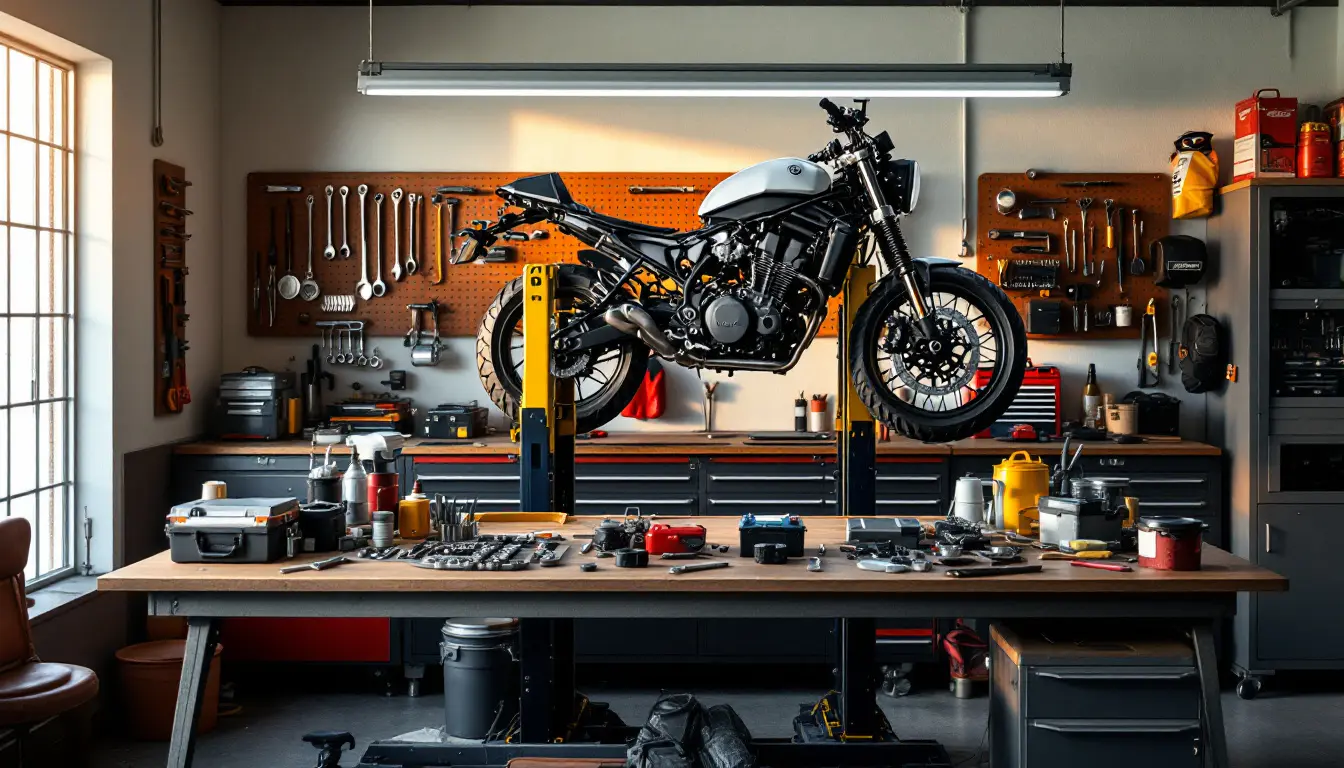
When you want to carry out repairs on your motorcycle yourself, it is crucial to equip yourself with adequate tools. Having the right tools not only allows you to perform the work efficiently but also ensures your own safety throughout the process. Among the basic equipment, work gloves and safety glasses are essential to protect against splashes and debris that may be thrown during handling.
Another essential element is the battery charger, particularly useful to avoid breakdowns due to a discharged battery, especially if your motorcycle is left inactive for a period. A jack or motorcycle stand is also recommended, as it facilitates access to various parts of the vehicle while keeping it stable and secure during repairs.
It is also advisable to invest in a mechanical toolkit including adjustable wrenches, screwdrivers, and a set of Allen keys. These versatile tools are essential for disassembling and reassembling the various parts of the motorcycle. Additionally, having common replacement parts on hand will allow you to make quick repairs without immediately having to search for necessary parts.
Finally, do not forget to have a maintenance manual specific to your motorcycle model. This document will guide you at every step of the repairs while helping you meet safety standards and maintain the performance of your two-wheeler. In short, being well-equipped is the key to effectively maintaining your motorcycle and ensuring a pleasant and safe riding experience.
FAQ on Essential Equipment for Repairing Your Motorcycle at Home
What are the essential tools for repairing my motorcycle? It is essential to have tools such as Allen keys, a socket set, a ratchet, a screwdriver, and of course, work gloves and safety glasses to ensure optimal protection during your repairs.
Why is it important to use gloves and safety glasses? These safety equipment help prevent injuries such as cuts and splashes, ensuring a safer repair experience.
What cleaning equipment do I need to maintain my motorcycle? A pressure washer, specific cleaning products for motorcycles, and soft cloths are recommended to keep your vehicle in good condition.
Is it necessary to have a battery charger? Yes, a battery charger is a must, especially if you use your motorcycle less frequently. It prevents breakdowns due to a dead battery.
What other tools should I consider adding to my collection? Depending on your needs, tools such as a jack, a torque wrench, or a multimeter can be very useful for more advanced repairs.
How should I choose the right quality of tools for my motorcycle? Choose recognized brands in the field of mechanics and check recommendations from other enthusiasts before making your purchases.
Are there tips for optimizing my workspace when repairing my motorcycle? Organize your tools functionally, use a solid workbench, and ensure good lighting to work effectively and safely.
Can you perform motorcycle repairs without being an expert in mechanics? Yes, many practical guides and online tutorials allow novices to learn how to perform basic repairs and gradually acquire skills in mechanics.


