
IN SHORT
|
Before leaving for a long trip on a motorcycle, it is essential to carry out a number of checks to ensure your safety and that of your machine. A thorough check of your motorcycle is crucial to avoid inconveniences on the road. From tire pressure to brake worn, not to mention lighting and transmission, each element requires special attention. With rigorous preparation, you will be able to fully enjoy your two-wheeled adventure.
Before embarking on roads that stretch as far as the eye can see, it is essential to perform meticulous checks of your motorcycle. These checks not only guarantee your safety but also ensure a pleasant and worry-free driving experience. In this article, we will explore the advantages and disadvantages of these essential checks.
Advantages
Performing checks before a long motorcycle trip has many advantages. Firstly, it significantly increases the safety of riders. By checking crucial elements such as brakes, tires, and lights, you reduce the risk of accidents due to technical failures.
Furthermore, by carrying out preventive maintenance, you extend the lifespan of your machine. Regular checks help identify and solve mechanical problems before they become serious. This can save you high costs of unforeseen repairs.
Moreover, a complete check before departure can also contribute to a better performance of your motorcycle. Correct chain tension or ideal tire pressure can enhance handling and comfort while riding.
Disadvantages
Disadvantages. The first one is the time it may take before leaving. For some, the verification process can seem tedious, especially if several elements need to be checked meticulously.
Moreover, there may be associated costs, especially if you need to consult a specialist to perform complex technical checks. This can discourage some riders who would prefer to hit the road directly.
In summary, although checks may seem an obstacle to the spontaneity of travel, they are a crucial step for any motorcycle adventure. The benefits in terms of safety and peace of mind generally outweigh the occasional inconveniences of these preparations.
Preparing for a long motorcycle trip requires essential checks to ensure your safety and that of your machine. Before hitting the road, it is crucial to ensure that your motorcycle is in optimal condition. Here is a comprehensive guide to the checks to perform for a worry-free trip.
Tire Check
Tires are your only contact with the road, so it is essential to check their condition. Start by visually inspecting each tire for signs of wear or damage. Also check the tire pressure, as under-inflated tires can cause unstable handling. Don’t forget to check the wear indicators to ensure they are still in good condition before leaving.
Brakes and Transmission
Safety depends on a braking system in perfect condition. Check the thickness of the brake pads and the condition of the discs. If you are unsure, it is advisable to have a thorough check by a professional. As for the transmission, ensure it is properly lubricated and that the chain tension is correct.
Lighting and Signaling
Safe transportation also involves adequate lighting. Ensure all lights are working properly, including headlights, turn signals, and taillights. This not only guarantees your visibility but also that of other road users. Proper signaling is crucial to avoid accidents and obey traffic rules.
Documents and Equipment
Before leaving, check that all your documents are in order. This includes your driver’s license, insurance, and registration certificate. Additionally, make sure to have all the mandatory equipment to ride safely, such as your helmet and appropriate clothing.
Fluid Levels Check
Finally, do not forget to check the fluid levels of your motorcycle, including engine oil, brake fluid, and coolant. Good preventive maintenance can prevent many problems during the trip. If any levels are too low, take your time to replenish or replace the necessary fluids.
Pilot Preparation
Before hitting the road, think about preparing yourself physically. Ensure that you are fit and well rested. A long trip can be exhausting, so stay hydrated and plan for breaks to stretch your legs. This plays a fundamental role in your health and your ability to react when needed during the journey.

Preparing your motorcycle for a long trip is essential to ensure safe riding. Before hitting the road, it’s crucial to perform a basic set of checks that will guarantee your comfort and safety. This article provides you with practical advice on the checks not to overlook before getting on your two-wheeler.
General Condition of the Motorcycle
Before leaving, start with a visual inspection of all parts of your motorcycle. Check the frame, fairing, and mirrors for any potential damage. Also, ensure that no object is stuck in the wheels or chain.
The Tires
The tires are one of the most important elements to check. Make sure their pressure is adequate and check their overall condition, including wear and the presence of wear indicators. Correct pressure improves grip and responsiveness of your motorcycle on the road.
Braking System
The braking system must be in perfect condition. Check the wear of the brake pads and ensure they are functioning well. Checking the brake fluid and cables is also advisable to guarantee an effective reaction when stopping your motorcycle.
Transmission and Lubrication
Examine the transmission of your motorcycle to ensure that the chain tension is correct. Don’t forget to lubricate the chain properly, which prolongs its lifespan and improves riding comfort.
Lighting and Signals
Check your motorcycle’s lighting, especially the headlights, turn signals, and taillights. Ensure they are all functioning properly to guarantee maximum visibility, especially at night or in rainy weather.
Documents and Rider Equipment
Before leaving, gather and check your documents: driver’s license, insurance, and registration certificate. Don’t forget to carry the necessary safety equipment, such as an approved helmet, gloves, and appropriate clothing for the trip.
Personal Preparation and Itinerary
Finally, prepare yourself as a rider. Make sure you are in good physical shape, as a long trip can be exhausting. Also plan your itinerary, taking into account breaks to stretch your legs and hydrate regularly.
These checks and preparations are crucial for your safety and that of others on the road. For more details, consult helpful resources on technical checks before hitting the road: Technical checks before departure and Motorcycle trip checklist.
Comparison of Checks Before a Long Motorcycle Trip
| Checks | Details |
| Tires | Check pressure and wear, ensuring wear indicators are in good condition. |
| Brakes | Check the condition of the pads and the level of brake fluid. |
| Transmission | Ensure the tension is properly adjusted and that lubrication is sufficient. |
| Lighting | Test front, rear, and turn signal lights to ensure they are functioning. |
| Documents | Check you have all necessary papers: license, registration, and insurance. |
| Battery | Check the condition of the battery and ensure it is sufficiently charged. |
| Load | Distribute your load evenly in the luggage to avoid unbalancing the motorcycle. |
| General Condition | Conduct a comprehensive visual check to detect any apparent problems. |

Testimonials on Checks Before a Long Motorcycle Trip
Before leaving for a long motorcycle trip, I always take the time to check the condition of my tires. Once, in anticipation of a road trip through the Alps, I noticed my tires had wear indicators. I had to replace them, which allowed me to leave with peace of mind. Safety comes first!
During my last adventure, I paid attention to the tire pressure and the worn brake pads. I took the time to measure the thickness of the pads and was pleasantly surprised to see they were in good condition. This saved me a lot of trouble when descending mountain passes.
Another essential element is the condition of the transmission. Before every departure, I check the tension and ensure it is well lubricated. This precaution has indeed kept me from mechanical problems during my escapades through remote roads.
Finally, I pay particular attention to the condition of the lights and ensuring that all necessary documents are up to date. Once, I forgot to check a faulty turn signal and had to make an unexpected stop to replace it. Vigilance is key to avoid compromising safety on the road.
By carefully preparing my motorcycles before departure, I optimize my riding experience while ensuring my safety. These technical checks make all the difference between an enjoyable trip and unpleasant inconveniences along the way.
Before leaving for a long motorcycle trip, it is essential to carry out certain technical checks to ensure your safety and the proper functioning of your vehicle. This article will guide you through the various points to check before hitting the road, including the condition of the tires, mechanics, and safety equipment.
Condition of Tires
Tires are one of the most critical elements of your motorcycle. Before any departure, it is imperative to check their condition. Ensure that they do not show signs of excessive wear and that the tire pressure is according to the manufacturer’s recommendations. A quick visual check can help to detect cracks or deformities. Feel free to use a gauge to assess the pressure accurately.
Balance and Alignment
Also check that your tires have a good balance, as it affects the motorcycle’s handling. An imbalance can cause unwanted vibrations, especially over long distances. If necessary, consult a professional for this check.
Braking System
Safety on the road largely depends on the condition of your braking system. Before leaving, inspect the brake pads to check their thickness and ensure they are in good condition. It is also essential to test the brake fluid level and examine the discs for any anomalies.
Lighting
Another point not to be overlooked is the lighting system. Check the functioning of the front, rear, and turn signal lights. Good visibility on the road is crucial, especially during night rides or in bad weather.
Fluids and Mechanics
Before a long trip, conduct a check of your motorcycle’s fluids. Check the level of engine oil, coolant, and transmission fluid. Low levels can significantly affect the performance of your vehicle.
Transmission and Chain
Don’t forget to check your transmission chain. Ensure it is properly tensioned and lubricated to avoid issues during the trip. A poorly maintained chain can lead to costly repairs and risks on the road.
Safety Equipment
Also check your safety equipment before leaving. Make sure your helmet is in good condition, that you wear appropriate clothing, and that your gloves provide enough protection. Also consider including a reflective vest in your gear as it can enhance your visibility on the road.
Documents and Itinerary
Finally, do not leave without checking that all your driving documents, such as your driver’s license and insurance, are in order and available. Also prepare your itinerary, keeping in mind the expected weather conditions and possible resting places.
Managing Driving Time
During your journey, remember to take regular breaks. This will allow you to stretch your legs, hydrate, and assess your state of fatigue. Taking the time to rest your body is essential to maintain good concentration.
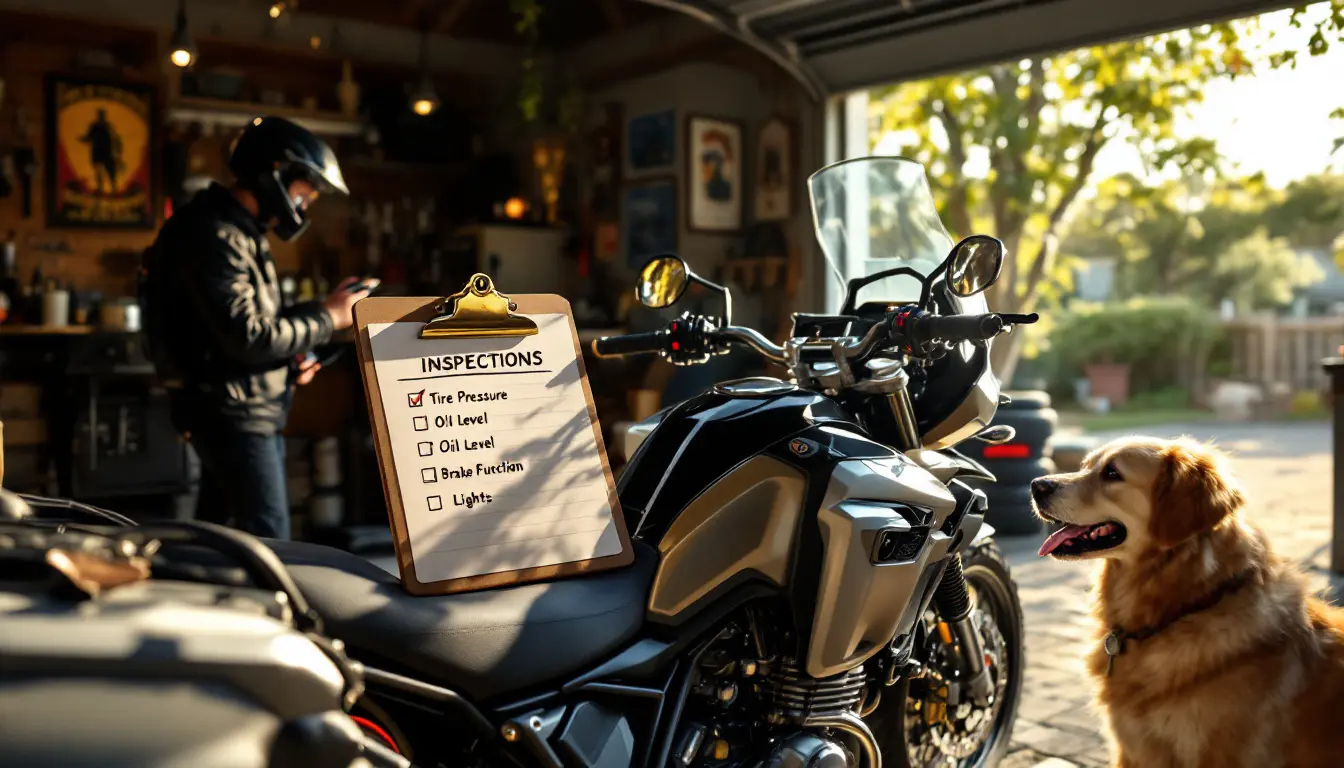
The Essential Checks Before a Long Motorcycle Trip
Before embarking on a long motorcycle trip, it is essential to perform certain checks to ensure not only the safety of the rider but also that of the machine. First, it is necessary to conduct a global visual inspection of the motorcycle. This includes a thorough examination of the tires, checking their pressure and wear condition. Visible wear indicators may indicate that it is time to consider a change of tires. It is important to ensure that the tires are in good condition to guarantee optimal grip on the road.
Next, it is essential to check the condition of the braking system. The brake pads, for example, must be in good condition; their thickness must be sufficient to guarantee effective braking. This may require more technical control if one cannot evaluate wear visually.
Another aspect to consider is the transmission. Ensure that the tension and lubrication of the chain are adequate before hitting the road. A poorly maintained transmission can lead to problems during the trip, which could result in perilous situations.
Finally, one should not neglect checking the lights and other signaling devices. A defective lighting system can hinder visibility and compromise safety, especially at night or in bad weather. Ensuring that all necessary documents are in order is also crucial to prevent complications during stops.
In summary, systematically performing these checks before taking to the road allows for a serene journey and the full enjoyment of the motorcycle trip.
- What is the first check to perform?
- Before leaving, it is essential to check the overall condition of your motorcycle, specifically the tires, brakes, and transmission.
- How to check the condition of the tires?
- Visually inspect your tires for signs of wear and ensure that the pressure meets the recommendations.
- Why is it important to check the brakes?
- The brakes must be in good condition to ensure your safety. Check the wear of the pads and the level of brake fluid.
- What should I do about the transmission?
- Ensure that the transmission is properly adjusted and sufficiently lubricated for optimal performance.
- What additional checks do you recommend?
- Consider checking the front and rear lights as well as the turn signals to ensure good visibility on the road.
- How should I prepare my luggage for a long trip?
- Be sure to distribute the weight of your luggage properly to avoid unbalancing your motorcycle and ensure they are securely fastened.
- Should I prepare an itinerary before I leave?
- Yes, planning your itinerary will help you avoid surprises and ensure a pleasant and safe ride.
- What should I do if I feel tired during the trip?
- It is crucial to take regular breaks to stretch your legs, hydrate, and assess your fatigue.


