
IN BRIEF
|
Transporting your motorcycle safely is essential, whether for a temporary move or a longer trip. Adopting the best practices not only ensures the protection of your machine but also that of other road users. Whether you prefer to use a trailer, a truck, or any other means, there are some indispensable tips to keep in mind to ensure your two-wheeler is properly secured and safe. Learn how to properly prepare your motorcycle for transport to avoid any incidents on the road.
Transporting your motorcycle may seem like a delicate task, but by following the best practices, you can ensure its safety and integrity. Whether moving, going to an event, or just temporarily storing it, there are several effective methods to perform this operation. This article explores the advantages and disadvantages of different motorcycle transport practices.
Advantages
Increased safety
When you transport your motorcycle properly, you minimize the risk of damage. Using safety straps and suitable supports helps keep your two-wheeler in place and avoids any movement during transit.
Ease of transport
Choosing a trailer or a van specifically designed for transporting motorcycles simplifies the process. These vehicles are often equipped with rails and anchors, making loading and unloading your motorcycle much easier. Additionally, they offer a load capacity suited to the dimensions of your motorcycle.
Versatility
The transportation methods vary and adapt to your needs. Whether you choose to rent a van for a day or use a trailer for a longer journey, flexibility allows you to meet various needs without too much difficulty.
Disadvantages
Additional costs
Transporting your motorcycle can incur additional costs. Renting suitable vehicles or trailers can quickly become expensive, especially if you don’t need them often. Additionally, insurance costs may increase depending on the chosen method.
Risk of damage
Poor handling when loading or securing can lead to damage to your motorcycle. It is crucial to ensure that the anchor points are reliable and that the motorcycle is well secured to avoid any incidents during transport.
Access and maneuverability limitations
Transporting a motorcycle in a vehicle may limit your access to certain places, especially if parking is tight. Moreover, a vehicle loaded incorrectly can become difficult to maneuver on the road, increasing the risk of accidents.
To deepen your knowledge on this subject, be sure to check supplementary resources, such as tips from MAXXESS FRANCE or practical guides available on Caradisiac. These references will help you better prepare before transporting your precious motorcycle.
Transporting your motorcycle may seem complex, but with the right tips, it can become a simple and safe task. Whether you opt for a trailer, a utility vehicle, or a truck, it’s crucial to follow certain practices to ensure the protection of your two-wheeler during transport.
Choosing the right means of transport
The choice of transport means is crucial. A truck is a comfortable option that can accommodate your motorcycle without any issues, whether short or long. Rail trailers are also recommended, offering good stability for heavier models. Make sure that your trailer’s load capacity is suitable for the weight of your motorcycle.
Preparing your motorcycle
Before loading your motorcycle into the vehicle, check that it is in good condition. Remove all fragile accessories that could be damaged or cause injury. Also, make sure to check that the fuel level is adequate; avoid transporting a motorcycle that is too full to prevent leaks.
Loading techniques
To load your motorcycle safely, use a loading ramp if you choose a trailer. This will facilitate the passage of the motorcycle from the rear without the risk of falling. Once the motorcycle is in place, position it correctly, ensuring that it does not exceed the recommended dimensions (maximum 2.50 m in width and 1.55 m in length).
Securing and safety
Once the motorcycle is loaded, it is crucial to secure it properly. Use quality straps and attach them to the anchor rings present in the vehicle. Ensure that the motorcycle is stable by gently shaking it to check that it does not move. After a few kilometers of transport, do not forget to check the straps to make sure they are still tight.
Additional considerations
Finally, remember to follow regulations regarding motorcycle transport in your area. Each country or region may have specific rules regarding the transport of two-wheeled vehicles. For more information on transport safety, you can consult this site.
For more tips and practices to follow, feel free to consult resources such as this link, which provides a detailed guide on the subject. With these tips at your fingertips, transporting your motorcycle will become a breeze!
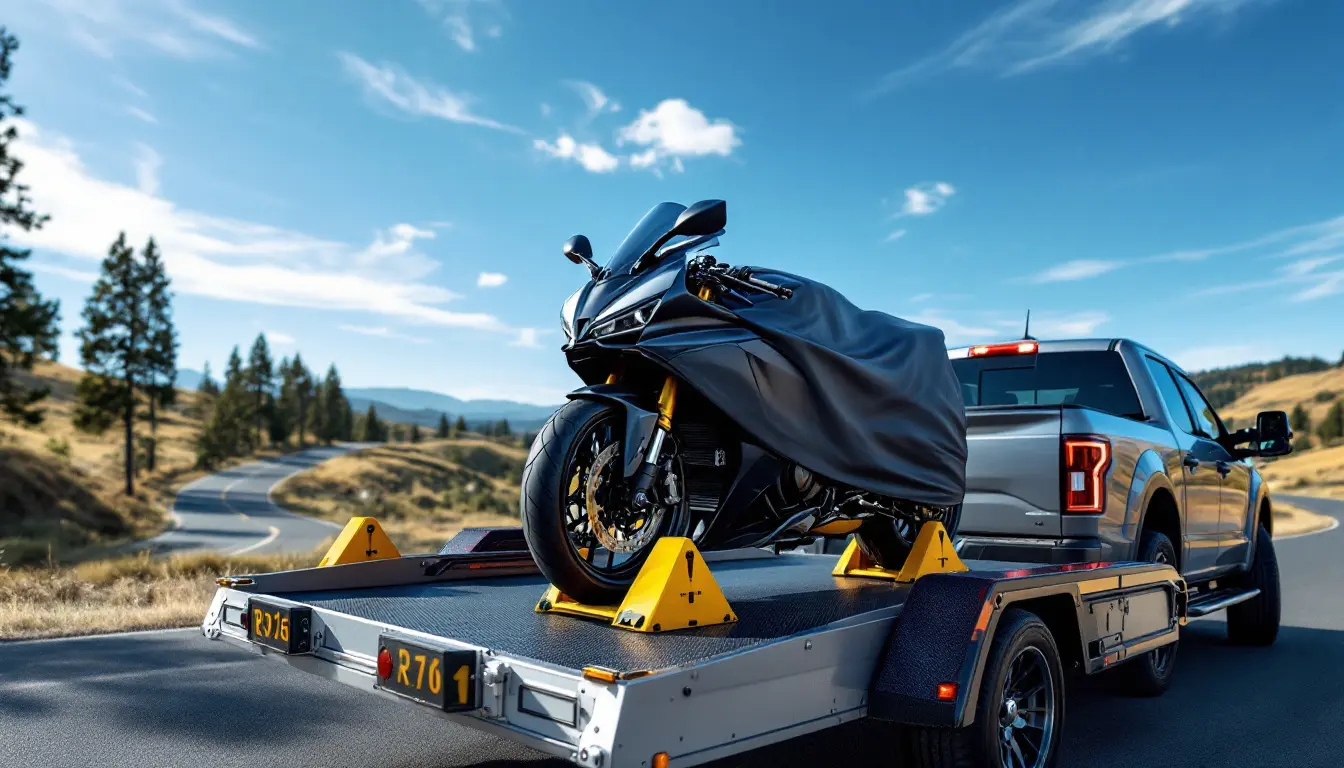
Transporting your motorcycle safely is essential to preserve its integrity and guarantee your peace of mind. Whether you choose a trailer, a truck, or even a utility vehicle, it is crucial to know the best practices for efficient transport. Discover here key tips that will help you transport your two-wheeler with confidence.
Choosing the right transport vehicle
The choice of the right vehicle will depend on the size and weight of your motorcycle. A truck or a utility vehicle is often ideal for larger motorcycles, while a rail trailer can be an excellent option for lighter motorcycles. Be sure to also attach the trailer properly to your vehicle to ensure optimal stability during transport.
Check dimensions and load capacity
Before loading your motorcycle, check that the dimensions of the trailer or vehicle do not exceed the authorized standards: no more than 2.50 m in width and 1.55 m in length. Similarly, make sure that the load capacity of your trailer is sufficient to support the weight of your motorcycle without risk of damage.
Use appropriate securing equipment
It is important to use quality straps and anchor rings to keep your motorcycle in place during transport. Place the motorcycle on a flat surface, tighten the diagonal straps to prevent any movement, and check that the motorcycle does not move before hitting the road. After a few kilometers, feel free to check the tightness of the straps to ensure their effectiveness.
Protecting your motorcycle during transport
To avoid any damage, consider using protective tarps to cover your motorcycle during transport. This will help protect it from the elements and dust. If possible, disassemble the most fragile parts, such as mirrors or fenders, to minimize the risk of accidents.
Plan your route
Before leaving, carefully plan your route. Avoid bumpy roads and prefer highways for safer and more comfortable transport. Also, remember to take regular breaks to check your load and adjust the straps if necessary.
Follow traffic rules
Finally, familiarize yourself with the specific traffic rules regarding motorcycle transport in your area. Some regulations may stipulate particular conditions regarding towing and transporting two-wheelers. For more information, refer to the specific traffic rules for motorcycles.
Best practices for transporting your motorcycle
| Practice | Details |
| Use a trailer | Practical for loading and transporting multiple motorcycles safely. |
| Secure fastening | Use strong straps to secure your motorcycle to prevent any movement. |
| Check dimensions | Ensure your motorcycle complies with the maximum transport dimensions. |
| Check ground clearance | Maintain a ground clearance of at least 0.1 m to avoid obstacles. |
| Condition of the vehicle | Assess the condition of the trailer or truck before departure. |
| Use anchor rings | Install anchor rings in the ground for better stability. |
| Safety on the road | After a few kilometers, check the straps for optimal retention. |
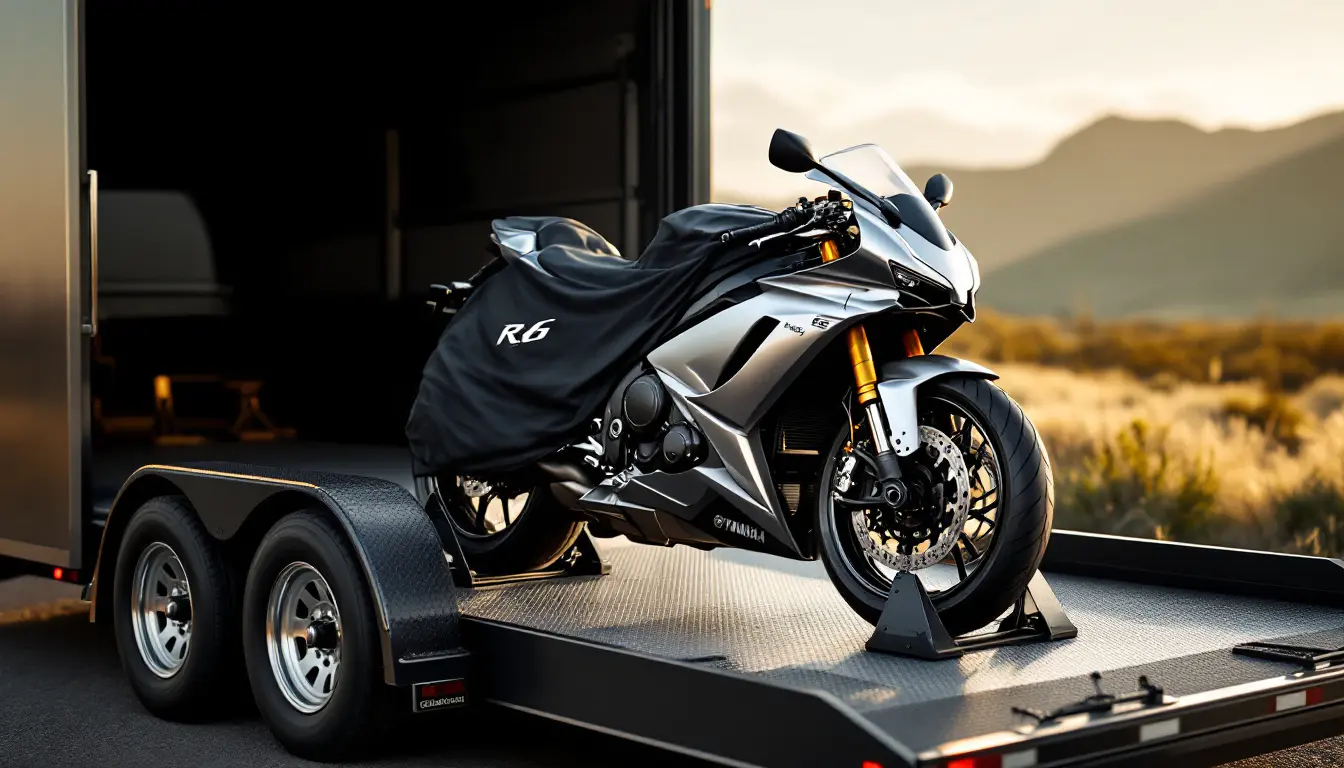
When it comes to transporting your motorcycle, it is crucial to do so securely to avoid any damage. Personally, I always opt for a solid trailer as it provides essential stability. During a recent move, I used a rail trailer that supported my motorcycle perfectly, reassuring me of its safety throughout the trip.
It is also essential to use quality straps to keep your motorcycle in place. Last year, I made the mistake of neglecting this point, and after a few kilometers, my motorcycle had shifted slightly. Since then, every time I transport my motorcycle, I check the straps multiple times to ensure there’s no slack.
Another tip I learned along the way is to ensure that the motorcycle does not exceed the recommended dimensions. To do this, I always measure my motorcycle before loading it. It is best that it does not exceed 2.50 m in width and 1.55 m in length to avoid any inconvenience on the road.
The choice of vehicle for transporting the motorcycle is also an aspect not to be overlooked. Whether you use a tall or low utility vehicle, it is important that the floor is equipped with anchor rings to properly secure the motorcycle. During a certain transport, I noticed that solid anchor rings can make all the difference in terms of stability.
Finally, before hitting the road, I make sure to give the motorcycle a little shake to check that it is well stabilized. These simple preventive gestures have allowed me to avoid potential issues during my many trips.
Transporting your motorcycle requires special attention to ensure its safety and avoid damage. Whether you are a motorcycle enthusiast or simply someone who needs to move their motorcycle, it is crucial to know the best practices to carry out this task. In this article, we will discuss different methods and tips for transporting your motorcycle with peace of mind.
Choosing the right means of transport
Using a trailer
One of the most popular solutions for transporting a motorcycle is to opt for a trailer. It must be sturdy enough to support the weight of your vehicle. Be sure to check the load capacity of your trailer before departure. A rail trailer is ideal for heavy models as it offers stable and secure support.
Transport by truck
The truck is another comfortable option for transporting motorcycles. Regardless of the size or configuration of your truck, ensure it is equipped with anchor rings on the floor to secure your motorcycle. This guarantees that it remains stationary during transit.
Preparing the motorcycle before transport
Checking dimensions
Before loading your motorcycle, it is advisable to check that it meets the dimensional standards. The width must not exceed 2.50 meters, while the length must be less than 1.55 meters. The ground clearance, on the other hand, must be at least 0.10 meter.
Protecting the motorcycle
Consider using protective tarps to shield your motorcycle from the elements and possible scratches. This is especially important if you need to leave the motorcycle exposed for a certain period of time.
Techniques for properly securing your motorcycle
Using straps
When loading your motorcycle, it is crucial to use good quality straps. These straps should be adjusted to keep the motorcycle immobile without damaging it. Do not hesitate to gently shake the motorcycle after securing it to ensure there is no movement.
Checks after departure
After a few kilometers on the road, stop to check the anchoring of your motorcycle. Ensure there is no play in the straps and that it remains stable throughout the journey.
Tip for passenger transport
If you need to transport a passenger on your motorcycle, it is important to follow certain good practices. Use a certified helmet and equip your passenger with appropriate safety gear. Also, ensure that the weight distribution on the motorcycle is balanced to maintain good maneuverability.
Partial conclusion
Transporting your motorcycle safely relies on proper planning and adherence to certain rules. By following these recommendations, you will reduce the risk of damage and guarantee a pleasant transport experience.
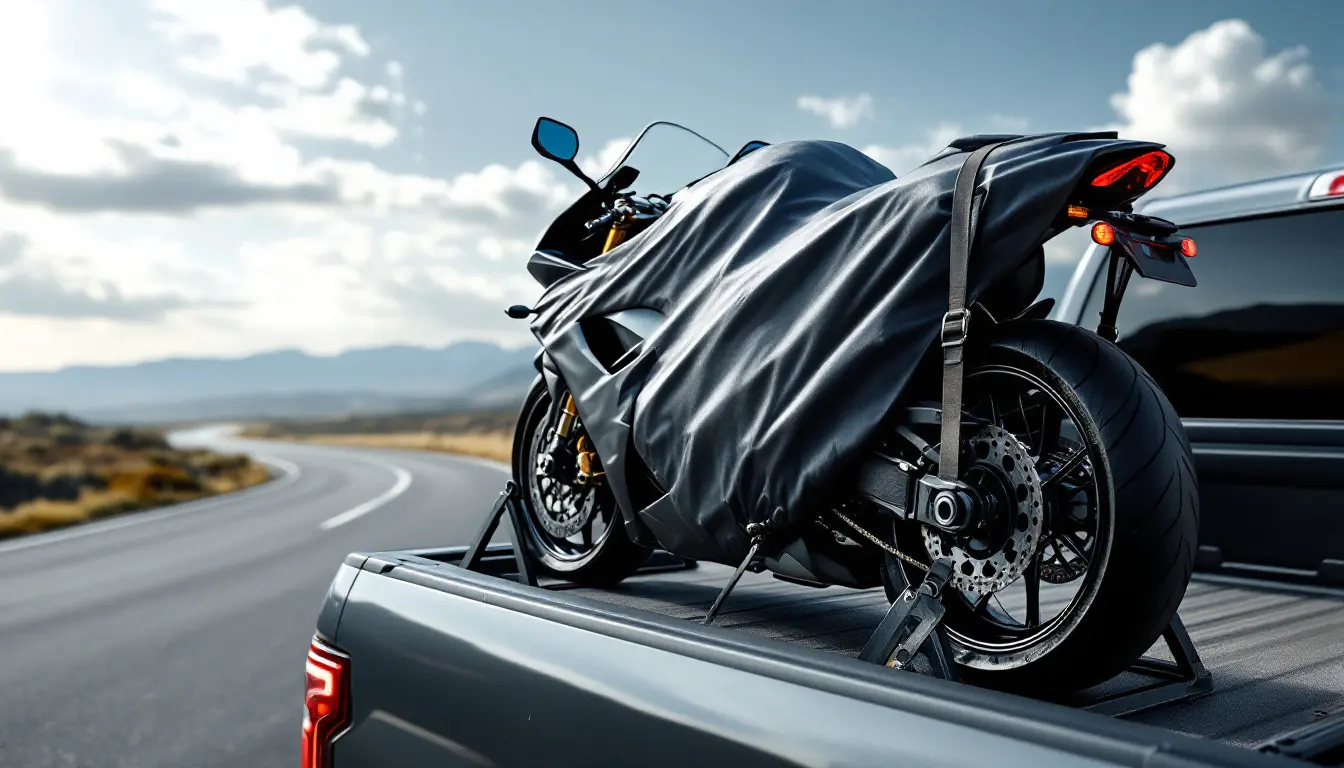
Transporting a motorcycle requires special attention to ensure its safety and integrity. One of the first steps is to choose the right mode of transport. Whether by using a trailer, a truck, or a utility vehicle, it is crucial to ensure that the chosen vehicle is suitable for the dimensions of your motorcycle, which must not exceed 2.50 meters in width and 1.55 meters in length.
Next, it is imperative to check that your trailer or truck is equipped with solid anchor rings for secure fastening. Using quality straps to secure your motorcycle is essential to prevent any movement during transport. After loading your vehicle, perform a stability check by gently shaking the motorcycle to confirm it is secure in its space. It is also advisable to make periodic stops to check the condition of the straps and ensure there is no slack.
Another highly appreciated option is using a rail trailer, especially for heavier models. This system provides robust support for extra protection during transport. Regarding the use of a utility vehicle, ensure it has the required load capacity to support your motorcycle’s weight.
Finally, do not forget to use protective tarps to cover your motorcycle, particularly in bad weather. This will not only help preserve your vehicle’s condition but also minimize the risk of external damage. By following these tips, you will ensure the safe transport of your motorcycle while maintaining its performance and aesthetics.
FAQ: Best practices for transporting your motorcycle
How to transport my motorcycle securely? Use robust straps to secure the motorcycle inside the vehicle or trailer, and ensure you have anchor rings for stability.
What is the best option for transporting my motorcycle? It depends on your needs, but trailers and trucks are often the best solutions. Rail trailers provide solid support for heavier motorcycles.
What dimensions should I comply with when transporting my motorcycle? Ensure that the motorcycle does not exceed 2.5 meters in width and 1.55 meters in length, with a minimum ground clearance of 0.1 meters.
Is it necessary to check the straps after a trip? Yes, it is recommended to check for slack in the straps after a few kilometers to ensure the safety of your motorcycle during transport.
Can I transport multiple motorcycles at the same time? Yes, but be sure to choose a trailer capable of supporting the total weight of all motorcycles. Also check dimensions to avoid any dangerous overloading.
How to load my motorcycle into a vehicle? Use a ramp to facilitate loading. This will allow you to pass the motorcycle from the rear with ease.
What mistakes should be avoided during transport? Avoid transporting the motorcycle without securing it properly, overloading the trailer or vehicle, and neglecting safety checks before departure.
What type of vehicle is best suited for transporting a motorcycle? A utility vehicle, whether high or low, is generally recommended. Ensure it has sufficient space and anchor rings.


