
IN BRIEF
|
Autumn poses a challenge for motorcyclists, with changing weather conditions and increased dangers on the road. To ride safely during this season, it’s essential to implement effective strategies. Whether dealing with humidity, low visibility, or slippery leaves, each element requires special attention. Here are some essential tips to ensure your safety and fully enjoy your rides during this colorful season.
Autumn is a season marked by changing weather conditions, making motorcycle riding more complex. It’s essential to adopt appropriate tips to ensure your safety on the road during this period. This article offers a comparison of the advantages and disadvantages of these essential practices to keep in mind for a smooth ride this autumn.
Advantages
Increased preparation
Adopting safety practices in autumn allows for more rigorous preparation before each outing. Checking the condition of your gear and motorcycle ensures not only your safety but also that of other road users.
Improved visibility
Wearing bright-colored clothing or reflective accessories increases your visibility on the road, especially as the days get shorter. Investing in good lighting and appropriate screens also helps better perceive obstacles, thus reducing accident risks.
Anticipation of weather conditions
Regularly checking the weather before heading out allows you to better anticipate climatic changes. Adjusting your routes based on rain or frost prevents many dangers.
Disadvantages
Unpredictable weather conditions
Autumn is synonymous with weather instability, sometimes making driving difficult. Rain, wind, or dropping temperatures can lead to loss of vehicle control if no precautions are taken.
Extended reaction time
The time needed for tires to reach their optimal effectiveness is longer in autumn. This means that motorcyclists must be particularly vigilant at the start of their trips, requiring additional adaptation time.
Leaves and debris on the road
Fallen leaves can make roads slippery, posing a true trap for motorcyclists. Natural debris increases the risk of skids, requiring ongoing attention while riding.
With the change of season, motorcyclists must double their vigilance on the roads. Autumn brings varying weather conditions and unexpected obstacles that can compromise drivers’ safety. This guide offers you the best tips for riding safely on a motorcycle during this accident-prone period.
The specific dangers of autumn
Autumn roads are often made dangerous by elements like dead leaves, rain, and low sun. These factors reduce visibility and grip, making driving more delicate. It is crucial to understand these dangers to adapt your behavior on the road.
Adjust your speed and safety distance
Speed reduction and increasing your safety distance are paramount. With changing road conditions, it’s advisable to take fewer risks by slowing down, especially on slippery surfaces. Distances should be increased to anticipate any unforeseen events.
Equip yourself properly
Wearing suitable clothing is necessary to avoid cold and humidity. A winter jacket, waterproof gloves, and appropriate footwear are essential to keep you warm and safe. Check the condition of your helmet and gear to ensure maximum protection.
Stay vigilant in the face of weather conditions
The weather can change rapidly in autumn. Learn to monitor forecasts before each outing to anticipate unfavorable conditions. This includes rain, frost, or falling temperatures. By adjusting your driving accordingly, you will reduce the risk of accidents.
Check your motorcycle
Before hitting the road, perform a check on your motorcycle or scooter. Ensure that the tires are in good condition and that all systems are functioning properly. This will allow you to ride safely despite changing conditions.
Be proactive about your visibility
With the decrease in daylight hours, it’s important to ensure that you are highly visible. Use reflective clothing and regularly check your motorcycle’s lighting. Accessories like armbands or light devices can also enhance your visibility on the road.
Share your experience and stay informed
Don’t hesitate to talk to other motorcyclists to share your experiences and tips. Staying informed about the best practices can enhance your safety on the road. Consider consulting resources and participating in road safety awareness events to improve your knowledge.

With the arrival of autumn, driving conditions on the roads change, making vigilance essential for motorcyclists. Between dead leaves, rain, and shorter days, this season calls for particular attention to surrounding dangers. Here are some essential tips to ensure your safety while enjoying motorcycle rides.
Adjust your speed
As temperatures drop and rain settles in, it is crucial to reduce your speed. In autumn, the road surface may be slippery, especially with the combination of wet leaves and water. Slowing down will allow you to maintain better grip and react more easily in case of unforeseen events.
Watch out for dead leaves
The layer of dead leaves on the road can reduce your motorcycle’s grip. Be particularly alert in turns and when braking to avoid slipping. It’s recommended to brake gradually and adjust your speed when you see leaves on the ground.
Plan for increased safety distances
Increasing your safety distance is crucial when conditions are less favorable. This gives you more time to react to potential obstacles and helps you avoid accidents. Make sure to maintain a greater distance from the vehicle in front of you, especially on wet roads.
Check your equipment
Before hitting the road, ensure that your gear is appropriate for the season. Check the condition of your helmet, gloves, jacket, and boots to effectively protect yourself from the cold and humidity. A good waterproof jacket and warming gloves are essential to stay dry and warm.
Pay attention to visibility
The days shorten quickly in autumn, which can catch you off guard during your outings. It is important to check your lights and wear clothing with bright colors or reflective elements. This will help you to be more visible to other road users, especially in low-light conditions.
Adapt your driving to weather conditions
In rainy conditions, modify your style of driving. Avoid sharp movements, anticipate your trajectories, and brake gently. If your motorcycle is equipped with ABS, take advantage of it, but remember that it does not replace cautious riding. Keep in mind that roads can be more slippery after the first rain, as water can mix oily residues that have accumulated.
Stay informed about weather developments
Before each outing, check the weather to anticipate any potential bad weather. This will allow you to choose the right time to leave and avoid riding in extreme conditions, such as heavy rain or freezing temperatures. Good planning is essential for your safety on the road.
Share your experiences
Feel free to share your tips and driving experiences in autumn. Exchanges can enrich everyone’s knowledge and promote a safer motorcycling community. Share your adventures in the comments and help raise awareness among other riders about the precautions to take this season.
| Tips | Details |
| Heightened vigilance | Stay alert to road hazards such as dead leaves and rain. |
| Adjust your speed | Slow down on wet or slippery roads to avoid accidents. |
| Regular checks | Check the condition of your motorcycle and gear before each outing. |
| Safety distance | Increase your braking distances, especially in the rain. |
| Improved visibility | Wear bright-colored clothing and check your headlights. |
| Manage frost | Monitor the weather and be cautious if frost is predicted. |
| Relaxed driving | Stay calm to avoid sudden movements that can lead to falls. |
| Consider darkness | Anticipate dusk and its impact on your visibility. |
| Proper equipment | Choose waterproof clothing to stay dry during bad weather. |

Every autumn, road conditions change, bringing a set of challenges for motorcyclists. Beware of dead leaves on the road is one of the most underestimated dangers. Running over these leaves can lead to loss of grip, making braking difficult. Adjusting my speed and braking gradually has helped me reduce risks during my autumn trips.
The frequent rain during this season significantly reduces visibility. I learned that it is essential to maintain an increased safety distance from other vehicles. By riding more relaxed and braking gently, I was able to avoid several dangerous situations, even on wet pavement.
Another factor not to overlook is the low sun, particularly disorienting during this time. For me, investing in appropriate sunglasses proved crucial. This allowed me to better see traffic signs and anticipate the reactions of other road users, especially when approaching intersections.
The drop in temperatures is also an aspect to consider. During my last rides, I noticed that my tires took longer to reach their optimal temperature. I thus got into the habit of riding more cautiously at the start, so as not to catch my motorcycle by surprise when turning or braking.
Finally, with the days getting shorter, I integrated a regular check of my lighting into my routine before each outing. This includes cleaning the headlights and taillights, ensuring better visibility when night falls quickly. By wearing bright-colored clothing, I also increased my chances of being seen by other drivers.
As autumn approaches, motorcycle driving conditions become more delicate due to climate changes and variations in lighting. To ensure your safety on the road during this season, it is essential to adopt certain driving practices and ensure your motorcycle’s preparedness. Here are our tips for riding peacefully and safely this autumn.
Anticipate weather conditions
Before hitting the road, it is crucial to check the weather to anticipate the conditions ahead. Autumn is often marked by rains and falling temperatures. Heightened vigilance is therefore required. Do not go out in the event of a storm warning, and prefer times of day when the sun is out to ensure better visibility.
Prepare your motorcycle
Before each outing, check the condition of your motorcycle. Ensure that the tires are in good condition, with sufficient tread to ensure good grip, especially on wet surfaces. Also, check the brakes, lights, and indicators. Regular maintenance helps identify issues before they become dangers on the road.
Adjust your speed and safety distances
Wet, slippery, or leaf-covered roads can reduce your motorcycle’s traction. Adapting to these conditions, it’s essential to reduce your speed. Ride more slowly, especially when turning and braking. Establish longer safety distances with other vehicles to anticipate any unexpected situations. Controlling your speed and riding smoothly will help you avoid losing grip.
Watch for obstacles on the road
During autumn, elements such as dead leaves, standing water, and even branches can obstruct your path. These obstacles represent hidden dangers. Before turning or braking, remain attentive to the road’s condition. In the presence of leaves, exercise caution, as they can create a slippery surface.
Ensure your equipment is suitable
Good equipment is essential for your safety. Make sure your helmet is in perfect condition. Consider wearing gloves and clothing suitable for the season, which will keep you warm while offering better protection. With shorter days, it is advisable to wear clothing with reflective elements to increase visibility to other road users.
Use lights wisely
With the arrival of autumn, days shorten, and it is more common to ride at night or in low light. Turn on your motorcycle’s lights, even during the day, to enhance your visibility. Also, check that your front and rear lights function correctly to ensure clear communication with other drivers.
Stay vigilant and focused
Finally, adopt active riding by staying focused on the road. In autumn, distractions can be numerous, whether from blinding low sun or frequent light changes. Avoid any distractions, especially when riding in urban areas where traffic flow is denser.
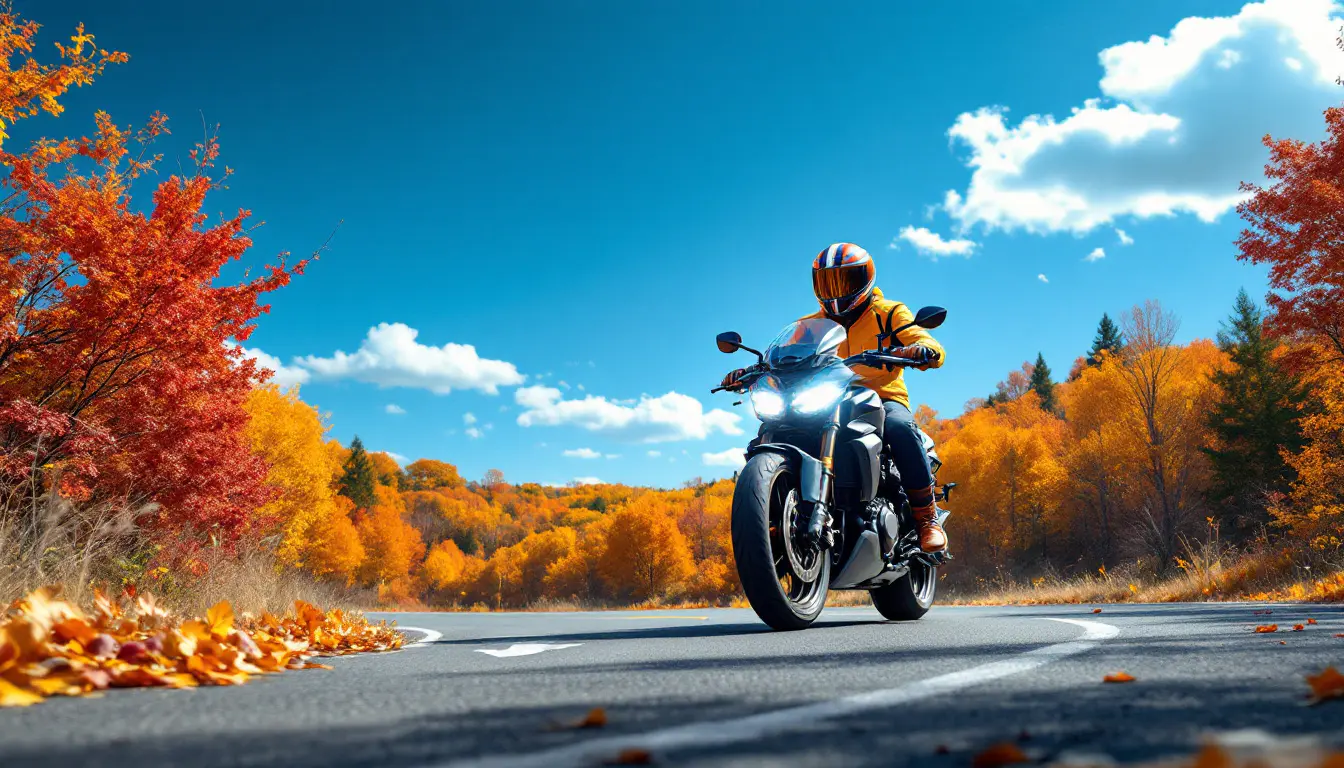
Riding a motorcycle in autumn requires adequate preparation that takes into account changing weather conditions and the specifics of the season. In the face of dead leaves, frequent rain, and diminishing light, it is essential to heighten vigilance with every journey. Motorcyclists need to be particularly attentive to changes in the environment and adjust their riding accordingly.
The presence of leaves on the road is a risk factor often underestimated. These leaves can reduce tire adhesion and lead to unexpected skids. To prevent accidents, it is recommended to brake and accelerate gradually. In case of rain, it is crucial to increase safety distances and brake gently to avoid wheel lock-up. Indeed, a relaxed and confident attitude is key to minimizing risks.
The low sun, which can blind motorcyclists, poses another danger. Using appropriate equipment, such as tinted screens or suitable sunglasses, can greatly improve visibility and reduce eye strain. Additionally, regularly checking your equipment is essential to ensure its effectiveness, particularly with regard to the motorcycle’s lighting.
Finally, not neglecting the dropping temperatures is equally important. Lower temperatures slow down the tire’s warming time, thus increasing the risk of accidents. Taking time to check the condition of your gear, tires, and motorcycle is essential for riding safely. With these practical tips, every motorcyclist can approach the autumn season calmly and safely.
FAQ: Riding safely on a motorcycle this autumn
Q: What precautions should I take when riding my motorcycle in autumn?
It is important to check the weather before each outing and adapt your attire as well as your gear, such as motorcycle gloves.
Q: Why can dead leaves be dangerous on the road?
Dead leaves can reduce your tires’ grip, thus increasing the risk of skidding.
Q: What should I do if it rains while I am riding?
It is advisable to increase safety distances and brake gently to avoid locking the wheels.
Q: How does the low sun affect riding in autumn?
The low sun can blind drivers, making traffic signs and other road users harder to see.
Q: Which gear should I check before heading out in autumn?
Check the condition of your helmet, motorcycle, tires, and ensure your clothing is waterproof.
Q: How can I manage dropping temperatures and frost in autumn?
Take time to warm up your tires properly before taking sharp turns and be cautious during the first brakes.
Q: What should I do to ensure good visibility during shorter days?
Check your lighting, clean your headlights, and choose reflective clothing or accessories.


