
IN BRIEF
|
The recent decision of the Council of State to reject the appeal lodged by the French Federation of Angry Motorcyclists (FFMC) raises questions about the future of technical inspection of motorcycles (CT2RM). This judicial failure does not seem to discourage motorcyclists, who continue to mobilize their efforts to contest this measure. Between legal actions and boycott campaigns, motorcycle enthusiasts are determined to express their disagreement and defend their interests against regulations they deem inappropriate.
Recently, the Council of State rejected the appeal lodged by the French Federation of Angry Motorcyclists (FFMC) regarding the technical inspection of motorcycles (CT2RM). This decision has sparked varied reactions among motorcyclists, who are considering different strategies to contest this now-enforced measure. This article examines the advantages and disadvantages of the motorcyclists’ responses to this situation.
Advantages
Mobilization of motorcyclists
Despite the setback suffered, the mobilization of motorcyclists remains strong. The FFMC has succeeded in uniting many motorcyclists around a common cause, thus creating a close-knit community. The massive support for the boycott campaign of CT2RM helps maintain constant pressure on the authorities, thereby proving that motorcyclists are not ready to bend without resistance in the face of this regulation.
Use of social networks
Social networks play a key role in disseminating information and organizing protest movements. Thanks to an effective communication strategy, motorcyclists have already managed to reach hundreds of thousands of people. This has helped raise awareness about the issues surrounding motorcycle CT, and consequently has mobilized significant support within the community.
Disadvantages
Costs related to legal actions
Although the FFMC is considering restarting the appeal, the costs associated with legal actions represent a significant barrier. The expenses related to these procedures can become an obstacle, especially if the results of previous actions are not favorable. This factor limits the options available for motorcyclists wishing to contest the Council of State’s decision.
Risk of isolation
Another major disadvantage is the risk of isolation for motorcyclists. If the boycott movement does not manage to achieve a sufficient number of participants, the impact on technical inspection centers may prove limited. Furthermore, the dispersion of motorcyclists focused solely on the boycott could reduce their ability to unite their forces for other more effective actions.
Economic viability of CT2RM
Finally, the economic viability of the technical inspection of motorcycles may be jeopardized. CT centers, reliant on the number of motorcyclists, could face difficulties if the boycott intensifies. This could lead to the closure of certain centers, making the situation even more complex for those who need to undergo the inspection.
In summary, the responses of motorcyclists to the failure of the appeal against motorcycle CT before the Council of State reveal a complex landscape. Reviving desires for justice remains a priority for motorcyclists, despite significant challenges they must overcome.
The recent refusal of the Council of State to annul the technical inspection of motorcycles (CT2RM) has generated strong reactions among motorcyclists, particularly those grouped within the French Federation of Angry Motorcyclists (FFMC). Despite this negative decision, motorcyclists do not intend to abandon the fight against this measure, and several strategies are being considered to continue the contestation.
A determined reaction from motorcyclists
Following the rejection of their appeal, motorcyclists are showing resilience. Homere Gillon, a member of the FFMC, stated that they would not hesitate to explore other legal options, such as an appeal, even if it represents a significant cost. The determination of motorcyclists not to be discouraged by this decision is palpable.
A strategic boycott of motorcycle CT
Instead of focusing solely on legal actions, the FFMC is promoting a boycott campaign against CT2RM. According to their estimates, up to 60% of motorcyclists could participate in this movement. The idea is to disrupt the economy of technical inspection centers by making them less profitable, which could ultimately lead them to reconsider their economic model.
Impact of social networks
The boycott strategy is also benefiting from strong visibility on social networks, where messages from the FFMC attract hundreds of thousands of views. This platform allows them to mobilize motorcyclists and expand support around their cause, often more effectively than legal actions.
Economic sustainability of technical inspection centers in question
The words of Laurent Palmier, the CEO of Sécuritest, underscore the potential economic consequences of CT2RM, labeling its economic model as not viable. The FFMC hopes to leverage this reality to push their demands to the State, urging a review of the territorial network of inspection centers.
For more information
For further details on the current situation, you can consult articles on the following sites: Ouest-France, FFMC, Le Télégramme, Moto Mag, Big Ben Motorcycle, and another article from Big Ben Motorcycle.
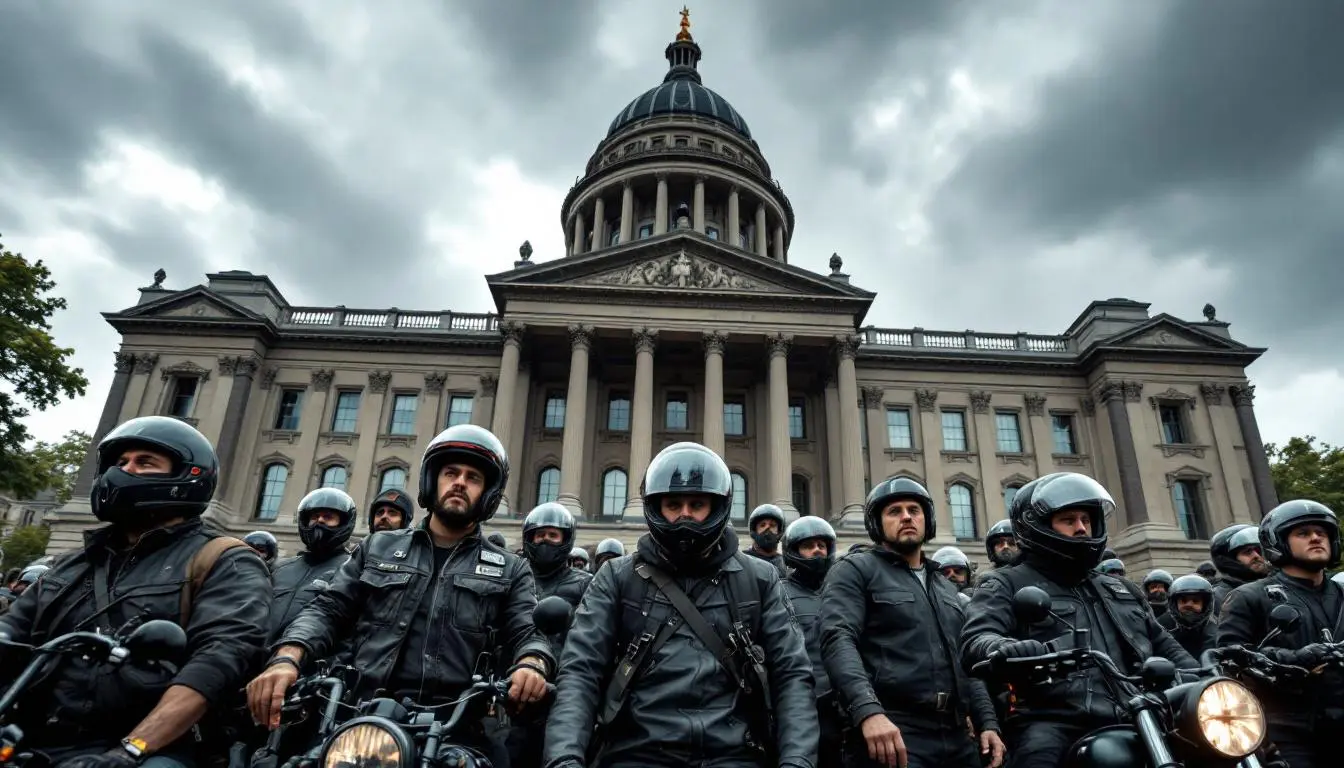
Recently, the French Federation of Angry Motorcyclists (FFMC) faced a setback with the rejection of the appeal regarding the technical inspection of motorcycles, known as CT2RM. Although this decision from the Council of State may seem definitive, motorcyclists are not planning to give up. They are focusing on alternative strategies to contest this measure.
An uncertain future for technical inspection
The decision of the Council of State, which rejected the challenge to motorcycle CT, does not mark the end of motorcyclists’ efforts. The FFMC still has plans in reserve. As one of its representatives indicated, there is the possibility of claiming further legal actions, even if this represents a high cost.
The boycott as the main strategy
In light of this situation, many motorcyclists have come together to launch a boycott campaign against CT2RM. According to sources within the FFMC, nearly 60% of motorcyclists are considering not complying with this new regulation, and feedback on this campaign appears positive. The responses on social networks show significant engagement from the community, which could prove more effective than legal actions.
Economic impact on technical inspection centers
The technical inspection centers are businesses, so it is crucial for them to maintain sufficient revenue. The FFMC hopes that non-compliance with motorcycle CT could force them to reconsider their economic model, thus making this measure less viable. If these centers do not perform inspections, it is possible that they may close their doors, but this remains to be seen.
Future perspectives for the fight
The FFMC envisions, in the future, reusing the argument about the territorial network of technical inspection centers. An insufficient number of centers could serve as leverage to convince the State to reconsider the legislation. The fight against this measure is far from over and the aim is directed towards the continued mobilization of motorcyclists.
To stay informed about this development, feel free to check out articles available on platforms like EvoMag and Auto-Moto.
| Actions | Responses and Progress |
|---|---|
| Legal action | No immediate abandonment, appeal plan considered despite high costs. |
| Boycott campaign | 60% of motorcyclists are boycotting the CT, impacting choices. |
| Awareness on social networks | Significant engagement, with hundreds of thousands of views. |
| Economic pressure on CT | CT centers may close if attendance decreases. |
| Arguing with the State | Negotiation strategy based on the lack of CT centers. |
| Member mobilization | Encouragement for reinforced collective support against measures. |

Motorcyclists’ testimonies after the Council of State’s refusal regarding motorcycle CT
Following the rejection of the appeal from the French Federation of Angry Motorcyclists (FFMC) by the Council of State, several motorcyclists express their determination to continue the fight. “It’s not over,” says one of them. “We still have options on the table, and we are ready to work more with our lawyers to consider a new appeal. Even if it is expensive, we must continue the fight.”
Another motorcyclist adds: “The boycott of the technical inspection is a strategy that works. We see more and more peers refusing to comply with this unjust measure. To date, about 60% of motorcyclists have decided to boycott the motorcycle CT. This shows that we are united and determined.”
A member of the FFMC highlights the importance of mobilization on social networks: “Our online actions generate hundreds of thousands of views. We have a real impact, and this is something that the authorities must consider. The voice of motorcyclists resonates even louder on these platforms.”
Some voices are also being heard about economic viability. “Technical inspection centers are businesses. If motorcyclists do not show up, it will complicate their economic model. We hope that in the long term, this will push for realistic changes,” explains a motorcyclist involved in the movement.
Solidarity among motorcyclists remains palpable, as another witness emphasizes: “We are ready to consider other actions to make our voices heard. It’s not just a matter of money but of our rights as motorcyclists. We will be there to defend our passion.”
Failure of the challenge to motorcycle CT: summary of the situation
On March 11, the Council of State rejected the appeal lodged by the French Federation of Angry Motorcyclists (FFMC) against the implementation of the technical inspection of motorcycles (CT2RM). This decision represents a new setback for motorcyclists but does not end the ongoing contestation. The FFMC plans to continue its fight through various means, including a possible appeal and a boycott campaign.
The determination of motorcyclists in the face of technical inspection
Although the rejection of their appeal was disappointing, motorcyclists do not intend to abandon their struggle. They are determined to explore all possible options to oppose the CT2RM. The FFMC has clearly stated its intention not to be intimidated by this judicial decision. Members of the association are ready to continue the fight, notably by considering an appeal, even though this represents a significant cost.
The boycott strategy as an alternative
Alongside legal actions, the FFMC emphasizes a boycott strategy for the technical inspection. This campaign has already shown results, with approximately 60% of motorcyclists declaring their intention to boycott the measure. The strength of social networks allows mobilization of a large audience and draws attention to this issue. Through enhanced communication, the FFMC hopes to influence public opinion and strengthen support from motorcyclists.
Economic impact on technical inspection centers
One major concern is the economic impact of the boycott on technical inspection centers. If motorcyclists do not visit these establishments, it could lead to financial difficulties for them. As Laurent Palmier, head of Sécuritest, pointed out, the economic model of CT2RM could become unviable, thus impacting the territorial network of centers. This dynamic plays in favor of the motorcyclists, who rely on this economic pressure to make the situation evolve.
The continuous mobilization of motorcyclists
Motorcyclists remain mobilized and united against this measure they deem unjust. They plan to continue organizing events, information campaigns, and relay their message on social media. Each action aims to raise awareness among a wider audience and generate strong public opinion against the technical inspection of motorcycles.
Discussions with lawyers and possibilities for appeals
Members of the FFMC are also assessing possible next steps. Discussions with lawyers could clarify the possibilities for a potential appeal. Although the funding of these actions remains an obstacle, the determination of motorcyclists to make their voice heard outweighs financial difficulties. It is crucial for them to find solutions that will allow them to continue contesting effectively.
The voice of motorcyclists in the public debate
The current situation also highlights the importance of the voice of motorcyclists in the public debate regarding regulations related to road safety. It is essential that policymakers take into account the opinions of motorcyclists, as they are the primary stakeholders of these measures. The FFMC positions itself to represent the interests of motorcyclists and hopes to open constructive dialogues with the relevant authorities.

The rejection of the appeal lodged by the French Federation of Angry Motorcyclists (FFMC) against the technical inspection of motorcycles (CT2RM) by the Council of State has generated varied reactions within the motorcycling community. Despite this setback, motorcyclists do not seem ready to abandon their struggle against this obligation. According to representatives from the FFMC, the determination to contest this measure remains intact, with the possibility of exploring other legal avenues in the future.
Motorcyclists have already intensified their boycott campaign against the technical inspection. The strategy adopted by the FFMC focuses on the idea that the boycott could have more impact than legal actions. Indeed, a significant number of motorcyclists have already chosen not to comply with this obligation, thus rendering the economic viability of CT centers uncertain. This approach aims to directly affect the profits of the inspection centers, an aspect deemed crucial to make their demands heard.
On social networks, the mobilization of motorcyclists has also gained momentum. The FFMC has observed a real echo to protest messages, thereby multiplying the visibility of their cause. The successes of the communication campaign on these platforms reinforce their conviction that public opinion can influence the decision-making of authorities. The engagement in this online debate seems to play a key role in the motorcyclists’ fight against CT2RM, much more than the legal avenues that prove costly and uncertain.
In conclusion, although the failure before the Council of State is a severe blow for motorcyclists, their response is characterized by a firmness and mobilization that could potentially transform the dynamics in their favor. The refusal to accept the current situation and the solidarity within the motorcycling community are promising elements for the future of their struggle.
Frequently Asked Questions about Motorcycle Technical Inspection
Q: What happened during the Council of State’s decision regarding motorcycle CT?
A: The Council of State rejected the appeal lodged by the French Federation of Angry Motorcyclists (FFMC) against the technical inspection of motorcycles (CT2RM).
Q: What impact does this have on the contestation of motorcycle CT?
A: Although this rejection is a setback for motorcyclists, it does not end the contestation. The FFMC is exploring other options, including the possibility of an appeal.
Q: What are the plans of the FFMC after this decision?
A: The FFMC intends to continue its boycott campaign against CT2RM, which has already shown promising results in mobilizing a majority of motorcyclists against the measure.
Q: What is the effectiveness of the boycott implemented by the motorcyclists?
A: According to the FFMC, the boycott could have more impact than judicial actions, with about 60% of motorcyclists participating in this movement.
Q: What strategies does the FFMC consider to strengthen its opposition to motorcycle CT?
A: The FFMC suggests continuing to alert about the financial impact on technical inspection centers, hoping that a decrease in attendance could force these centers to close, thereby disrupting the territorial network.
Q: Are there supports among industry stakeholders regarding the viability of CT2RM?
A: Yes, some figures, such as Laurent Palmier from Sécuritest, have announced that the economic model of CT2RM “is not viable”, which could lead to closures of centers.
Q: What message do motorcyclists want to convey to the State?
A: The FFMC hopes that if the number of inspection centers decreases, it could lead them to reconsider the motorcycle CT measure and open a discussion about its effectiveness.


