
IN BRIEF
|
The safety of motorcyclists is a major concern, especially with the approach of the summer season. In this context, planning for ‘Riding Recovery’ sessions and improving riding skills is essential. These programs are designed to offer motorcyclists the opportunity to improve, regain confidence, and learn driving techniques suited to the situations encountered on the road. The sessions offered, led by qualified instructors, cover various technical and practical aspects, thereby enhancing safety and mastery of the motorcycle.
Road safety is a crucial issue, particularly for motorcyclists. The ‘Riding Recovery’ and skill improvement sessions are initiatives implemented to reduce accident risks. This article explores the advantages and disadvantages of planning these sessions, in order to appreciate their benefits and limits.
Advantages
Planning ‘Riding Recovery’ sessions presents several notable advantages for motorcyclists. Firstly, these sessions provide a secure environment for participants, allowing for learning without pressure. They are supervised by qualified instructors who impart their expertise, ensuring a high level of training.
Moreover, these sessions are often free and accessible, enabling a wide audience to benefit from this type of training. In practice, they improve the technical skills of motorcyclists, notably their handling in real situations. Participants gain knowledge about motorcycle behavior, safety trajectories, and safety equipment.
Furthermore, these trainings also promote exchanges among motorcyclists, creating a community of mutual assistance. They allow for the sharing of experiences and advice, which strengthens awareness of the issues of road safety.
Disadvantages
However, planning guided sessions and skills improvement is not without disadvantages. One of the main challenges is the availability of training slots, which may be limited. During the summer period, for example, demand increases, making it difficult to reserve a spot in a desired session.
Another aspect to consider is that, although these sessions are designed to be reassuring, for some participants, resuming riding after a period of inactivity may generate stress or anxiety. This can impact their ability to fully concentrate on learning.
Finally, it is important to note that some individuals may not be aware of the benefits of recovery sessions, leading to a lack of commitment to the training. Awareness and communication around these initiatives are therefore essential to maximize their impact.
Road safety is a major concern for all motorcyclists. In this context, the ‘Riding Recovery’ sessions are put in place to help riders reaffirm their skills and improve their safety on the road. These trainings, offered by departmental mission leaders, combine theory and practice to ensure that each participant acquires the necessary skills to ride safely.
Objectives of the Sessions
The ‘Riding Recovery’ sessions aim at several crucial objectives for motorcyclists. Firstly, they allow for updating theoretical knowledge regarding motorcycle behavior and mastering driving techniques. Moreover, these trainings promote a better understanding of safety trajectories and protective gear. Finally, these sessions also focus on developing the reflexes necessary to handle varied driving situations.
Session Program
Day 1
On the first day, the emphasis is on learning and practice. Participants are guided through various theoretical contributions regarding the forces in action on the motorcycle and their use for optimal riding. Practical demonstrations help better understand the importance of the rider’s positions and exercises on the maneuverability of the motorcycle are also proposed.
Day 2
The second day focuses on putting acquired skills into practice. Trainees participate in a ride of 200 to 280 km, with several educational stops. This route aims to review the reminders before departure such as positions, braking, and trajectory. Educational workshops and group riding advice are also organized for a clear application of the acquired skills.
Supervision and Safety
Each session is supervised by a team of motorcycle school instructors as well as specialized departmental mission leaders. With a limited number of 15 to 20 trainees per session, personalized supervision allows for enhanced focus on the development of each participant’s skills. The courses are designed to create a secure and enjoyable environment while maximizing learning.
Registration and Practical Information
Sessions are generally offered free of charge during spring and summer, especially as the summer season approaches. Interested motorcyclists can check this link for information on dates and registration procedures.
Importance of Continuous Training
Updating riding skills is essential for every motorcyclist. The ‘Riding Recovery’ sessions provide an ideal framework for reinforcing the acquired foundations and ensuring that each rider is ready to face the dangers of the road. Indeed, practicing and training are key steps to reduce the risk of accidents and improve road safety.

The ‘Riding Recovery’ program offers motorcyclists the opportunity to enhance their confidence and refine their riding skills. These sessions allow participants to learn essential techniques for safe riding while being supervised by professionals. In this article, we will explore the key elements to consider when planning these sessions.
Choosing the Right Time for Sessions
The ideal period for organizing ‘Riding Recovery’ sessions is generally in spring and summer when weather conditions are favorable. This allows participants to focus on their learning without being affected by inclement weather. Also, check the calendar of local events to avoid conflicts.
Determining the Number of Participants
It is essential to plan for a group of 15 to 20 trainees per session. This ensures personalized attention while promoting interactions among participants. In case of high demand, consider organizing multiple sessions to accommodate all interested parties.
Ensuring Professional Supervision
During these sessions, each participant should be accompanied by qualified motorcycle school instructors and specialized mission leaders in motorized two-wheelers. Their expertise is fundamental to providing relevant advice and ensuring everyone’s safety.
Establishing a Detailed Program
A structured program is key to the success of ‘Riding Recovery’ sessions. Plan for both theoretical and practical modules. The former can include topics such as motorcycle behavior and safety trajectories, while the latter can consist of exercises on maneuverability and emergency braking.
Integrating Assessment Sessions
It is beneficial to include assessment moments throughout the training. This allows for the teaching to be adapted to the needs and skills of each participant. Regular debriefings can also help identify areas for improvement.
Using Digital Tools for Communication
It is recommended to use digital platforms to communicate with participants regarding schedules and session details. This also allows for gathering feedback and adapting to everyone’s expectations.
Promoting the Sessions
To ensure good participation, promoting the ‘Riding Recovery’ sessions on social media or through local advertising materials is crucial. Don’t hesitate to generate interest by sharing useful links, such as those on prevention initiatives or practical advice, like those found on improvement courses.
Comparison of Riding Recovery Sessions
| Sessions | Characteristics |
| Day J-1 | Theoretical and practical workshops on riding, maneuverability, and motorcycle behaviors |
| Day J-2 | Ride with educational stops, putting acquired skills into practice |
| Number of Participants | 15 to 20 trainees per session for personalized supervision |
| Free Training | Accessible to all motorcyclists wishing to improve their skills safely |
| Supervision | Team composed of motorcycle school instructors and specialized mission leaders |
| Duration of the Session | Sessions spread over 2 days for better absorption of knowledge |
| Educational Objectives | Strengthen skills, adapt know-how, and prevent dangers |
| Equipment Presented | Presentation of standards and models of airbags, advice on safety gear |
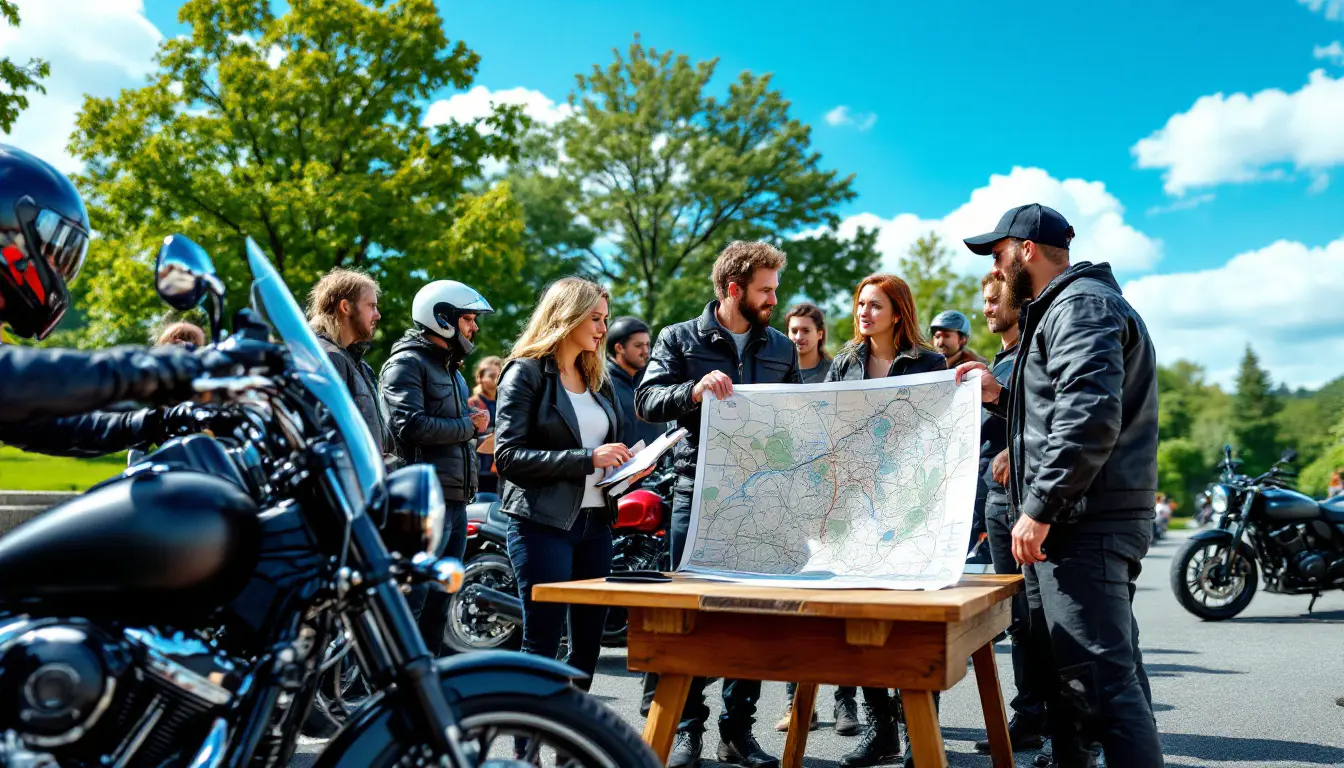
Testimonials on the Planning of ‘Riding Recovery’ Sessions
Road safety is essential, and the riding recovery sessions play a crucial role for motorcyclists. Each participant reports an enriching and formative experience, allowing them to strengthen their skills. These sessions offer an ideal framework for refreshing skills, especially before the summer season when the roads are busier.
One participant shared: “Having the opportunity to attend these improvement courses has been decisive. I could revisit the fundamentals while discovering new riding techniques. It’s reassuring to know that professionals are there to support us.”
Another female motorcyclist added: “The program is well-structured, with a progressive approach to learning. Practical exercises such as emergency braking and changing directions help us better understand our reflexes in real situations.”
The riding recovery sessions are not limited to theory. Participants emphasize the importance of the educational workshops. “These moments allow us to apply what we learn in the field. The debriefings after the rides are an excellent way to understand our mistakes and areas for improvement,” notes another motorcyclist.
Finally, a trainee highlighted the importance of safety equipment during these sessions. “The presentations on standards and purchase criteria for equipment like airbags are very informative. It is part of our responsibility as motorcyclists to ride safely.”
Planning ‘Riding Recovery’ sessions is essential for improving motorcycle riding skills. These trainings allow riders to reinforce their confidence, enhance their know-how, and familiarize themselves with safe riding techniques. In this article, we will discuss the objectives, organization, and methods proposed to maximize the effectiveness of these improvement sessions.
Objectives of the Riding Recovery Sessions
The main aims of these sessions are to optimize the safety of motorcyclists and improve their riding technique. During these trainings, participants acquire tools to analyze driving situations and adapt to various traffic conditions.
The first objective is to recall fundamental elements of riding, such as positions on the motorcycle, braking, and trajectories. By reinforcing the basics, participants can approach riding with confidence.
Another crucial aspect is acquiring reflexes in response to potential dangers. The sessions prepare motorcyclists to identify risks on the road and react appropriately, thus minimizing the chances of accidents.
Planning the Sessions
To ensure the success of the trainings, careful planning is necessary. The sessions should be offered in spring and throughout the summer, considering the weather and participants’ availability.
It is recommended to organize the Riding Recovery sessions over two days. The first day will focus on theory and practical exercises in the classroom and on track, while the second day will be dedicated to a pedagogical ride with stops for practical workshops. This allows for a gradual and deeper learning of skills.
Each session should accommodate between 15 to 20 participants to ensure adequate attention from instructors and an optimal learning environment.
Teaching Methods
The methods used during the sessions should be diverse to maintain interest and engagement among participants. A combination of theoretical inputs and practical exercises is crucial.
On the first day, it is advisable to include theoretical demonstrations on maneuverability of motorcycles and fun exercises aimed at improving riding mastery. This interactive approach allows participants to actively engage and better understand the concepts.
The second day must focus on putting the acquired skills into practice with educational workshops before challenging sections and regular debriefing to provide personalized feedback. This method reinforces learning and adapts advice to the specific needs of each rider.
Importance of Safety Equipment
One of the priorities during these sessions is to raise participants’ awareness of the importance of safety equipment. It is essential to present the standards regarding equipment, as well as the various models available on the market, including airbags for motorcycles.
The trainings should include discussions on the criteria to consider when purchasing equipment for enhanced safety. By educating motorcyclists on the importance of proper protection, we help reduce accident risks and improve safety on the roads.

The ‘Riding Recovery’ sessions offer a unique opportunity for motorcyclists to enhance their skills and gain confidence on the road. Planning these sessions is essential to ensure that participants can benefit from training tailored to their needs. In this regard, it is crucial to organize modules that take into account the different levels of experience among riders.
The program is designed to combine theory and practice, allowing trainees to acquire a solid foundation while developing their confidence on the bike. The first day focuses on themes such as motorcycle behavior, safety trajectory, and the presentation of protective equipment. These elements are fundamental for ensuring safe riding and are approached interactively so that each participant can express themselves and ask questions.
The second day, in turn, focuses on putting the acquired knowledge into practice through guided outings. These rides include strategic educational stops, allowing for the analysis of driving situations while benefiting from the support of experienced instructors. Thus, motorcyclists are trained not only to react correctly in the event of dangers but also to anticipate and avoid risky situations.
Ultimately, these improvement sessions are much more than just training; they represent a true investment in road safety. By providing a structured and professional environment, they help to forge responsible and aware motorcyclists, ready to face the challenges of the road with confidence.
FAQ on ‘Riding Recovery’ Sessions
Q: What are the ‘Riding Recovery’ sessions? They are free training courses for motorcyclists wishing to improve their riding skills, especially with the approach of the summer season.
Q: Who organizes these sessions? They are coordinated by the Prefect of Puy-de-Dôme and led by departmental mission officers and motorcycle school instructors.
Q: How many trainees can participate in each session? Each session can accommodate between 15 and 20 participants.
Q: What are the dates of the proposed sessions? The sessions take place in spring and throughout the summer, with specific organization according to a projected schedule.
Q: What is the structure of the training days? The training is spread over two days, with one day dedicated to theoretical and practical inputs and another day for a pedagogical ride.
Q: What skills are covered during these sessions? The sessions focus on motorcycle behavior, safety trajectory, braking, and the presentation of safety equipment.
Q: Is it necessary to attend both days of training? Yes, it is essential to participate in day 1 before considering day 2, as they form a complete curriculum.
Q: How can I register for the sessions? Registrations can be made online via the calendar provided to book a slot.


