
IN BRIEF
|
Electric motorcycles are gaining popularity, but a major issue persists: their compatibility with ultra-fast charging stations commonly used for cars. Understanding how these charging systems work and the associated challenges is essential for future electric motorcycle riders. This compatibility issue raises technical and practical challenges, ranging from the speed of charging to the accessibility of necessary infrastructure for a transition to more environmentally friendly vehicles.
The field of electric motorcycles is evolving rapidly, particularly thanks to the emergence of ultra-fast charging stations previously reserved for cars. This technology allows electric motorcycles to benefit from quick charging, a crucial issue for their adoption. This article will discuss the advantages and disadvantages of this compatibility, as well as how it operates and the issues that arise from it.
Advantages
One of the main advantages of electric motorcycles’ compatibility with ultra-fast charging stations is the significant reduction in charging time. Indeed, thanks to an innovative system, some motorcycles can recover up to 80 % of their capacity in just 45 minutes. This greatly improves flexibility for users, who no longer have to worry about unexpected power outages during their rides.
Additionally, these stations allow for a more convenient usage for riders, especially in urban areas where charging time can be optimized. Compatibility with conventional charging stations also facilitates access to existing infrastructure, making the adoption of electric motorcycles even more appealing.
Disadvantages
Despite these advantages, there are also some disadvantages to consider. First of all, dependence on these ultra-fast charging stations can be problematic, especially in areas where their presence is limited. Riders may therefore encounter difficulties finding a suitable charging point, which can detract from the overall riding experience.
Furthermore, the fast charging technology, while innovative, may have economic implications for users, who could face higher costs when using certain stations. Additionally, ultra-fast charging devices may be more complex to produce, potentially leading to logistical challenges for electric motorcycle manufacturers.
In summary, the compatibility between electric motorcycles and ultra-fast charging stations opens new perspectives for the future of sustainable mobility, but it is not without its challenges.
The development of electric motorcycles is on the rise, and their compatibility with ultra-fast charging stations for cars is a crucial issue. Understanding how these systems work and the obstacles to overcome can provide insights into the future of electric two-wheeled mobility. Here is a guide on how electric motorcycles integrate into the current charging infrastructure, highlighting the associated challenges and innovations.
Operation of ultra-fast charging stations
Ultra-fast charging stations are designed to provide high charging power, allowing an electric vehicle to recover a large part of its capacity in record time. Generally, they can provide power ranging from 100 kW to 350 kW. This means that, for example, in the case of an electric car, it is possible to recharge up to 80 % of its battery in less than 30 minutes.
For electric motorcycles, the fast charging technology often relies on the same type of connector as that used for cars, such as the Combo CCS connector. This facilitates access to charging infrastructure, but it is essential for motorcycle manufacturers to integrate the necessary systems to take advantage of ultra-fast charging.
Issues of compatibility
One of the main concerns regarding the compatibility of electric motorcycles with ultra-fast charging stations is range. Historically, electric motorcycle models offer a lower range compared to four-wheeled vehicles, which may deter potential users. However, with technological advancements, certain models are beginning to show interesting performance.
Moreover, charging times play a crucial role in the adoption of electric motorcycles. Users are looking for practical and quick solutions to avoid long waits. For example, some recent electric motorcycles can recover up to 80 % of their charge in 45 minutes, making the use of ultra-fast charging stations much more appealing.
Recent innovations
Many companies are developing innovative solutions to improve the compatibility of electric motorcycles with charging infrastructure. The Indian startup Raptee is an emblematic example, having presented a prototype of an electric motorcycle capable of recharging quickly thanks to a high voltage system. The integration of such technologies could transform the landscape of electric two-wheeled mobility.
It is also worth mentioning the need to establish a network of charging stations suitable for motorcycles, so that users can easily access quick charging. This includes communication between motorcycle manufacturers and charging station operators in order to optimize the charging rate experience.
Towards a promising future
The future of electric motorcycles looks promising, especially if the issues of compatibility with ultra-fast charging stations continue to be addressed. The advancement of technologies will not only improve the riding experience but also reassure future users regarding range and charging speed.
With the rise of renewable energies and the increasing number of charging infrastructures, electric motorcycles could benefit from better acceptance and growing popularity in the market, thus offering a sustainable alternative to traditional mobility.
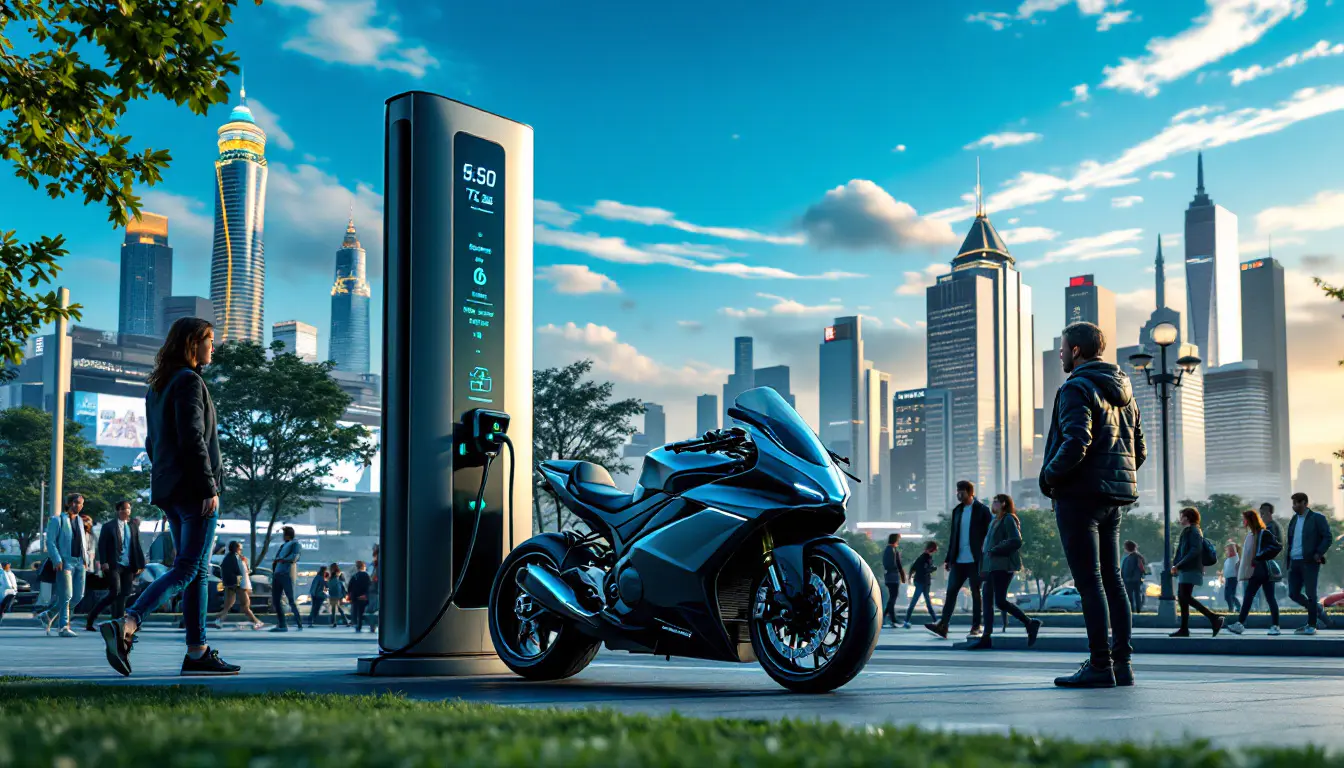
More and more consumers are interested in electric motorcycles, due to their reduced environmental impact and lower operating costs. However, one of the main barriers to their adoption remains compatibility with charging stations. This article explores the issues related to the fast charging of electric motorcycles and provides practical advice for benefiting from this technology.
Understanding the operation of ultra-fast charging stations
Ultra-fast charging stations are designed to reduce waiting time when recharging vehicles. These stations operate by providing high power to the battery, allowing for a large part of the capacity to be recovered in a limited time. For electric motorcycles, it is essential to ensure that the chosen model is compatible with these stations, especially when aiming for longer trips or frequent use.
The challenges of fast charging for electric motorcycles
One of the main challenges related to charging electric motorcycles lies in range. Most users fear running out of battery on the road, which can deter purchases. Thanks to technological advances, some motorcycles can now recharge to 80 % in just 45 minutes. This highlights the importance of choosing a model that not only offers good range but also integrates into the fast charging network.
How to check compatibility with charging stations
To ensure that your electric motorcycle is compatible with ultra-fast charging stations, it is crucial to check the type of connector used by the vehicle. The majority of fast charging stations use the Combo CCS2 connector, which is also common on electric cars. Make sure your motorcycle is equipped with this type of connector to take advantage of the available charging infrastructure.
The benefits of fast charging for users
The ability to recharge your electric motorcycle at ultra-fast charging stations offers many benefits. It not only minimizes the time spent on charging but also optimizes longer trips. Users can recover significant range in a matter of minutes, making the use of electric motorcycles more practical and attractive.
The current limitations of charging systems
Despite the advances, there are still some limitations regarding charging systems for electric motorcycles. Fast charging infrastructures are not yet as developed as for cars, and it may be necessary to plan trips based on charging stations. Furthermore, not all electric motorcycle models are yet adapted to benefit from these advanced technologies.
Final thoughts on the evolution of charging for electric motorcycles
With the growing popularity of electric motorcycles, it is predictable that the development of ultra-fast charging stations and the improvement of compatibility with two-wheeled models will increase. Users will then be able to fully enjoy the experience without fearing battery failure, making electric motorcycles increasingly attractive in the market.
Compatibility of Electric Motorcycles with Ultra-Fast Charging Stations
| Electric Motorcycles | Compatibility with Ultra-Fast Stations |
| Model A | Compatible with the Combo CCS2 connector, rapid charging in 45 minutes for 80% capacity. |
| Model B | Uses a specific connector, slow charging, primarily dependent on conventional stations. |
| Model C | Integrates rapid charging technology, allows for 40 km of range in 15 minutes. |
| Model D | Not yet compatible with ultra-fast stations, requires future updates. |
| Model E | Supports the fast charging network, 150 km range with optimized charging. |
| Model F | Compatible only with stations offering ultra-fast charging options. |
| Model G | Charging advantages similar to cars, which increases versatility. |
| Model H | No support for fast charging stations to date, limiting long trips. |
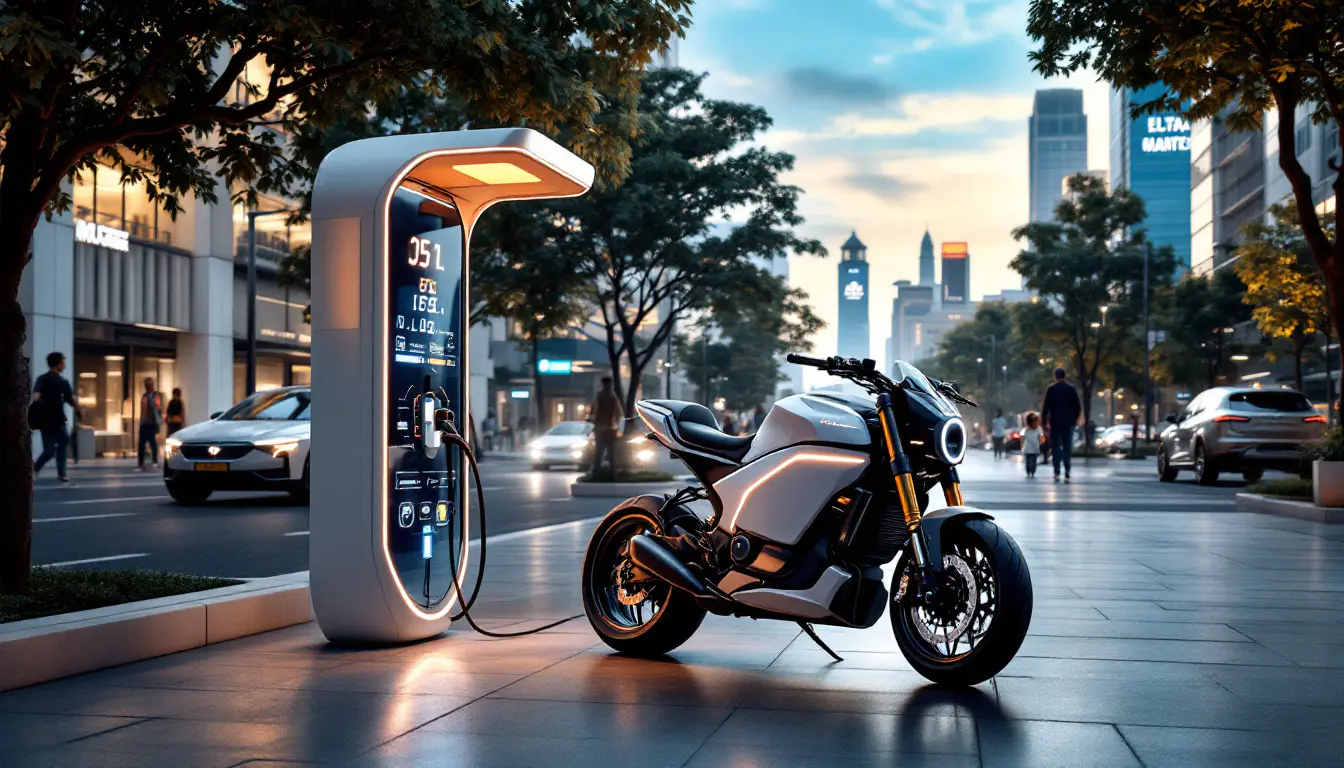
Testimonials about electric motorcycles and their compatibility with ultra-fast charging stations
More and more motorcycle enthusiasts are interested in electric models, but the question of compatibility with ultra-fast charging stations remains a major issue. Antoine, an electric motorcycle user, shares his experience: “When I switched to an all-electric motorcycle, I was worried about range. However, I found that some motorcycles like the Super73 C1X are compatible with fast charging stations, which reassured me.”
Marie, an experienced rider, also testifies: “I appreciate the innovation, but I feared I wouldn’t find suitable stations during my long trips. After researching, I realized that most modern charging stations, especially those designed for electric cars, can also be used for motorcycles, thanks to the appropriate connector.”
Another rider, Julien, emphasizes the importance of fast charging: “I use my motorcycle for daily commutes, and ultra-fast charging stations allow me to recharge a good part of my battery in just 45 minutes. It’s a significant time saver, especially when I’m in a hurry.”
For Sophie, the benefits of these technological advancements are clear: “Fast charging is a real asset for electric motorcycle users. With the promise of recovering up to 80 % of capacity in no time, the anxiety of running out of power fades away.”
Finally, Alice, the manager of a small garage specializing in electric motorcycles, highlights the market’s evolution: “We recently added fast charging stations suitable for motorcycles in our workshop. This makes all the difference for our customers, as they can recharge their vehicle while chatting about motorcycles with us.”
Electric motorcycles: compatibility with ultra-fast charging stations
Electric motorcycles are gaining popularity, but their adoption is often hindered by concerns about range and charging time. With the emergence of ultra-fast charging stations, it is crucial to understand how these stations can interact with two-wheeled vehicles. This article examines the compatibility issues between electric motorcycles and charging systems designed for electric cars, while presenting the benefits of a transition to adapted infrastructures.
Operation of ultra-fast charging stations
Ultra-fast charging stations, typically equipped with CCS (Combined Charging System) connectors, allow for rapid charging of electric vehicles in record times. These systems can provide power levels up to 350 kW, allowing quick battery charges. Most electric car models can thus recover up to 80 % of their capacity in less than 30 minutes.
For electric motorcycles, although they often have smaller capacity batteries than cars, they can also benefit from these stations. However, this will depend on the compatibility of the connector and the onboard electronics. Motorcycles equipped with a CCS2 connector, like certain new generations of electric motorcycles, will be able to take advantage of this technology, thus offering an efficient charging solution.
Issues of compatibility and efficiency
One of the main issues lies in the standardization of charging connectors. While many car models use the CCS2, not all motorcycles are yet equipped with this type of connector. It is essential for motorcycle manufacturers to adopt these standards to maximize accessibility to fast charging stations.
Moreover, motorcycles with more sophisticated battery management systems will be able to optimally interact with these stations. This implies that users should also consider the technology integrated into their motorcycle when purchasing, to ensure that it is compatible with the available charging infrastructures.
Advantages of a suitable charging infrastructure
A well-suited charging infrastructure for electric motorcycles could significantly enhance the user experience. By facilitating access to ultra-fast charging stations, users will be able to take minimal breaks while maximizing their time on the road. This would be especially beneficial for long trips, where concerns about range are more pressing.
Additionally, with fast charging, drivers can save time and reduce anxiety related to running out of power. This will pave the way for more electric motorcycles in the market and could potentially encourage established brands to invest more in this growing segment.
Faced with rapid technological evolution, it is imperative that the compatibility between electric motorcycles and ultra-fast charging stations progresses simultaneously. This will help build a solid ecosystem for motorcycle users, facilitating their transition to more eco-friendly and practical commuting.
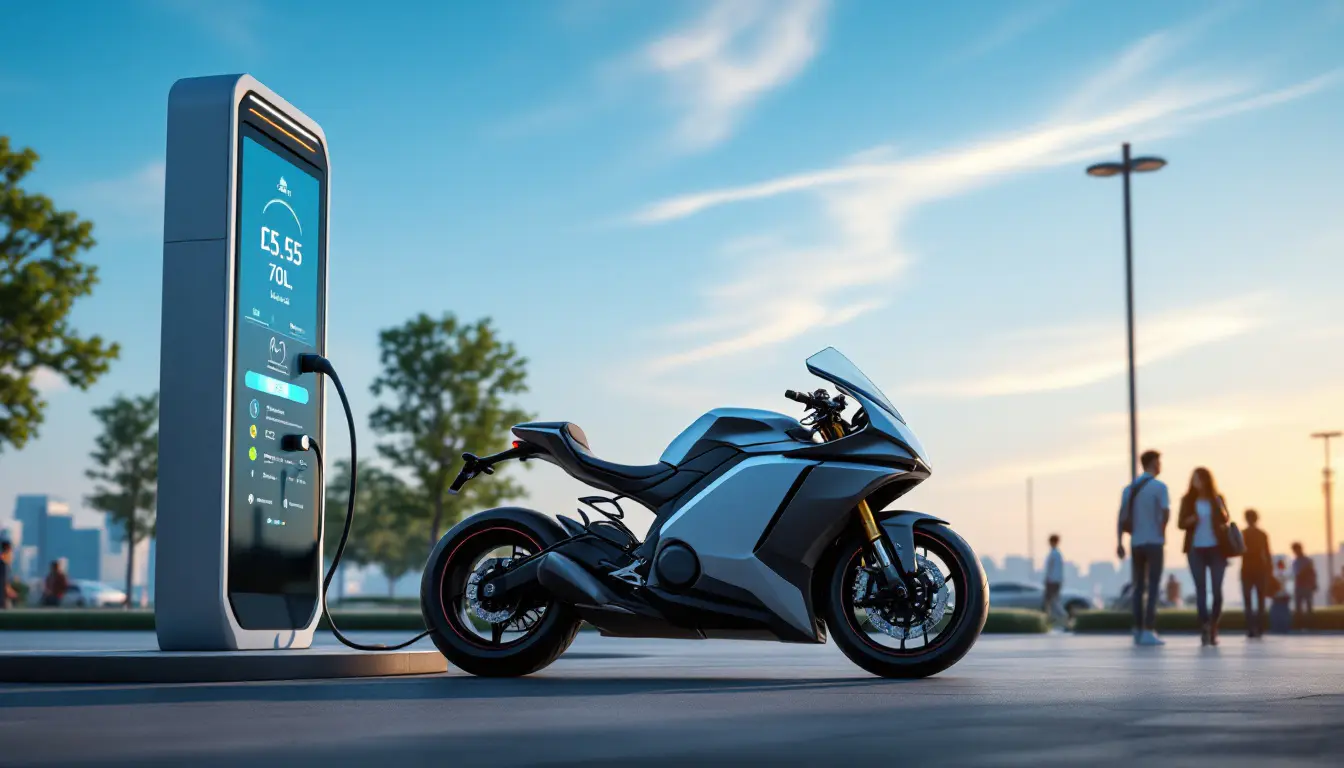
Compatibility of electric motorcycles with ultra-fast charging stations
The compatibility between electric motorcycles and ultra-fast charging stations is a key topic in the evolution of this growing segment. As the market for electric vehicles expands, the integration of motorcycles into this ecosystem becomes essential. Users are looking for charging solutions that allow them to maintain a satisfactory range while minimizing downtime.
Currently, most electric motorcycles use the CCS2 connector, the same as that of electric cars, thus facilitating their compatibility with ultra-fast charging stations. This technical uniformity is a major asset, as it allows motorcycle owners to benefit from an enhanced and seamless charging experience, similar to that of electric cars. Innovations in charging technologies offer access to stations capable of recharging up to 80 % in 30 to 45 minutes, marking a significant advancement compared to older charging systems.
However, it is crucial to address the issues related to this compatibility. One of the main concerns remains the availability of charging infrastructure. Motorcycle users must be able to access stations that meet their needs, especially during long trips. Identifying and deploying stations in strategic locations is essential to reassure potential consumers and turn their skepticism into confidence in electric motorcycles.
Additionally, motorcycle manufacturers must continue to innovate in battery and charging technologies. This could include upgrade systems to allow existing models to benefit from the latest advancements in fast charging. The search for a standard exchange and increased interoperability is essential to ensure sustainable growth in the electric motorcycle market.
FAQ on electric motorcycles and ultra-fast charging stations


