
IN SHORT
|
Getting your motorcycle license is a real challenge that requires meticulous preparation, especially for the traffic test. This test is the final step before obtaining your precious license for good. It is essential to master the various maneuvers and traffic rules to pass this exam. This article offers you tips and recommendations to approach this test with confidence and maximize your chances of success.
Obtaining your motorcycle license is an important step for any aspiring biker. This exam consists of several parts, and mastering the traffic test is essential. In this article, we will highlight the advantages and disadvantages of preparing for the traffic exam, in order to better understand how to maximize your chances of success.
Advantages
The preparation for the traffic exam has several significant advantages. First, passing this test allows you to become a responsible and safe motorcyclist on the roads. By mastering the various traffic rules, candidates acquire skills that will be useful throughout their motorcycling life.
Moreover, the training for the traffic exam helps to build self-confidence. By regularly practicing real-life situations, candidates improve their reflexes and ability to react to unforeseen circumstances. This also helps reduce stress on the exam day.
Additionally, good preparation for the traffic exam often includes learning defensive driving techniques. This means that future motorcyclists will be better equipped to anticipate hazards on the road and avoid accidents. Finally, mastering the exam may open doors to opportunities, both professionally and personally, in the world of motorcycling.
Disadvantages
Despite the numerous advantages of preparing for the traffic exam, there are also some disadvantages to consider. The first is the cost associated with training and driving lessons. Courses can quickly become expensive, especially if candidates choose to take several hours of practice before the exam.
Another disadvantage is the stress and pressure that candidates feel leading up to the exam. While this can be a motivating factor for some, others may experience detrimental effects on their mental health. Indeed, anxiety can lead to driving errors during the evaluation phase.
Finally, it should also be noted that mastering the traffic exam does not always guarantee perfect driving after obtaining the license. New motorcyclists must continue to gain experience on the road, as initial training does not cover all possible situations encountered in real life.
Taking the traffic test to obtain your motorcycle license can be intimidating, but good preparation will help you feel confident and maximize your chances of success. This article will provide you with practical tips and essential steps to help you master the various facets of this crucial exam.
Preparation Before the Exam
Before hitting the road, it is crucial to prepare properly. This involves checking the state of your equipment and familiarizing yourself with the traffic rules specific to motorcycles.
Safety Equipment
- Make sure to wear a certified helmet.
- Check that your protective clothing, gloves, and boots are suitable.
- Make sure your motorcycle is in good working condition.
Pre-departure Checks
Before departure, it is essential to check:
- The indicators on the motorcycle.
- The front headlight must be on.
- The mirrors should be in good condition.
Duration and Conduct of the Test
The traffic test lasts approximately 40 minutes. You will need to demonstrate your ability to drive without making eliminatory mistakes, such as running a red light or failing to yield to pedestrians.
The Independent Driving Phase
Part of the exam consists of a phase of independent driving, during which you will be guided by signs. For about 5 minutes, the examiner will not give instructions. This requires good independence and constant attention to your surroundings.
Key Points to Master
There are several key elements to master to excel during the traffic exam:
Positioning on the Road
Adjust your position on the road based on your situation:
- Stay in the middle of the lane at normal speed.
- Move to the left for a left turn and to the right for a right turn.
Blind Spot Checks
Checking your blind spots is crucial. Don’t forget to perform:
- A head movement to check blind spots on the left and right.
- Regular checks of the mirrors.
Managing Roundabouts
Roundabouts can be tricky to navigate. Remember to:
- Check your blind spots before entering.
- Use turn signals appropriately.
- Adjust your speed according to traffic.
Mistakes to Avoid
It is important to know the eliminatory mistakes you need to avoid to succeed:
- Ignoring right-of-way.
- Running a red light.
- Not using turn signals when necessary.
Useful Links for Preparation
You can find more information and advice on specialized sites such as:
Moto Sécurité – Permis Circulation and
Pedagomi – Motorcycle Eliminatory Mistakes.

The traffic exam to obtain a motorcycle license is a crucial step that requires meticulous preparation. The candidate must not only be comfortable on the plate but also master the subtleties of driving in real situations. This article will provide you with essential advice and tips to succeed in this test and maximize your chances of obtaining your license.
Pre-departure Checks
Before taking to the road, it is fundamental to carry out certain safety checks. Ensure your helmet is certified and properly fitted. Also, check the condition of your protective gear, including clothing, gloves, and boots. Before starting the motorcycle, make sure all the indicators on your dashboard are in order and that the front and rear lights are functioning correctly.
Position on the Road
Your position on the road is crucial for safe driving. Generally, the road is divided into three parts: left, right, and center. Follow this technique: stay centered while riding, shift left if turning left, and right if turning right. This improves your visibility and facilitates maneuvers.
Checks and Vigilance
You need to remain vigilant and perform regular checks of your blind spots and mirrors. Every time you change direction, remember to check these areas. The mirror check should be done every 10 seconds to ensure your safety and that of other road users.
Roundabouts: Special Attention
Roundabouts can be critical points during the traffic exam. Before entering a roundabout, be sure to reduce your speed and position yourself correctly on the road. If you are turning right or left, perform all necessary checks before changing direction. Don’t underestimate the importance of signaling your intentions with appropriate turn signals.
Anticipating Obstacles and Dangers
During your test, you will face various obstacles such as pedestrians, stopped vehicles, or changing traffic conditions. Good anticipation is essential. Avoid getting too close to vehicles and adjust your speed according to the circumstances. This will give you more time to react to unforeseen events.
Behavior at Intersections
When approaching an intersection, reduce your speed and stay alert to other road users. Remember to signal all your movements, whether it’s a change of direction or a stop. Ensure your behavior shows good control of the situation, which will surely impress the examiner.
Comparison of Success Strategies for the Traffic Exam
| Strategies | Practical Tips |
| Equipment Check | Ensure that the helmet and protections are compliant. |
| Regular Checks | Check mirrors, headlights, and indicators before leaving. |
| Position on the Road | Adopt a central position to avoid dangers. |
| Blind Spot Checks | Make constant checks to anticipate other maneuvers. |
| Mastering Roundabouts | Respect signage and priorities, especially before entering. |
| Adaptation to Traffic | Adjust your speed and position according to traffic conditions. |
| Right-of-Way Rules | Slow down and check carefully before each intersection. |
| Merging onto Highways | Accelerate cautiously and check blind spots before entering. |
| Stopping Management | Use proper positioning to facilitate starting. |
| Safety Trajectories | Choose safe trajectories to avoid collisions. |

Testimonials on Mastering the Traffic Exam to Obtain Your Motorcycle License
When I started preparing for my traffic exam for the motorcycle license, I didn’t know where to begin. My instructor’s advice turned out to be invaluable. He encouraged me to perform thorough checks of my motorcycle before each lesson, which helped me gain points during the exam. On the big day, I felt ready and confident due to this preparation.
Another decisive aspect was my mastery of roundabouts. I had often heard that this part of the exam was complex, but with regular practice and applying the appropriate checks, I managed to navigate through them without stress. Understanding priorities and anticipating the movements of other users was a real advantage.
My best friend also took her exam recently. She claims that road positioning is essential. By training to always position herself appropriately, she naturally developed good habits. During the exam, she was able to demonstrate her ability to manage the space effectively, which allowed her to obtain her license on the first try.
Another interesting testimony comes from a colleague who admits to having difficulties at first. He decided to watch instructional videos explaining the routes and driving techniques. This helped him visualize his actions and understand how to perform them correctly. This resource, combined with his practice, allowed him to feel ready on exam day.
Finally, another friend recommended that I treat each driving session as if it were the exam. By this, he meant to work on stress management and learn to stay focused, regardless of the environment. Thanks to this approach, I was able to tackle the test without excessive anxiety, which is crucial for success.
Obtaining the motorcycle license requires passing different tests, but the traffic exam is often considered one of the most crucial. During this test, you will need to demonstrate practical skills and mastery of the rules of the road. Through this article, you will discover essential recommendations to prepare effectively for this test, so you can optimize your chances of success.
Preparation Before the Exam
Before you hit the road, it is vital to prepare meticulously. This includes a thorough check of your motorcycle and safety equipment.
Equipment Check
- Ensure your helmet is in good condition, certified, and properly fitted.
- Check that your gloves, boots, and clothing are suitable for riding.
- Remember to check all indicators on your dashboard.
Motorcycle Inspection
Before starting, perform a quick inspection of your motorcycle:
- Check that the turn signals are working properly.
- Check the condition of the front and rear lights.
- Examine the tires to ensure they are inflated to the correct pressure.
Understanding Traffic Rules
During the traffic examination, having a good understanding of traffic rules is essential. This includes right-of-way, signals, and the comprehension of various signs.
The Right-of-Way Rules
Familiarize yourself with the principle of right-of-way, as this will often be tested during the exam. Don’t hesitate to ride slowly through intersections and always check that the road is clear before proceeding.
Basic Maneuvers
Master basic maneuvers such as roundabouts, lane changes, and overtaking. Each maneuver requires safety checks with your mirrors and a turn signal to indicate your intentions to other road users.
Strategies During the Test
On the day of the exam, it is crucial to stay calm and focused. Here are some strategies that can help you.
Anticipation and Vigilance
Adopt a vigilant and anticipatory attitude. Observe the drivers around you closely and anticipate their actions. Defensive driving will help you avoid critical situations.
Independent Driving
As part of the exam, the independent driving phase requires you to follow a route without assistance from the examiner. Familiarize yourself with the routes and try to memorize them for this part of the test.
Evaluation and Feedback
After your route, take the time to ask for feedback from the examiner. Listen carefully to the feedback and note the points for improvement. This can be a valuable source of information for your future practice.
Managing Stress
Finally, to manage the stress related to the exam, adopt relaxation techniques before your driving turn. Deep breathing and positive visualization can help you stay calm.
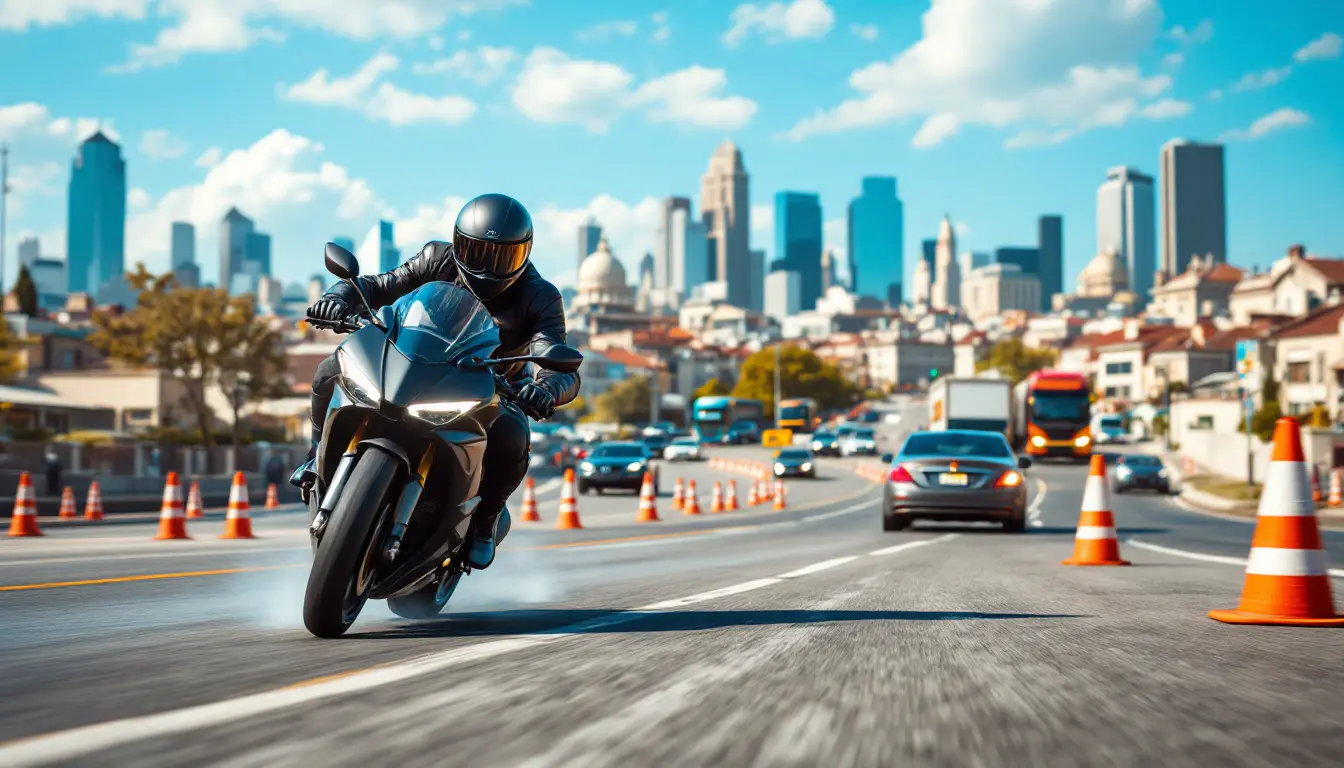
Obtaining your motorcycle license requires rigorous preparation, especially for the traffic test. This decisive step demands not only practical skills but also a good understanding of traffic rules and the ability to react to the various situations you might encounter. A structured approach must be established to tackle the exam with confidence.
First and foremost, it is crucial to master the mechanical and safety checks of your motorcycle. Before departing, ensure that your helmet and gear comply with standards, that all indicators function correctly, and that your lights are operational. Proper conditioning can not only earn you points but also increase your safety during the exam.
At the moment of driving, your position on the road is essential. Understanding traffic lanes and maintaining safe distances from other users are key elements for navigating effectively and safely. Additionally, regularly practicing blind spot checks and the use of turn signals, as these actions are closely monitored by the examiner.
Complex situations, such as roundabouts or intersections, require special attention. Proper positioning, along with a suitable driving strategy, can make all the difference. Practice anticipating the movements of other vehicles and be ready to react quickly while maintaining control of your machine.
Finally, the psychological aspect of the exam should not be overlooked. Keep calm, stay focused, and believe in yourself. Repetition and simulation in real conditions will help you manage stress on the day of the test. Working on these various aspects will put you on the path to success and allow you to obtain your motorcycle license successfully.
FAQ: Mastering the Traffic Exam to Obtain Your Motorcycle License
Q: What is the goal of the traffic exam for the motorcycle license? A: The goal is to validate the practical skills of candidates in real driving situations to ensure their safety on the road.
Q: How many points must be obtained during the traffic test? A: It is necessary to obtain a minimum of 21 points out of the available 27 to pass this test.
Q: What is the duration of the traffic exam? A: The exam lasts about 40 minutes, during which the candidate must avoid any eliminatory mistakes.
Q: What are the eliminatory mistakes to avoid during the exam? A: Running a red light, ignoring a stop sign, or failing to yield to a pedestrian are examples of eliminatory mistakes.
Q: What should be checked before departure for the exam? A: You need to check the condition of your equipment, turn on the front light, and ensure that the dashboard indicators are functioning correctly.
Q: What is the importance of independent driving during the exam? A: The independent driving phase, where the candidate follows a marked route without instructions from the examiner, assesses their ability to navigate independently.
Q: How should one position themselves on the road during the traffic exam? A: A motorcyclist should position themselves in the middle of the lane at normal speed and tighten to the left or right depending on the direction taken.
Q: What checks should be made for roundabouts during the exam? A: It is important to perform mirror and blind spot checks before entering the roundabout, as well as to use appropriate turn signals.
Q: What precautions should be taken when faced with obstacles on the road? A: Avoid storm drains, observe pedestrian crossings, and maintain a safe distance from any potential danger.
Q: Is it important to adjust one’s speed during the exam? A: Yes, it is crucial to adjust your speed and position according to the situations encountered on the road to ensure safety and earn good points.


