
IN BRIEF
|
As winter approaches, it becomes crucial to question the best way to protect your two-wheeled vehicle. Indeed, weather conditions can affect the state of your motorcycle or scooter if no precautions are taken. Between the option of wintering in a closed and dry space or using a protective cover, every rider must consider effective methods to preserve their two-wheeler from the harshness of the cold season. Adopting the right practices ensures that your vehicle remains in excellent condition and ready to hit the road as soon as spring returns.
As winter approaches, motorcycle owners often wonder about the best method to preserve their two-wheeler. Whether for protection or storage, each option has its advantages and disadvantages. This article explores these two solutions to help you make the most suitable choice for your vehicle.
Advantages
Protecting your motorcycle
Protecting your motorcycle by covering it with a proper cover helps shield it from the elements and temperature fluctuations. Good protection prevents corrosion, paint fading, and reduces the risk of dirt or debris accumulation. By opting for protection, you ensure that your motorcycle is always ready to hit the road when the weather improves.
Storing your motorcycle
Storing your two-wheeler in a closed and dry garage is undoubtedly the most effective option during winter. Indeed, it offers optimal protection against harsh weather conditions. Storage also guarantees better security against theft and accidental damage while avoiding temperature fluctuations. By storing your motorcycle, you minimize general wear and tear, which prolongs its lifespan.
Disadvantages
Protecting your motorcycle
Despite its advantages, protecting with a cover can have some drawbacks. For example, if the cover is not breathable, this can cause condensation inside, leading to rust. Moreover, external protection cannot always prevent damage from falling branches or other external elements in the event of a storm.
Storing your motorcycle
Storage, while effective, requires additional space and may not be an option for everyone. Additionally, it is essential to review the preparation steps, such as removing the battery and ensuring that the tank is protected, which requires time and preparation. If the motorcycle is poorly stored, this can also harm its condition, leading to complications when restarting in spring.
When winter arrives, it is crucial to properly prepare your motorcycle to survive the rigors of the cold season. Knowing whether to protect your two-wheeler or store it is a matter of safety, comfort, and durability. In this article, we will guide you through the essential steps to ensure the protection of your vehicle in winter.
Why protect your motorcycle during winter?
Protecting your motorcycle during winter is essential to avoid premature wear and ensure an easy restart when temperatures rise. The elements, corrosion, and temperature fluctuations can seriously affect your vehicle’s components. That’s why it is recommended to take certain precautions to keep it in good condition.
The benefits of storage
Storing your two-wheeler in a closed and dry garage is the most effective method to protect it. This avoids damage from the elements and maintains a stable temperature. If this is not possible, a suitable protective cover can also do the trick, but it will not replace the safety of a garage.
How to properly prepare your motorcycle for wintering?
Before putting your motorcycle away for winter, perform a complete cleaning. This will remove any dirt or impurities that could cause rust. Next, consider removing the battery to store it in a dry place at an appropriate temperature. Also, ensure that your tires are well-inflated and consider removing them to avoid deformation.
Essential equipment for wintering
To ensure the protection of your motorcycle, some equipment is essential. Invest in quality locks to prevent theft during storage. Also, consider a well-fitted cover if your motorcycle must remain outside. Finally, a battery charger will help ensure that it stays in good condition.
Summary of the steps to follow
For a successful wintering of your motorcycle, start by cleaning it. Then, store it in a garage or under a protective cover. Remember to remove the battery and check the tires as well as the oil and coolant levels. By following these tips, you will effectively protect your vehicle during the cold months.
For more useful tips
If you wish to deepen your knowledge about wintering two-wheelers, do not hesitate to consult detailed guides available online, which will provide you with practical tips to best preserve your motorcycle. You will also find information regarding the appropriate equipment to choose for winter.
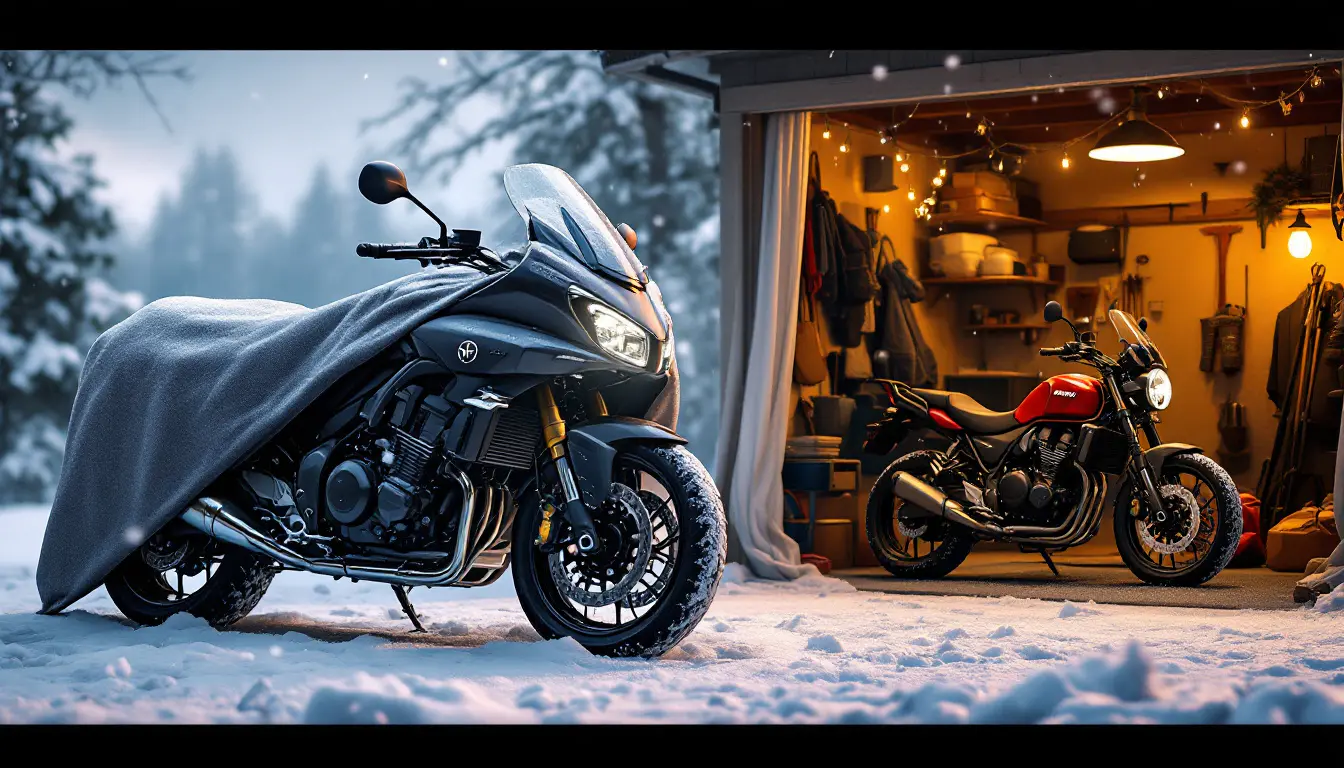
When temperatures drop and winter sets in, it is crucial to know how to protect or store your motorcycle or scooter. Following a few essential tips can ensure the durability and proper functioning of your two-wheeled vehicle when the first sunny days arrive. In this article, we reveal practical tips for properly preparing your two-wheeler for wintering and ensuring a safe return in spring.
Choosing the right storage space
To effectively protect your vehicle during winter, choosing the right storage space is fundamental. Ideally, a closed and dry garage is best as it shields your motorcycle from the elements and temperature fluctuations. If you don’t have a garage, consider using a proper cover to cover your two-wheeler. Ensure that it is breathable to avoid moisture buildup.
Preparation before wintering
Before putting your motorcycle away, it is recommended to perform a thorough cleaning. A good wash removes dirt and contaminants that could affect the paint and metals. Don’t forget to treat aluminum surfaces and apply a protective product to prevent oxidation.
Battery management
A crucial step in preparing your motorcycle for wintering is to properly handle the battery. It is advisable to remove it and store it in a dry place, maintaining an ambient temperature between 15 and 25 degrees Celsius. You might also consider using a maintenance charger to keep the battery in good condition.
Protecting important components
Ensure that your motorcycle is well prepared by checking the condition of its tires, oil, and brake fluids. Consider inflating the tires to the recommended pressure and inspecting their condition. Additionally, changing the oil before wintering can help prevent corrosion inside the engine.
Stay informed about weather conditions
Finally, stay vigilant regarding local weather conditions. Extreme temperature variations can affect your bike. Adapt your storage habits and preparation according to the weather forecast to ensure maximum protection in winter.
By following these practical tips, you will ensure your motorcycle effective protection during winter while preparing for a smooth return to the road when the sunny days arrive. For more details on wintering, consult useful resources like this site or this one.
| Option | Description |
|---|---|
| Storage | Store the motorcycle in a closed garage to avoid the elements. |
| Protection | Use a proper cover if the garage is not available. |
| Battery | Remove and store the battery in a dry and temperate place. |
| Cleaning | Perform a complete wash before wintering to prevent corrosion. |
| Fuel | Keep the tank full to avoid condensation and rust. |
| Tires | Check tire pressure, maintain adequate inflation. |
| Oil | Change the oil to protect the engine during wintering. |
| Visibility | Covers or tarps to ensure protection from dust. |
| Taking over | Upon resuming, check the brakes and the motorcycle’s overall condition. |
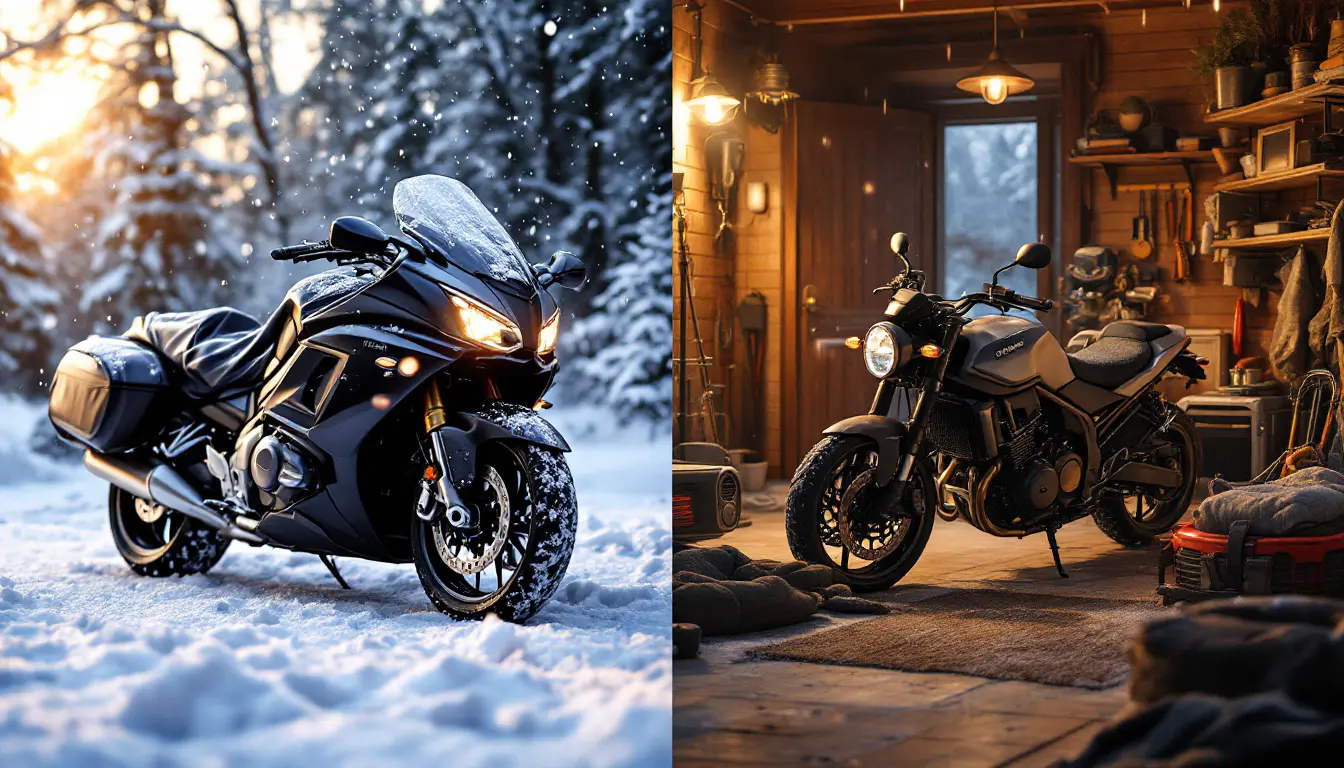
Testimonials: Winter and Motorcycles – Protecting or Storing Your Two-Wheeled Vehicle?
Paul, 30 years old: “Every winter, I face the same question: should I store my motorcycle or just cover it? After several seasons trying different methods, I realized that proper storage is essential. So I choose a closed garage because it protects it from the elements. I also cover it with a proper cover to avoid temperature variations. It’s really a great way to keep your two-wheeler in perfect condition and ready to go as soon as spring comes.”
Françoise, 27 years old: “I’m a novice in the motorcycle world and last winter was my first experience with wintering. I underestimated the importance of protecting my motorcycle, leading to troubles, including a completely flat battery. I learned that it is crucial to store the battery in a dry, temperature-controlled location. I’m now better prepared for this winter and I know that a successful wintering involves preventive measures.”
Julien, 22 years old: “As a regular user of my motorcycle, I find myself juggling between protecting it or storing it in winter. I’ve tried both, and based on my experience, I can say that storage is the best option if you want to ensure the engine runs well when spring comes. Even though the sight of my motorcycle in the garage makes me a bit sad, it’s a necessity to preserve the mechanics.”
Sophie, 35 years old: “If you really want to take care of your motorcycle, don’t leave it outside in winter. I’ve wasted too much time and money due to poor exposure to the elements. Now, I make sure to properly prepare my motorcycle for winter. I clean, cover, and most importantly, I pay attention to the battery. The practical tips I’ve followed have helped me keep my motorcycle in perfect condition, and I’ve even stopped fearing the first ride in spring.”
Marc, 29 years old: “For me, wintering is synonymous with safety. Every year, I consult a comprehensive guide to ensure that I follow all necessary steps to prepare my motorcycle. I strongly advise all riders to take this seriously. Storing your motorcycle properly guarantees a long life and more fun during every ride. Winter is approaching, and it’s time to do things right!”
Winter is approaching and it is essential to know how to protect or store your two-wheeled vehicle. In this article, we will explore the best practices for winterizing your motorcycle or scooter to ensure their longevity while ensuring your safety when returning to the road in spring. We will discuss storage options, precautions to take, as well as practical tips for effective wintering.
Choosing the Right Place for Wintering
The first step in protecting your two-wheeler during winter is to choose an adequate location. A closed and dry garage remains the best option as it protects your vehicle from the elements and temperature fluctuations. However, if a garage is not available, using a sturdy protective cover becomes essential to avoid moisture buildup and corrosion.
Preparing the motorcycle before wintering
Before storing your motorcycle, it is essential to clean it thoroughly. A complete wash removes dirt, mud, and contaminants that could damage the paint and materials. Then, it is recommended to strip the motorcycle of all mud and apply a protective wax layer on the bodywork.
Organizing the Maintenance of Your Vehicle
Before storing your motorcycle, it is crucial to perform a complete maintenance. This includes checking the oil level, inspecting the air filter, and replacing any worn-out liquids. Don’t forget about the battery: to prevent it from discharging, it is recommended to remove it and store it in a dry place at room temperature (between 15 and 25 °C).
Tires and brakes
The tires should be monitored before wintering. Ensure that they are properly inflated to avoid any deformation during storage. The brakes must also be in good condition; remember to check the pads and replace them if necessary, as a motorcycle with defective brakes poses a serious risk when resuming riding.
Using Protections and Equipment
For successful wintering, consider using suitable accessories. A well-fitted cover is essential to protect your motorcycle from dust as well as moisture. You may also opt for anticorrosion products specially designed for motorcycles; they can be applied to exposed metal parts.
Regular checks during winter
Included in your wintering process, it is recommended to check your motorcycle occasionally during winter. Check the condition of the protective cover, ensure that it is not damaged, and that moisture has not infiltrated. Furthermore, it is wise to rotate the wheels to prevent the tires from flattening.
Preparing to Return to the Road in Spring
When spring arrives and you’re ready to get back on the road, it is essential to do a complete check of your motorcycle. Reconnect the battery, check the tires, brakes, oils, and ensure everything is in the best possible condition. A short test ride will ensure that the motorcycle is running correctly after this period of inactivity.
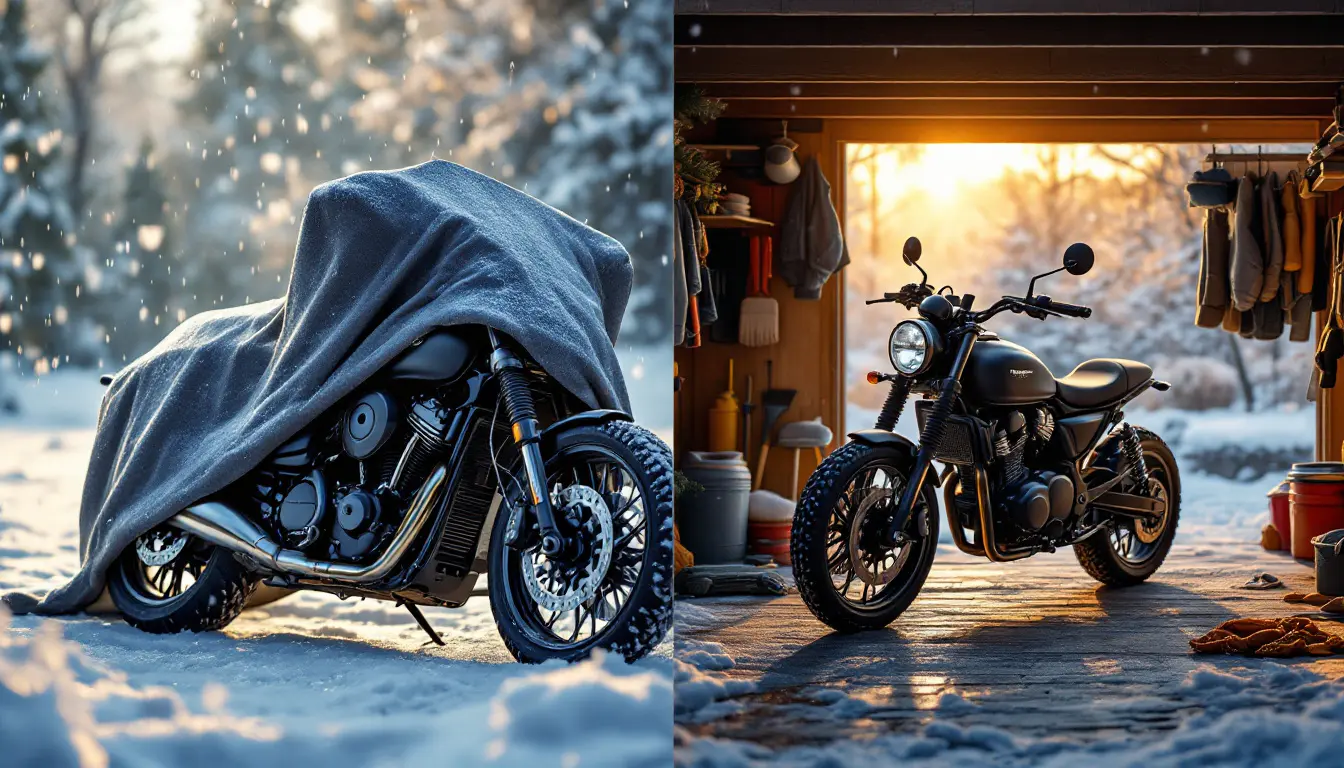
When winter sets in, it is crucial to decide how to protect or store your motorcycle to guarantee its longevity and performance. Harsh weather conditions, with low temperatures and frequent precipitation, can significantly impact your two-wheeled vehicle. Therefore, good preparation is essential to avoid inconveniences when spring arrives.
First, wintering your motorcycle starts with cleaning it. A thorough wash eliminates dirt, mud, and salt that could promote corrosion during the cold months. Next, finding a suitable storage space is crucial. The garage, if it is dry and protected from the elements, is the ideal location for your two-wheeler. If a garage is not available, using a suitable protective cover can help preserve your motorcycle from temperature variations and external elements.
Another aspect to consider is the battery storage. Removing the battery and placing it in a temperature-controlled environment can prevent discharge and ensure its proper functioning when restarting your motorcycle. Also, don’t neglect the tires, which should be checked and, if necessary, properly inflated to prevent any deformation.
Ultimately, the choice between protecting or storing your vehicle will depend on several factors, including your residence location and access to suitable space. Careful preparation, whether for long-term storage or occasional use, is key to enjoying the pleasures of motorcycle riding when better days return.
FAQ: Winter and Motorcycles – Protecting or Storing Your Two-Wheeled Vehicle?
Q: What is the best option to protect my motorcycle in winter?
A: The best solution is to store your motorcycle in a closed and dry garage to protect it from the elements and temperature fluctuations.
Q: What should I do if I do not have a garage to store my motorcycle?
A: If a garage is not an option, use a suitable cover to protect your two-wheeler from the elements.
Q: How should I prepare my motorcycle for winter storage?
A: Start by completely cleaning your motorcycle to eliminate any dirt and potential corrosion before storage.
Q: What should I do with my motorcycle’s battery for wintering?
A: It is recommended to remove the battery and store it in a dry place with a temperature between 15 and 25 degrees to avoid failures.
Q: What are the other essential equipment for wintering my motorcycle?
A: Ensure to check oil levels, tires, and brakes before storing your motorcycle for winter.
Q: How can I preserve my tires during winter?
A: Store your tires in a cool and dry place, and consider elevating them to prevent deformation.
Q: Is it necessary to perform complete maintenance on my motorcycle before winter?
A: Yes, a complete maintenance before winter is crucial to ensure a trouble-free restart in spring.
Q: When should I take my motorcycle out after winter?
A: Wait until the temperature is stable and the roads are free of ice and snow to plan your first ride.
Q: What should I do if I want to use my motorcycle during winter?
A: If you plan to ride in winter, equip yourself with suitable clothing to combat the cold and ensure that your motorcycle is equipped with adequate tires.


