IN BRIEF
|
The world of motorcycles is undergoing a transformation, with technological innovations aimed at enhancing the safety of riders. Among these advancements, the airbag system for motorcycles is experiencing a decisive turning point. Thanks to the efforts of companies such as Toyoda Gosei, the development of an airbag system specifically designed for the collision dynamics faced by motorcyclists is taking shape. This evolution promises to make motorcycles safer and reduce the risk of serious injuries in accidents.
In the ever-evolving world of road safety, the motorcycle airbag technology is making significant strides. Recently, innovations have been developed to integrate airbag systems directly onto two-wheelers, promising to enhance the protection of motorcyclists in the event of an accident. This technological advancement represents an important step in the fight for the safety of motorcycle users and could very well become essential equipment in the coming years.
Benefits
The integration of airbags on motorcycles presents several potential benefits. Firstly, this safety device could drastically reduce injuries in the event of collisions. During crash tests conducted by companies like Toyoda Gosei, positive interactions between the rider and the airbag system were observed during impacts, confirming the potential effectiveness of this technology.
Additionally, advancements toward models that directly integrate the airbag onto vehicles could make this technology more accessible and standardized. Indeed, if these airbag systems were mass-marketed on different models of motorcycles and scooters, their cost could decrease and their adoption could generalize among motorcyclists.
Drawbacks
drawbacks related to the implementation of airbags for motorcycles. Firstly, this technology can represent a significant additional cost when purchasing a motorcycle. Not all motorcyclists can afford this high-end equipment, which could create a gap between markets.
Moreover, the testing and development phase of the airbag systems must be carefully planned to avoid potential failures in real conditions. Real-world testing, in addition to simulations, is essential to ensure that the airbags deploy optimally during accidents. The integration of these devices therefore requires a lengthy research and development process, which can delay their market introduction.
For motorcycle enthusiasts, safety is a primary concern. Recently, an essential distinction has been made in the development of airbag systems for two-wheeler riders. Innovations in this field promise to significantly enhance the protection of motorcyclists in the event of an accident. The Japanese company Toyoda Gosei has made a significant step by starting tests on a prototype airbag, tantalizingly close to greater accessibility for the general public.
A burgeoning technology
Research on airbag systems is intensifying, making these safety devices increasingly accessible to motorcycle users. Historically, airbags have often been synonymous with protection in the automotive sector. Today, this technology is beginning to find its place in the field of two-wheelers, despite a still challenging path. Promising advancements are underway to make motorcycle airbags a reality on the market.
Promising tests
During recent crash tests conducted by Toyoda Gosei, experts tested the deployment of their prototype in the event of a frontal collision. This process aims to determine not only the effectiveness of the system but also its interaction with the rider at the time of impact. Through these tests, researchers hope to refine the development of the equipment, making it applicable for systematic use on motorcycles and scooters.
Toward the democratization of airbags for motorcycles
If the test results are positive, rapid democratization of airbag systems for motorcycles could be envisaged. By saving lives, such an evolution would represent a significant leap forward for motorcycle safety. The combination of real-world tests and simulations will contribute to improving the effectiveness of this innovative device.
A promising future for motorcyclist safety
With the commitment of companies to the development of safety equipment, motorcyclists can hope for significant progress in their protection. The emergence of new devices like airbags contributes to enhancing road safety. Connections between technological innovations and safety are becoming increasingly evident, promising a healthier and much safer ride for all.
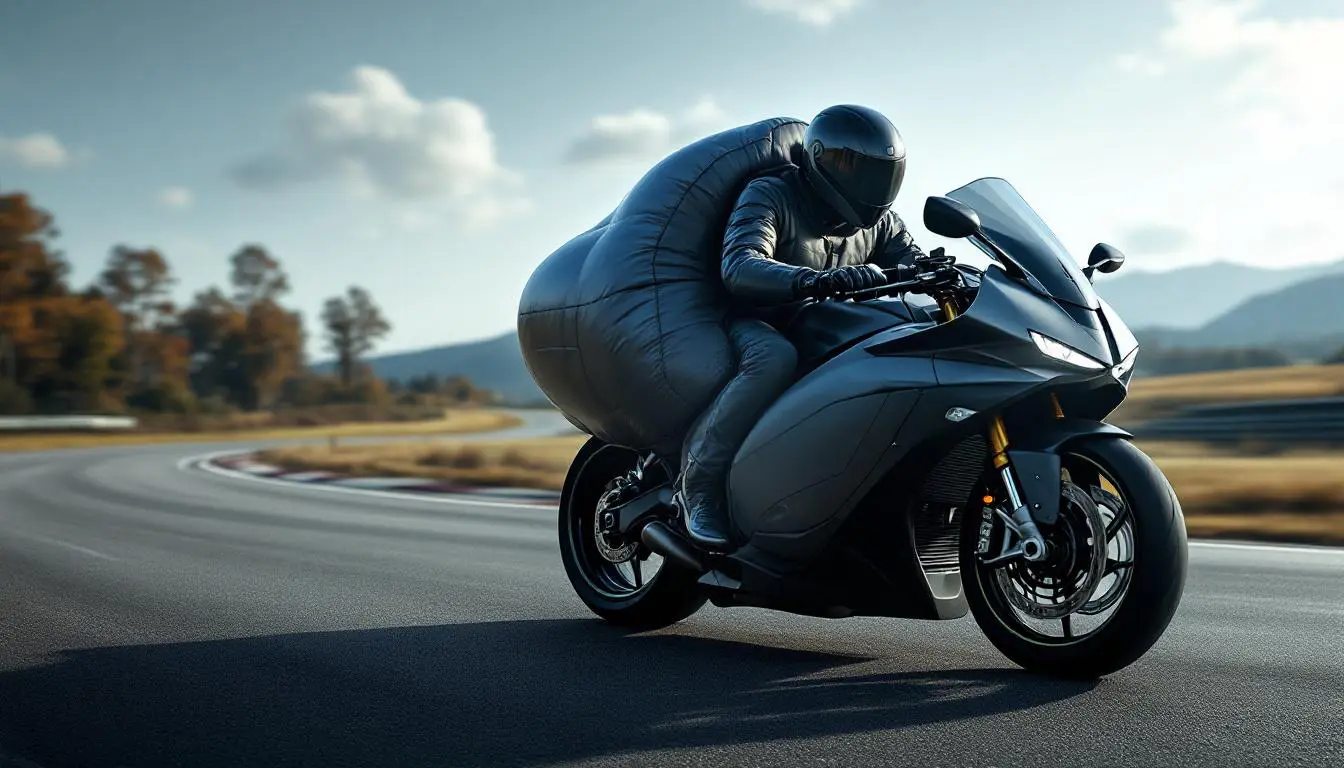
Technological advancements in the field of motorcyclist safety are making the airbag an increasingly promising topic. Airbag systems developed for motorcycle riders are being perfected, making this protective solution more and more accessible. A revolution that could change the game for the safety of two-wheeled users.
Development of airbag systems for motorcycles
The airbag technology, already well established in the automotive industry, is beginning to impact the two-wheeled sector. Engineers, including those from the Japanese company Toyoda Gosei, are working on an airbag specifically designed for motorcycles. Recent tests have simulated complex collisions, thereby refining the effectiveness of these safety devices.
The crash tests and their importance
The crash tests conducted by manufacturers are essential to validate the functionality of these airbags. Using dummies and scooters, the tests examine the deployment of the airbag during frontal collisions. This phase allows for the assessment of how the airbag interacts with the rider at the moment of impact, a crucial aspect to optimize safety.
Integration on motorcycles and scooters
The goal of designers remains the integration of these airbag systems into mass-produced motorcycles and scooters. This process will still require a lot of real-world testing and simulations to ensure that the equipment functions effectively. A significant advancement in this area could quickly make these safety devices standard in the motorcycle industry.
Toward the democratization of safety devices
If the test results prove positive, the democratization of airbags for motorcycles could become a reality. The potential impact on motorcyclist safety is enormous, and every step taken gets users closer to a safer riding experience. For more information on these new technologies, you can consult specialized articles such as those from Passion Moto Formation or Scooter DZ.
The Advancement of Airbag Systems for Motorcycles
| Comparison Axis | Details |
|---|---|
| Development Phase | Laboratory tests with dummies. |
| Types of Tests | Crash tests on frontal collisions. |
| Interaction with the Rider | Evaluation of effectiveness during impact. |
| Objective | Integration on motorcycles and scooters. |
| Competitive Equipment | Similar automotive safety equipment. |
| Publisher Reputation | Similar established companies. |
| Potential Impact | Reduction of injuries and fatalities. |
| Competitive Advantage | Innovative technology specifically for motorcycles. |
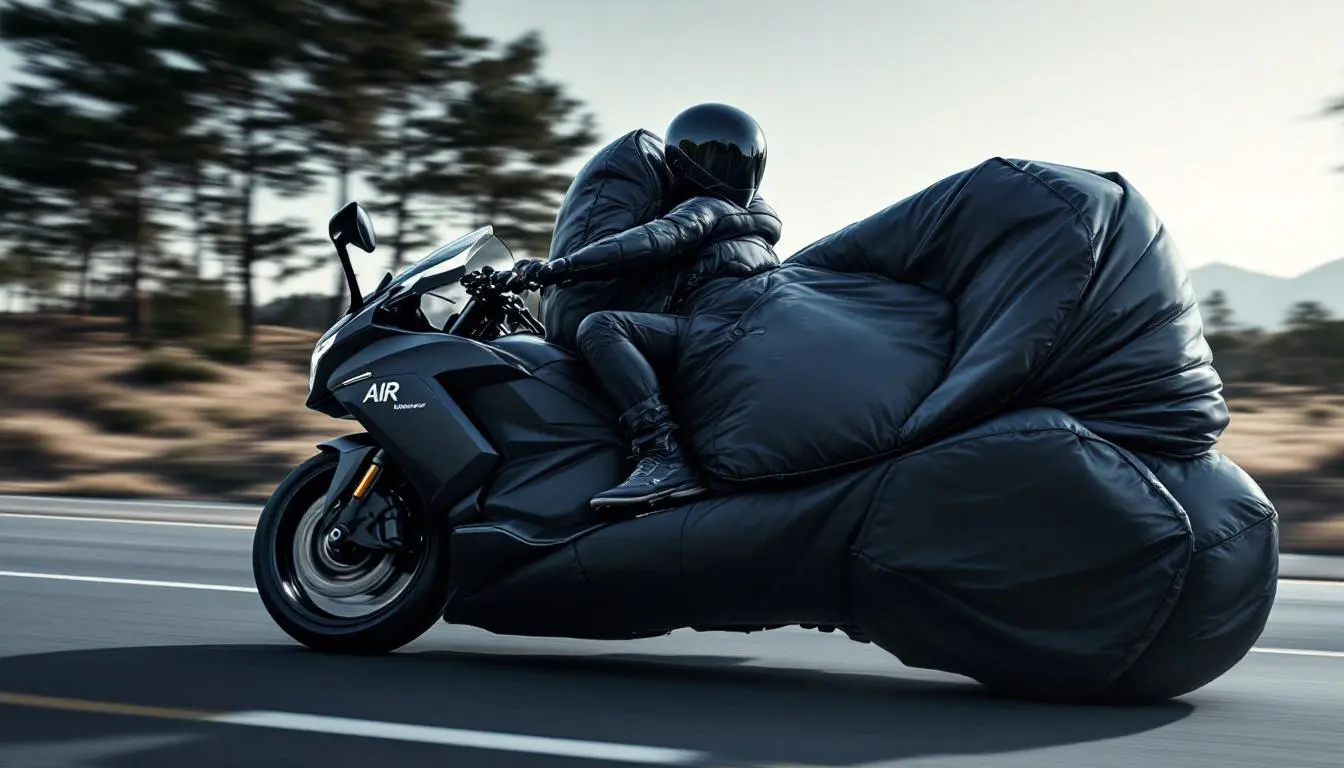
The safety of motorcyclists is constantly evolving, and recent advances in the development of airbag systems for motorcycles are quite promising. Increasingly accessible, this technology might transform how two-wheelers are designed and used on our roads.
The Japanese company Toyoda Gosei (TG) has recently crossed a decisive milestone by beginning collision tests with dummies and real vehicles. These trials aim to determine the effectiveness of the airbag prototype in the event of a frontal collision and to analyze the interaction with the rider during impact. The results of these tests could revolutionize the perception of safety on two-wheelers.
The main objective of the development teams is to refine this airbag system so that it can be offered as standard on motorcycles and scooters. The integration of such systems could significantly reduce the injuries suffered by two-wheel users. Indeed, every improvement made to the safety of motorcyclists could potentially save lives.
In the near future, it is conceivable that real-world testing methods will be combined with simulations to further optimize the effectiveness of this vital equipment. Such innovation could emerge quickly, and it is highly likely that this type of safety equipment will find its place in the market, considering its crucial importance in reducing accidents.
The pursuit of developments in this area is not only a technological advancement but also a step forward for the protection of motorcyclists. With integrated airbag systems, the hope is to significantly reduce crash-related trauma, thereby providing a new level of safety for motorcycle enthusiasts.
Safety equipment for motorcyclists continues to evolve, and the integration of airbag systems on motorcycles is now a tangible project. The Japanese company Toyoda Gosei (TG) has made an important step in the development of this technology with crash tests conducted on its prototype. This advancement could transform the safety of two-wheel drivers, making motorcycles even more secure against the risks of accidents.
A protective innovation for motorcyclists
Two-wheeler users are particularly vulnerable on the road, and statistics show that accidents can have serious consequences. In light of this reality, the integration of an airbag system on motorcycles could radically improve motorcyclist safety. This type of protection is already well established in the automotive sector, but its arrival in the world of motorcycles represents a significant turning point.
Real-world testing
The development of the motorcycle airbag by Toyoda Gosei has taken a concrete turn with the initiation of crash tests. These tests involve the use of dummies and real vehicles, allowing for the evaluation not only of the airbag deployment in the event of a frontal collision but also its interaction with the rider at the moment of impact. This rigorous approach is essential to understand how to maximize the effectiveness of the device without compromising rider comfort.
The challenges of development
The path to integrating airbags on motorcycles is not without challenges. The goal is to refine the equipment so that it can be standardly integrated into new models of motorcycles and scooters. Engineers at Toyoda Gosei must overcome several technical obstacles, including miniaturizing the technology while maintaining a good level of safety. Additionally, the need to simulate complex collision conditions poses new challenges for the development of this protective system.
An enhanced safety for all
With continuous progress in the development of this technology, it is plausible to imagine a rapid adoption of this type of equipment. The benefits of such an innovation could translate into a significant reduction in injuries and loss of life on the roads. Indeed, an effective airbag could become an essential element of motorcyclist safety gear, alongside helmets and protective clothing.
The future of motorized safety
The rise of these airbag systems on motorcycles could also encourage other manufacturers to embark on similar projects, thus contributing to an overall improvement of safety standards for two-wheelers. The market could witness a real evolution, positioning motorcycles as increasingly safe vehicles. The democratization of airbags for two-wheelers undoubtedly represents a step forward toward a future where motorcyclist safety will be reinforced. The next steps will involve combining real-world tests with simulations to maximize the effectiveness of these systems, and hopefully pave the way for the widespread adoption of the technology.

The development of the airbag for motorcycles is at a decisive turning point, promising to enhance the safety of motorcyclists on the roads. While this equipment has long been reserved for automotive vehicles, technological advancements now allow for the prospect of its integration onto two-wheelers. This evolution is crucial, as motorcycle drivers face particularly dangerous traffic situations and are often exposed to increased risks during accidents.
The Japanese company Toyoda Gosei has made significant progress regarding airbag systems, conducting crash tests to evaluate the performance of their prototype. These tests involving dummies and real vehicles aim to refine the deployment of the airbag during a frontal collision as well as its interaction with the rider. This research is essential to ensure that the equipment functions optimally in the event of an accident.
The future of safety gear for motorcyclists relies on this innovation. The development of an airbag specifically designed for the collision dynamics of motorcycles could dramatically reduce the number of serious injuries and fatalities on the roads. The integration of this equipment into models of motorcycles and scooters could then become a reality in the near future, after the phase of real-world tests.
Should positive results arise during the next stages of development and testing, we can hope that widespread adoption of airbag systems for motorcycles occurs rapidly. This would be a true game changer in terms of safety, providing motorcyclists with additional protection against the dangers of the road.
The airbag for motorcycles is a safety system designed to protect the rider in case of an accident, by deploying to cushion the impact.
Q: How does the motorcycle airbag system work?
The system detects an impending collision and deploys the airbag within milliseconds, thereby providing protection to the rider’s head and torso.
Q: Who develops these airbag systems for motorcycles?
The Japanese company Toyoda Gosei is one of the main players in the development of this type of technology for two-wheelers.
Q: What is the objective of the tests conducted by Toyoda Gosei?
The tests aim to refine the airbag system and assess its deployment in the event of a frontal collision, as well as its interaction with the rider.
Q: When can we expect to see these airbag systems integrated into motorcycles?
If the tests are conclusive, the integration of these systems could happen on mass-produced motorcycles or scooters in the near future.
Q: What are the prospects for the future of airbags for motorcycles?
With positive developments, these devices could quickly become widespread, marking a significant step forward for motorcyclist safety.