
IN BRIEF
|
When planning a motorcycle trip, it is essential to keep in mind the overweight of your vehicle. Overloading your motorcycle risks not only hindering your comfort but also compromising the safety of your travels. Adequate loading helps maintain good balance and optimal handling. In this regard, it is crucial to learn how to manage your loading to avoid inconveniences during your two-wheeled adventure.
During your motorcycle adventures, the overweight of your machine can become a real headache. Knowing how to manage your luggage and avoiding excess weight is essential to ensure optimal safety, maintain the proper functioning of your motorcycle, and ensure the comfort of your journey. In this article, we will examine the advantages and disadvantages related to avoiding the overweight of your motorcycle.
Advantages
Avoiding the overweight of your motorcycle offers numerous advantages, both in terms of safety and riding comfort.
Increased safety
Reducing the weight of your motorcycle helps maintain optimal handling. In turns, a properly loaded motorcycle reacts better, which is crucial to avoid accidents. Moreover, with a controlled weight, you save on the effort needed to handle your machine, making each maneuver smoother.
Improved performance
By respecting the load capacity indicated on your registration document, you promote the proper functioning of your vehicle’s suspensions and avoid causing premature wear of certain parts. With the right weight, your motorcycle remains performant, allowing you to optimize your fuel consumption on long trips. This also contributes to reducing the environmental impact of your travels.
Riding comfort
A good balance of the load ensures a more pleasant and less tiring ride. Avoiding overloading your motorcycle allows you to benefit from smoother ascents and descents, thus enhancing the overall experience during your journey.
Disadvantages
Despite the many advantages, there are also disadvantages to consider when trying to avoid overweight during your trips.
Resource limitation
By keeping the weight to a minimum, you may be forced to limit the number of items you take with you. This can be problematic during a long trip where some equipment or supplies may prove necessary.
Strict planning
Avoiding excess weight requires more rigorous planning of your loading and your belongings. This demands a certain investment of time to select the essential items, especially if you’re going away for several days. Failing to optimize your luggage could result in a lack of crucial items for your comfort or safety.
Compromise on comfort
When eliminating items to respect weight limits, you might sacrifice certain comfort elements, such as additional clothing or safety equipment. This compromise can affect your quality of life while traveling, especially on a prolonged trip.
During a motorcycle trip, the loading can quickly become a headache. An overload can not only harm your safety but also alter your vehicle’s handling. This guide presents tips and advice to ensure your motorcycle stays within the recommended loading limits while providing you with a pleasant travel experience.
Respect the loading capacity
Each motorcycle has a specified loading capacity indicated on its registration document (point F.2). It is crucial never to exceed this maximum weight. If in doubt, check this information to ensure your safety and that of others. An overloaded motorcycle can lose stability and performance, making your ride risky.
Distribute weight evenly
A good weight distribution is essential for the balance of your motorcycle. Place heavy items as low as possible and distribute the weight evenly between the right and left. This helps maintain the maneuverability of your machine, especially during turns or on winding roads.
Choose suitable luggage
Use saddlebags designed for motorcycles, such as saddlebags or a top case, which are optimized for the loading capacity of your vehicle. Avoid unsuitable luggage that could unbalance your motorcycle or make the loading less secure. You can find advice on choosing suitable luggage for effective travel on specialized sites like Ride For Life.
Anticipate needs on the road
During the trip, it is wise to plan for fuel and material needs. Make a list of necessary items to avoid packing unnecessary things. This will help limit the weight of your loading and allow you to travel lighter.
Secure your luggage
Make sure your luggage is well secured to prevent it from moving during the trip. Use spacers for your saddlebags and regularly check that everything is in place. Poorly secured luggage can also affect your motorcycle’s maneuverability and cause accidents.
Protect your belongings from rain
If you plan to face uncertain weather conditions, consider protecting your belongings from the rain. Waterproof bags or protective covers can save you a lot of trouble. You will find valuable advice by consulting Journal des Motards.
Take regular breaks
During your trip, don’t hesitate to take regular breaks. This will allow you to evaluate your motorcycle’s loading and ensure that no excessive weight has accumulated. It’s also an opportunity to check your motorcycle’s condition and recharge your batteries.
Conclude with caution
By following these tips, you will not only ensure the safety of your trip but also a better experience on the road. Always keep an eye on your luggage and respect the recommendations regarding the weight of your motorcycle. For more information on loading your motorcycle, consult ViaMichelin.

During your motorcycle adventures, it is crucial to manage the weight of your machine to ensure a safe and enjoyable ride. Excess weight can harm your handling and make your trips less comfortable. Discover some practical tips to avoid overweight and travel light.
Plan your loading
Before departing, take the time to plan what you will take. Make a list of essential items to avoid unnecessarily overloading your motorcycle. Avoid adding “just in case” items that may not serve but will add weight to your luggage.
Choose suitable luggage
Opt for light luggage specifically designed for motorcycles. Saddlebags, top cases, and tank bags allow for better weight distribution. Ensure they are robust enough to withstand the rigors of the road without adding unnecessary weight.
Distribute weight evenly
A proper weight distribution is essential to ensure your motorcycle’s stability. Place the heaviest items at the bottom and center of your luggage. This will help maintain good balance and avoid affecting your vehicle’s maneuverability during the ride.
Do not exceed the maximum authorized load
Each motorcycle has a maximum load indicated on the registration document. It is fundamental not to exceed this for your safety and that of other road users. By respecting this limit, you will also protect your motorcycle’s components, such as the suspensions.
Anticipate the overweight when stationary
Also consider how your motorcycle will behave when stationary. An excessively loaded motorcycle will be more difficult to lift, especially if parked on a slope. Keep these aspects in mind to avoid any unpleasant surprises.
Protect your luggage from the elements
Don’t forget to protect your belongings from rain and the elements. Use waterproof covers and ensure your luggage is secured. This will prevent damage to your equipment and eliminate the need to replace essential items during your trip.
For more information on tips for loading your motorcycle, check Trail Adventure Magazine or One Month on a Ride.
| Tips | Actions to take |
| Check the maximum load | Consult the motorcycle registration document to know the PTAC. |
| Balanced distribution | Place heavy items at the bottom and center of the motorcycle. |
| Appropriate luggage | Use suitcases and bags designed for motorcycles. |
| Anticipate overweight | Check your loading before departure to adjust if necessary. |
| Protect your belongings | Use waterproof covers to prevent moisture. |
| Accessibility | Organize your bags for easy access to essential items. |

During my motorcycle trips, I quickly realized the importance of respecting the maximum load of my machine. One day, I wanted to carry too many things, thinking it wouldn’t be a problem. I hit a winding road, and my motorcycle struggled to respond to the curves. The handling was compromised, and I had to stop to reevaluate my luggage. Since then, I avoid overweight at all costs by focusing on the essentials for each trip.
Another time, I assisted a friend who had loaded his motorcycle unevenly. The heavy bags were placed high, which upset the balance of the motorcycle. After a few kilometers, he lost control in a turn. This confirmed to me that it is essential to distribute weight correctly, with the heavier items positioned as low as possible. Since that incident, I always check that the load is well balanced before departing.
It is also crucial to secure your luggage properly to avoid any sliding. Once, I forgot to securely attach a bag, and along the way, it shifted and almost unbalanced my motorcycle. I learned that each bag must be firmly secured, and I always use spacers for my saddlebags. This allows me to travel with peace of mind.
The protection of belongings is another vital aspect. During a rainy trip, I neglected to cover my things, and everything got soaked. Since then, I always plan to bring waterproof covers for my luggage. This ensures that I can travel in any conditions without worry.
Finally, I always pay attention to the accessibility of my belongings. When planning my luggage, I make sure that the necessary items are easily accessible during the trip. This avoids frequent stops to rummage through my bags. A good arrangement makes all the difference to fully enjoy each stop.
During a motorcycle trip, it is crucial to manage weight properly to ensure a safe and pleasant ride. By avoiding overload, you not only preserve the integrity of your vehicle but also your riding comfort. In this article, we will present essential recommendations to avoid overloading your motorcycle, allowing for better handling and an optimal travel experience.
Understand the loading capacity of your motorcycle
First of all, it is important to familiarize yourself with the loading capacity of your motorcycle. This information is usually found on your registration document, at point F.2. Respecting this limit is fundamental, as in the case of overload, your motorcycle’s maneuverability will be compromised. This can lead to problems of stability and even safety on the road.
Analyze your luggage
Before departing, it is wise to make a list of your luggage. This will allow you to bring only essential items. Good planning will prevent your motorcycle from being excessively overloaded. By eliminating unnecessary items, you lighten your journey and facilitate the loading.
Choose suitable luggage
To travel easily by motorcycle, choose luggage specifically designed for use. Saddlebags, top cases, and tank bags are ideal. These pieces of equipment are often lightweight and optimized for motorcycles, helping you to better distribute weight while maximizing your storage space. You can also take your motorcycle’s shape into account and choose luggage that integrates harmoniously into its structure.
Weight distribution
Another crucial aspect in managing the load is weight distribution. It is essential to arrange heavy items at the bottom evenly between the right and left of your motorcycle. Poorly distributed loading can lead to instability, particularly in turns or during sudden braking. Ensure that your motorcycle stays centered to maintain a pleasant and safe ride.
Use spacers and ties
For better security, also think about using spacers for your saddlebags and properly securing your luggage. This will prevent them from shifting during riding, which could also impact your motorcycle’s behavior. A well-secured load will give you peace of mind and allow you to focus on the road.
Protecting your equipment
Don’t forget to protect your luggage from rain and elements. Use waterproof covers or rain bags to keep your belongings safe and ensure they remain dry, regardless of the weather conditions. This precaution will not only prevent excessive weight but also avoid inconveniences during your trip.
Awareness of riding
Finally, be aware that a loaded motorcycle requires adjusted riding. You may need to review your maneuvering style, especially concerning turns, braking, and speed. Particular attention should be paid to the brakes, which may be more taxed on a heavier vehicle. Being aware of these adjustments will enable you to adapt your riding for your safety on the road.
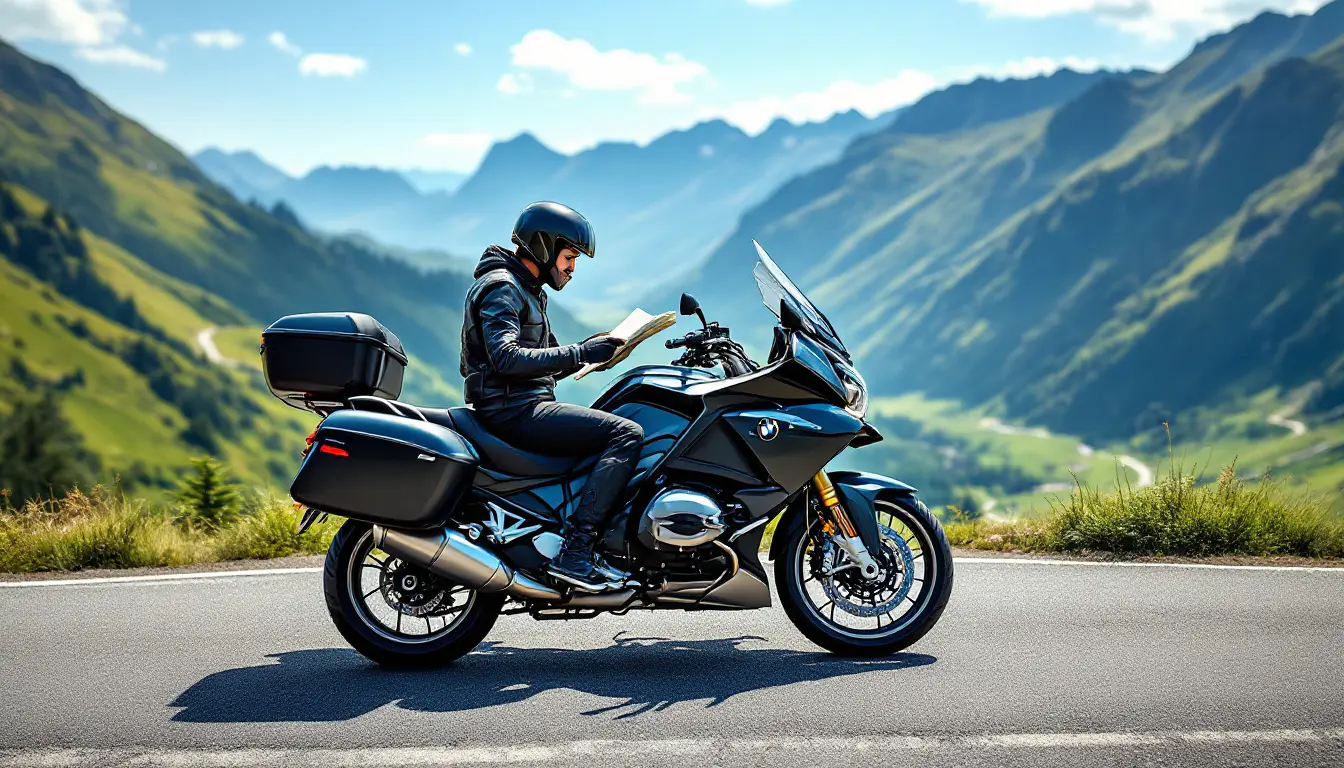
Managing your motorcycle’s weight is crucial to ensure a safe and comfortable ride, especially on long trips. Overweight can alter not only your machine’s handling, but also its dynamics. The suspension, braking, and maneuverability face additional pressure, increasing the risk of accidents.
To remedy this, the first step is to consult the registration document to know the maximum authorized weight as well as the payload. By respecting these indications, you ensure that you do not exceed the limits set by the manufacturer and remain within the law. Next, it is crucial to properly distribute the weight on your motorcycle. Place heavy items low and centrally to maintain optimal stability.
It is also recommended to use suitable luggage, such as tank bags or saddlebags, which are specifically designed to distribute weight evenly. Before departing, take the time to make a list of essential items to avoid unnecessarily overloading your motorcycle. Keep in mind that traveling light often means more comfort and better performance on the road.
Finally, proper preparation before departure is key to avoid tricky situations. Before each trip, take the time to check the loading, adjust if necessary, and ensure that all luggage is correctly secured. By implementing these tips, you will not only preserve the integrity of your motorcycle but also enjoy a hassle-free journey, safely.
Frequently asked questions about motorcycle overweight
Q: Why is it important not to overload my motorcycle?
A: Overloading can alter your motorcycle’s handling and affect the functioning of the suspensions, leading to dangerous situations on the road.
Q: How can I tell if my motorcycle is overloaded?
A: Check the maximum load indicated on the registration document (point F.2) of your motorcycle. Ensure that you do not exceed this total authorized weight.
Q: What are the consequences of excess weight on my motorcycle?
A: Excess weight can make your motorcycle less maneuverable, cause poor cornering behavior, and increase the wear of tires and mechanical components.
Q: How can I balance the weight of my motorcycle when packing?
A: Distribute the weight evenly between the right and left and place heavy items as low as possible in your luggage to avoid instability.
Q: What types of luggage are recommended for a motorcycle trip?
A: Opt for luggage specifically designed for motorcycles, such as saddlebags, a top case, and tank bags that allow for good weight distribution.
Q: What should I do if I exceed my motorcycle’s weight limit?
A: Remove some items or replace them with lighter alternatives to come back within the recommended weight limit.
Q: How can I protect my luggage from rain while respecting weight?
A: Use lightweight waterproof bags or protective covers for your luggage to protect your belongings without adding too much extra weight.


